After more than seven hours of negotiations between Merkel’s conservatives and the pro-business Free Democrats stretching into the early morning hours, the parties agreed to ax an unpopular doctor’s office fee from January.
In exchange for winning that concession, the FDP agreed to back a benefit from August for parents who care for their children at home.
The online service of news weekly Der Spiegel called it a “Summit of Gifts” ahead of the general election next September or October, intended to shore up support for the governing parties whose majority is under threat.
“There were presents for everyone so close to the election year ― not only for the voters but also for the individual coalition partners,” it wrote.
While Merkel’s Christian Democrats are leading in the polls, their Bavarian sister party, the Christian Social Union, faces a tough re-election battle in a state vote next year.
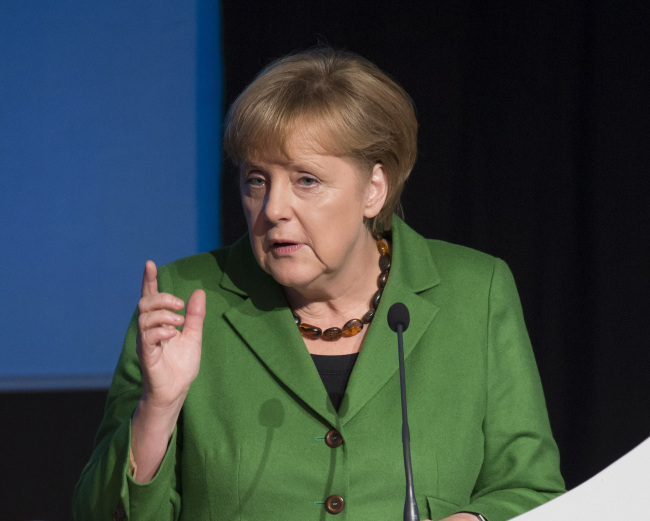
German Chancellor Angela Merkel delivers a speech in Timmendorfer Strand, Germany, Monday. (AP-Yonhap News)
And the FDP, whose priority in its election platforms has long been tax cuts, has seen this aim largely thwarted by Merkel’s austerity drive and call for a balanced budget by 2014.
In a poll released Sunday, the FDP again tallied beneath the 5 percent level required to hold seats in parliament.
Analysts say the most likely electoral outcome is a repeat of the “grand coalition” between the conservatives and the Social Democrats with Merkel at the helm, last seen 2005-2009.
The call for a benefit for stay-at-home parents, the brainchild of traditionalists in the CSU, has been criticized for discouraging women in particular to work outside the home, and compromising the integration of immigrant children who might benefit from day care. (AFP)
koreaherald@heraldcorp.com