
[THE INVESTOR] With amplifying public concern over fine dust and other forms of air pollution, imports of related preventive items skyrocketed year-on-year, data showed Thursday.
According to the Korea Customs Service, the total amount of imported masks hit $23 million last year, more than a three-fold increase from $7.1 million in 2014.
The agency explained that public concern has persisted since the outbreak of Middle East respiratory syndrome last summer that had led to an increased demand in masks.
Last year, 79.3 percent of imported masks were manufactured in China, mostly disposable and cheap. The average unit cost of imported masks also decreased from $0.055 in 2013 to $0.045 in 2014.
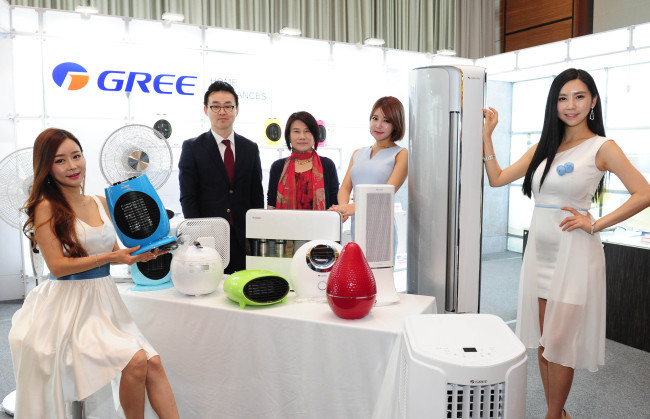
Imports of air purifiers increased by 21.8 percentage points to $32 million last year.
Within the first five months of this year, the total amount of imported air purifiers reached $43 million, surpassing last year‘s $32 million.
Industry watchers said that costly home appliances such as air purifiers and vacuum cleaners equipped with a strong dust filter that is built to remove microorganisms were also gaining popularity.
The total amount of imported vacuum cleaners hit $220 million last year, a 31.6 percent point increase from 2014. The total sales of vacuum cleaners from January to May this year hit $130 million.
Imports of daily supplies for oral hygiene also went up by 3.7 percentage points, reaching $16 million last year.
A mobile social commerce company Ticket Monster -- one of the most-visited shopping platforms for daily appliances -- said last month that the sales of products related to air purification, such as masks, air purifiers and pot plants, in May saw a two to four-fold increase in year-on-year sales.
It explained that while the sales of air purifying products mostly ceased around May last year, sales and consumer demands on those products have been constantly increasing this year even after the spring time.
It added that the largest group of consumers who purchased goods related to air purification last year were mostly women in their 30s (36 percent), followed by men in 30s (29 percent), men in 40s and women in 40s.