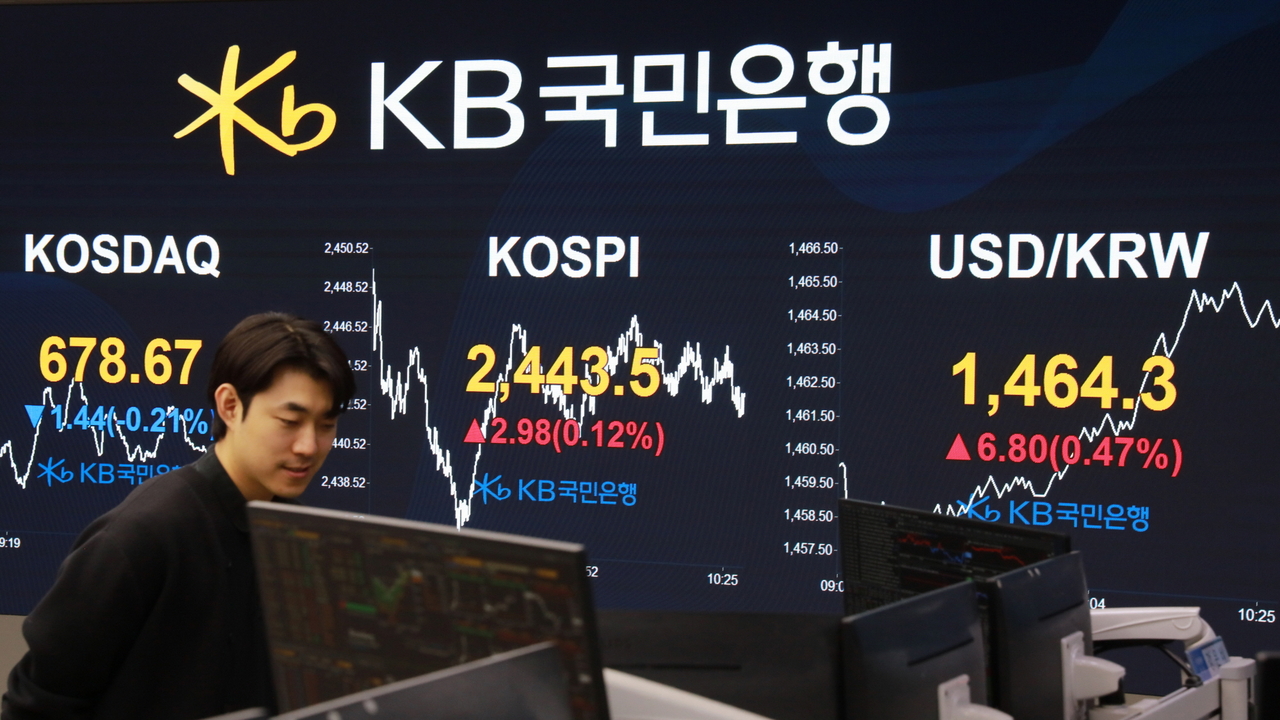
The Korean won slumped to its weakest level against the US dollar in almost 16 years Thursday, as the currency shows no sign of a rebound after nearly a month of political turmoil.
The won dropped 0.57 percent, sitting at 1,464.8 won per dollar as of 3:30 p.m. This is its weakest level since March 2009, when the global financial crisis severely impacted the country’s economy.
The currency has been under selling pressure throughout December, as the country experiences political turbulence following President Yoon Suk Yeol's Dec. 3 martial law declaration and subsequent impeachment proceedings.
The dollar’s stubborn strength has stemmed from the US Federal Reserve’s hawkish rate cut decision, and the Bank of Korea’s projection for another key rate slash next year is also fanning the won’s depreciation.
As the won continued to fall sharply against the greenback, foreign investors pulled money out of Korea’s equity market. Foreigners became net sellers of Korean stocks, offloading 16.5 billion won ($11.2 million) and 19.7 billion won worth of shares in the benchmark Kospi and tech-heavy Kosdaq markets.
The daily trading volume of the main board amounted to 6.82 trillion won, shrinking further from the 13-month low figure tallied in the previous session.
Investment sentiment for won-denominated assets appears to have weakened further after the Korean central bank hinted at cuts on the policy interest rate in consideration of economic risks next year.
In the report, Monetary Policy for 2025, released Wednesday, the BOK said it would “flexibility adjust the pace of base rate cuts” in line with changes in economic conditions to ensure that inflation remains stable and downward pressures on growth are mitigated.
With only three days left to wrap up the foreign exchange market of 2024, experts believe the Korean won would likely remain weak until March next year.
Moon Da-woon, an analyst at Korea Investment & Securities, pointed to the country’s “leadership vacuum that could lead to lowering negotiating power over US incoming President Donald Trump, (and) tempering expectations for Korea’s economic growth rate next year” as factors that could stimulate downward pressure on the won.
hnpark@heraldcorp.com