Audi, outpaced by Tesla, aims to boost sales with at least three new launches in first half
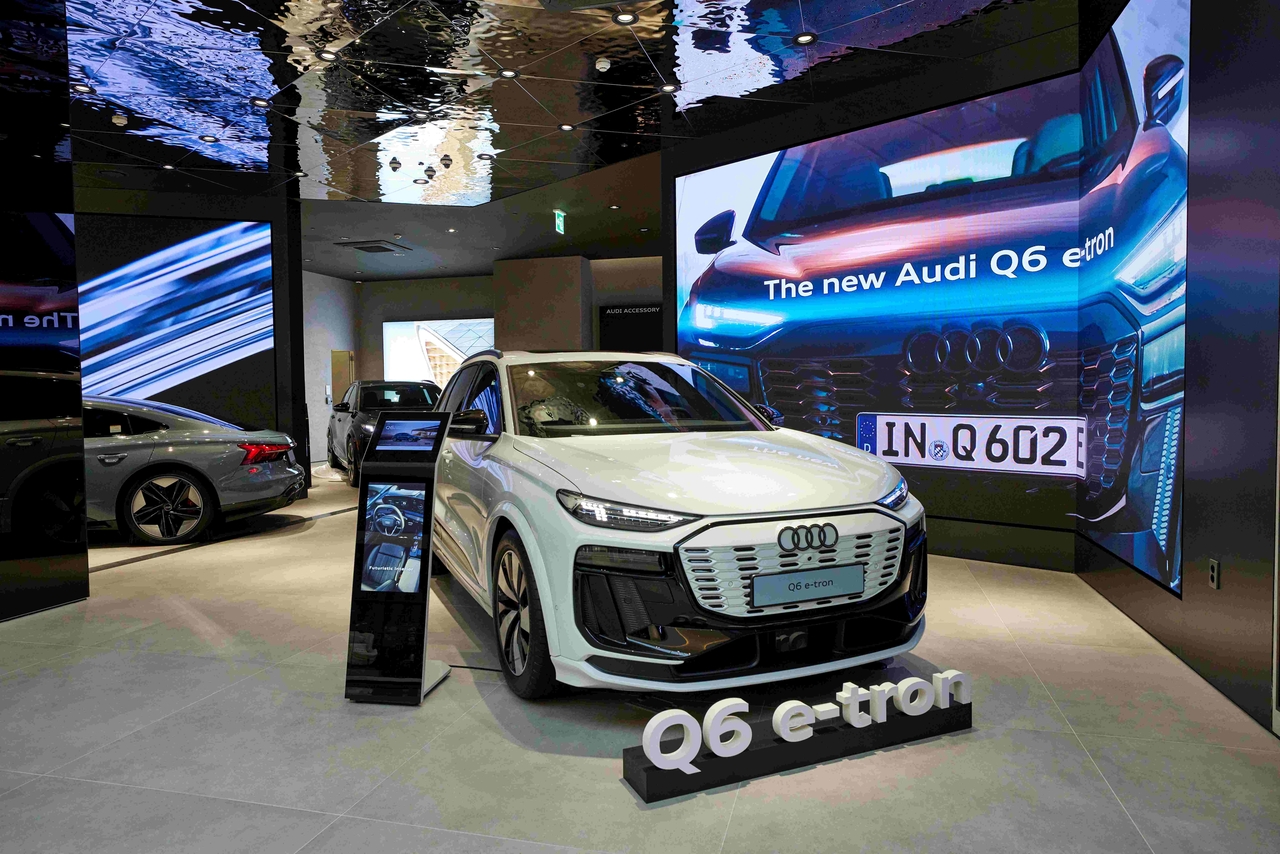
Audi is gearing up to reclaim its top-three standing in Korea’s auto importer rankings next year as it plans to roll out at least three new models in the country.
The German automaker earlier announced a plan to carry out nationwide preview events for the Q6 e-tron, the brand’s all-electric compact crossover sport utility vehicle, from November this year through February to offer Korean customers hands-on experiences with the new model.
“At the VIP events, customers will have the exclusive opportunity to explore the new Audi Q6 e-tron and Audi SQ6 e-tron,” Steve Cloete, who became Audi Korea’s executive director in May this year, shared in a LinkedIn post.
“The feedback has been overwhelmingly positive with some pre-orders already placed.”
Cloete also wrote in a different LinkedIn post that the Audi Q6 e-tron is “just the first of over 20 models set to debut in the region within the next two years,” indicating the brand’s attempt to bounce back in the Korean market with new releases.
The Q6 e-tron, which is slated to be officially released in the market after the preview events end in February, will complete Audi Korea’s electric SUV lineup along with the Q4 e-tron and the Q8 e-tron.
Audi Korea also plans to release the A5, a mid-sized sedan, and the A6 e-tron, a mid-sized all-electric sedan, in the local market in the first half of next year to bolster its presence.
An auto import industry official noted that Audi lay low this year as it did not have many new models released in Korea.
“As (Audi) did not have that many planned releases this year, it appeared that Audi was looking forward to next year already and did not conduct much marketing efforts,” said the official.
According to the Korea Automobile Importers and Distributors Association’s data, Audi sold 8,386 units between January and November, nearly a 50 percent decline from 16,650 units sold in the same period last year.
With the annual sales on pace to be cut in half, Audi Korea is likely to finish the year as the seventh-largest auto importer in the country. The German automaker was the No. 3 auto importer behind BMW and Mercedes-Benz from 2020 to 2023.
Another auto import industry official pointed to Audi’s lack of hybrid models as another reason for its ailing sales.
“Audi Korea only has one hybrid model, which is the A7 plug-in hybrid, whereas more Korean customers are looking for hybrid options,” said the official. “And the A7 plug-in hybrid model is not an affordable model for mass appeal.”
According to Carisyou's data on Korea's import car market, the sales of gasoline-powered vehicles and diesel-powered vehicles in the first eleven months of this year decreased by 9.1 percent and 35.9 percent, respectively, from the same period last year. On the other hand, the sales of hybrid vehicles increased by 1.7 percent in the same period.
hwkan@heraldcorp.com


![[Exclusive] Ateez to return in November](https://wimg.heraldcorp.com/news/cms/2026/09/02/news-p.v1.20260902.76162fb0ba55493aad1c076f240d0750_R.jpg?type=h&h=120)