
Rival parties on Monday argued over the main opposition’s proposal to create a bipartisan panel to tackle the MERS outbreak here, blaming the Park Geun-hye administration for failing to contain the deadly disease that has left dozens dead and thousands quarantined.
Senior lawmakers of the main opposition New Politics Alliance for Democracy released a joint statement calling the Park administration the “main carrier” of MERS. They claimed Park focused on scapegoating and creating partisan wars while shirking efforts to contain the outbreak.
But the ruling Saenuri Party’s chair Rep. Kim Moo-sung rejected the NPAD’s proposal later Monday, saying the National Assembly’s special MERS panel the was already serving as a bipartisan work group.
“The (special MERS panel) is already functioning. The panel is a group dedicated to creating possible solutions, while staying as far away from party politics as possible,” Kim said.
“It is my job as a senior party official to ensure that the already existing bipartisan panel works.”
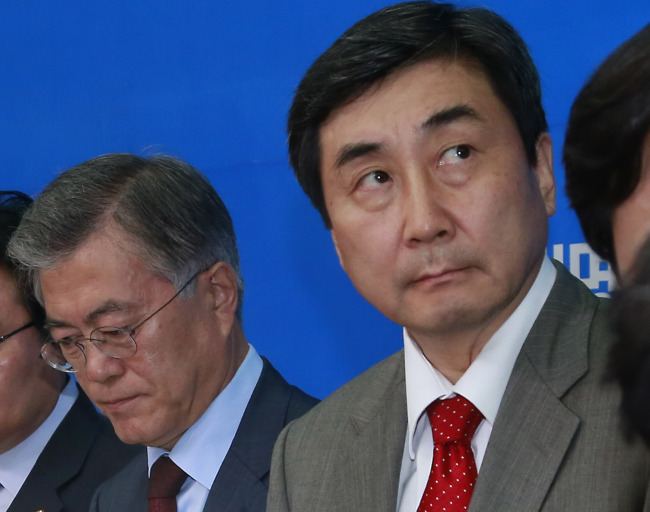
The Assembly’s special MERS panel was formed by leaders of the main parties earlier this month. The committee includes nine opposition and nine ruling party lawmakers.
The NPAD’s proposal included plans to increase government spending in areas most affected by the deadly respiratory virus, including Pyeongtaek, Gyeonggi Province, where the first MERS patient was reported to have stayed and spread the virus.
NPAD chair Rep. Moon Jae-in also suggested increasing spending beyond this year’s budget, and raising the corporate tax as a possible way to obtain funds to tackle MERS.
The MERS outbreak left 27 dead while over 3,800 remained quarantined as of Monday. The number of confirmed patients rose to 172 earlier in the day. But the overall outlook appeared positive as the virus’ spread was expected to be contained in the coming days.
President Park’s approval rating rose by 0.3 percent to 34.9, the local pollster Realmeter reported Monday. The rise ended two weeks of continued falls likely caused by the administration’s apparent failure to stem the growth in the number of MERS-related deaths.
The weekly survey polled 2,500 adults nationwide from June 15-19, using automated and computer-automated phone interviews. The study’s results had a 95 percent confidence level, and a margin of error of plus or minus 2 percent.
By Jeong Hunny ()
koreaherald@heraldcorp.com