Discovery of drones thought to be from N. Korea exposes holes in Seoul’s air defenses
Criticism is mounting over the South Korean military’s ill-preparedness against North Korea’s drone-based military activities after a drone was found to have flown over the presidential office of Cheong Wa Dae and filmed its facilities.
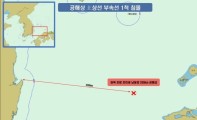
The military authorities found two suspicious drones, one in Paju close to the Demilitarized Zone and the other on the border island of Baenyeongdo, last Monday and this Monday, respectively. Seoul has tentatively concluded that the two were from the North.
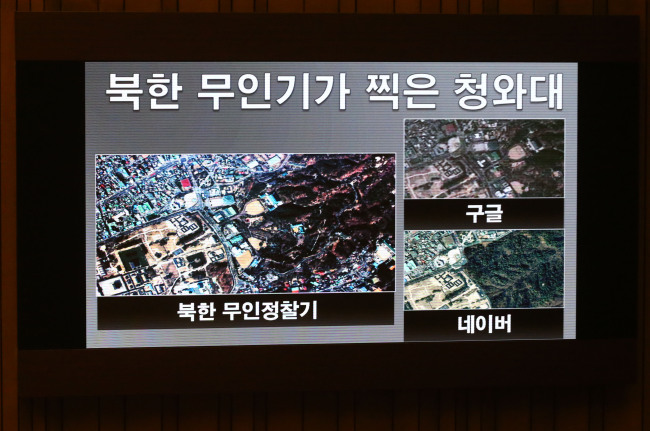
Local media revealed one photo, taken by the drone found in Paju, which showed the presidential compound and nearby Gyeongbokgung Palace. The photo indicated that the drone flew over Cheong Wa Dae at an altitude of about 1 kilometer.
The presidential office has strengthened security amid rising concerns over what critics call a “porous” air defense.
Seoul’s Defense Ministry said that the drone that crashed in Paju was found to have taken 193 photos during its flight over northern Gyeonggi Province and parts of Seoul. But the ministry said those photos were not transmitted to the communist state.
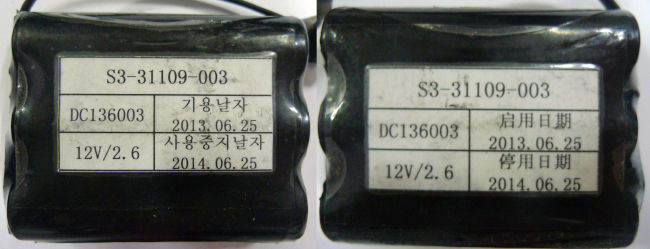
“There was a transmitter in the drone. It was not for transmitting images to the North, but for receiving GPS signals. Thus, the drone was not capable of sending the photos it took here,” said ministry spokesperson Kim Min-seok.
The drone found on Baengnyeongdo apparently took off from Onchon Airport in North Korea’s Hwanghae Province, a senior government official said, declining to be named. The official also said that marine troops on the island fired some 300 shells with its Vulcan cannons, but could not destroy the drone as it flew at a higher altitude.
The drone flew at an altitude of 1.4 km at a speed of 100-120 km per hour in a “zigzag pattern” over the border islands of Socheongdo and Daecheongdo, and then crashed on Baengnyeongdo due to a fuel shortage, the official explained.
The drone also carried a digital camera and took photos of military facilities on those islands, but no photos were transmitted to the North.
The ministry argued that the North Korean drones were “small, entry-level” surveillance aircraft and did not pose any serious military threat. But concerns have persisted that drones containing bombs or chemical and biological weapons could cause a catastrophe in the country.
Some denounced the South Korean military for not responding enough when it was aware that the North began developing military drones in the early 1990s and imported some from foreign countries.
Seoul officials believe that Pyongyang imported Chinese-made D-4 drones and modified them into “Banghyon” drones to fit Korean terrain features, and deployed them to frontline units.
The North is also known to have developed and deployed unmanned aircraft for strike missions. Observers believe it imported U.S.-made MQM-107D Streakers from 2010-2011 from a Middle Eastern nation, most likely Syria.
To ease the public criticism and security worries, Seoul is seeking to introduce more advanced radar capable of detecting objects flying at low altitudes, and develop a jamming system to disrupt drone operations and a system to intercept unmanned aircraft.
By Song Sang-ho ()
koreaherald@heraldcorp.com