

Consumer satisfaction in Korea last year reached its highest level on the National Customer Satisfaction Index in the survey’s history, the state-run Korea Productivity Center said this week.
The NCSI national level in 2014 was 73.4 points, a 0.4 point increase from 2013 and the highest since the survey was first carried out in 1998.
The NCSI, developed by the KPC, Chosun Ilbo newspaper and the University of Michigan, measures consumer expectations and satisfaction nationwide.
Last year, 305 companies and institutions across 71 industries were surveyed among 81,651 consumers across Seoul, Busan, Daegu, Gwangju and Daejeon.
Organizers said the increase suggests that despite the economic sluggishness, companies and institutions have been focusing on customer satisfaction.
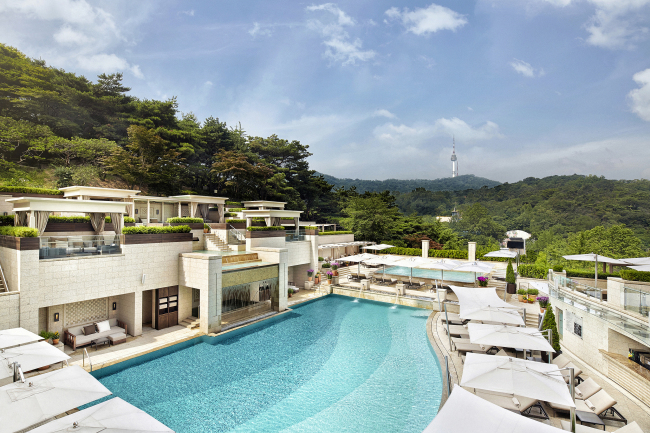
Out of 305 entities surveyed, Hotel Shilla, an affiliate of Samsung Group, ranked first with 84 points.
The top 10 companies and institutions on the NCSI last year included five hotels, four hospitals and one private university, all scoring above 79 points.
Seven out of 13 economic sectors saw their customer satisfaction increase, as did 32 out of 65 industries, a higher rate than a year ago (29 industries).
Competition for customer satisfaction was intense in 2014, with 11 industries seeing a change in their highest-ranking brands, and eight industries all ranking first place, raising the overall bar in customer satisfaction.
However, the middle and lower-ranked companies and institutions have a higher gap in performance scores than high-ranking companies.
By economic sector, the nondurable products sector had the highest overall satisfaction rating, increasing by 1.9 points (2.6 percent). All but one of its industries increased in their customer satisfaction rate, with the men’s formal dress industry having the highest increase with four points (5.5 percent).
The education service sector followed with a 1.7 point increase (2.5 percent), then health care and social assistance sector up 1.1 points (1.4 percent), and the accommodations and restaurant sector with a one-point increase (1.3 percent) from 2013.
The nondurable products sector saw its success by responding to the customers’ need for smart purchases as the recession lingered, the KPC said.
Companies enhanced their price competitiveness by increasing discounts in online markets, lowering prices of foreign cigarettes and holding constant sales on food and drinks in markets and convenience stores.
By Sang Youn-joo ()
koreaherald@heraldcorp.com


![[World Class] HUFS bets on Songdo, AI to redefine what a global university can do](https://wimg.heraldcorp.com/news/cms/2026/10/18/news-p.v1.20260930.7e4dbeacfc1d4d16848c0e2a441c04e6_R.jpg?type=h&h=120)
