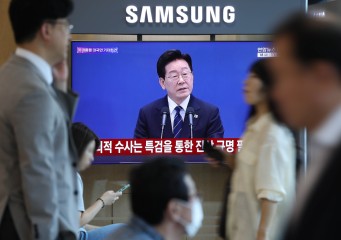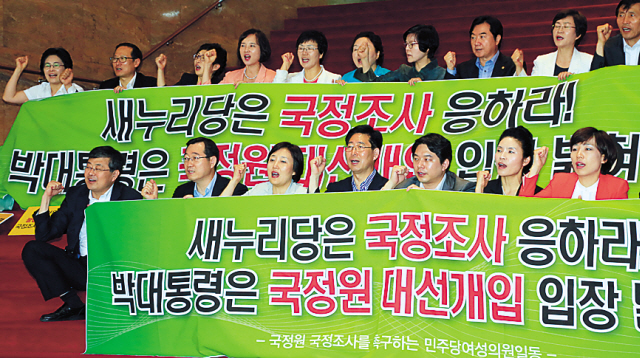
The rival parties’ dispute over the legality of the National Intelligence Service’s disclosure of the 2007 inter-Korean summit transcript escalated Tuesday, with opposition figures claiming the document to have been fabricated.
Former members of the Roh Moo-hyun administration charged that the disclosed transcript had been faked for political gain.
Controversy over the legitimacy of the disclosure as well as different interpretations of the contents of the 100-page log of conversation is expected to persist as political wrangling dominated the parliamentary session.
At the core of the dispute is whether the summit talks’ record can be considered part of the public archive.
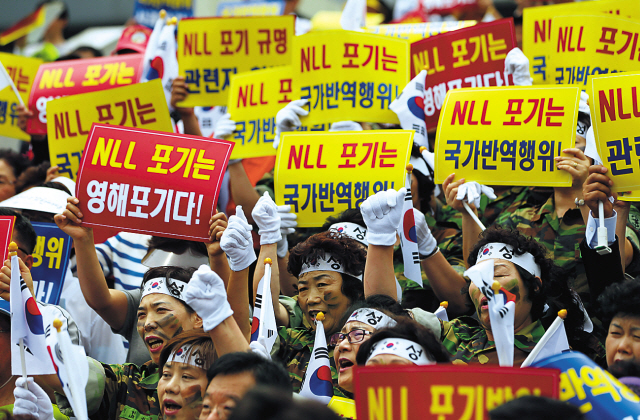
The basis upon which the NIS unsealed the transcript on Monday was a presidential decree on security operation. Under this regulation, reclassification of confidential data that is defined as public record can be carried out on the issuer’s authority. It is the NIS position that its chief Nam Jae-joon had the authority to lift the confidentiality of the archive authored and kept by the NIS.
It is, on the other hand, the DP’s position that the transcript should be considered presidential record as it was based on a Cheong Wa Dae voice recording, and the NIS’ lifting of confidentiality violates both the presidential decree and the Act on the Management of Public Archives.
In accordance with the law on public archive management, confidential records can be used under limited conditions at the discretion of the head of the relevant organization such as when he or she deems it is impossible to verify the relevant information without the relevant archives upon request by a public body.
Prosecutors said they will be conducting a probe as scheduled into several Saenuri Party members of the Intelligence Committee and NIS chief Nam Jae-joon, who are the subject of a complaint filed by the DP for viewing the inter-Korean summit log at the NIS last week ahead of the full disclosure this week.
The Seoul Central District Prosecutors’ Office is reportedly reviewing whether the NIS’ transcript can be defined as presidential records or public.
Last February, the prosecutors had decided that the excerpts and original copies of the transcript in question partially exposed by Saenuri Party Rep. Chung Moon-hun were public record.
If the data is reconfirmed as public, the investigation is likely to zero in on whether the viewing by the lawmakers and the purpose of use were legitimate.
But observers said it remained to be seen whether the Saenuri Party members could be punished as the relevant transcript had already been disclosed by the NIS and were no longer confidential.
Those who read the data are liable to receive up to two years’ imprisonment or 10 million won in fines for revealing the confidential information. The person can also not use the acquired information for purposes other than those written in the application.
Meanwhile, former aides to Roh were seen taking a step slightly divergent from the DP leadership’s position, by questioning the authenticity of the transcript.
“Can the people trust 100 percent the data released by the same organization that engaged in political maneuvering in the last presidential election?” said Kim Kyung-soo, who was Roh’s secretary for speeches at the time of the inter-Korean summit, in a radio interview Tuesday.
“As the NIS’ data is a ‘fake,’ we must clearly confirm (the remarks) by looking at the authentic documents kept in the presidential archives,” he said.
Park Sun-won, who was Roh’s secretary for unification, foreign affairs and security, said in a separate radio interview that the excerpts were “a product of distortion and fabrication.”
koreaherald@heraldcorp.com