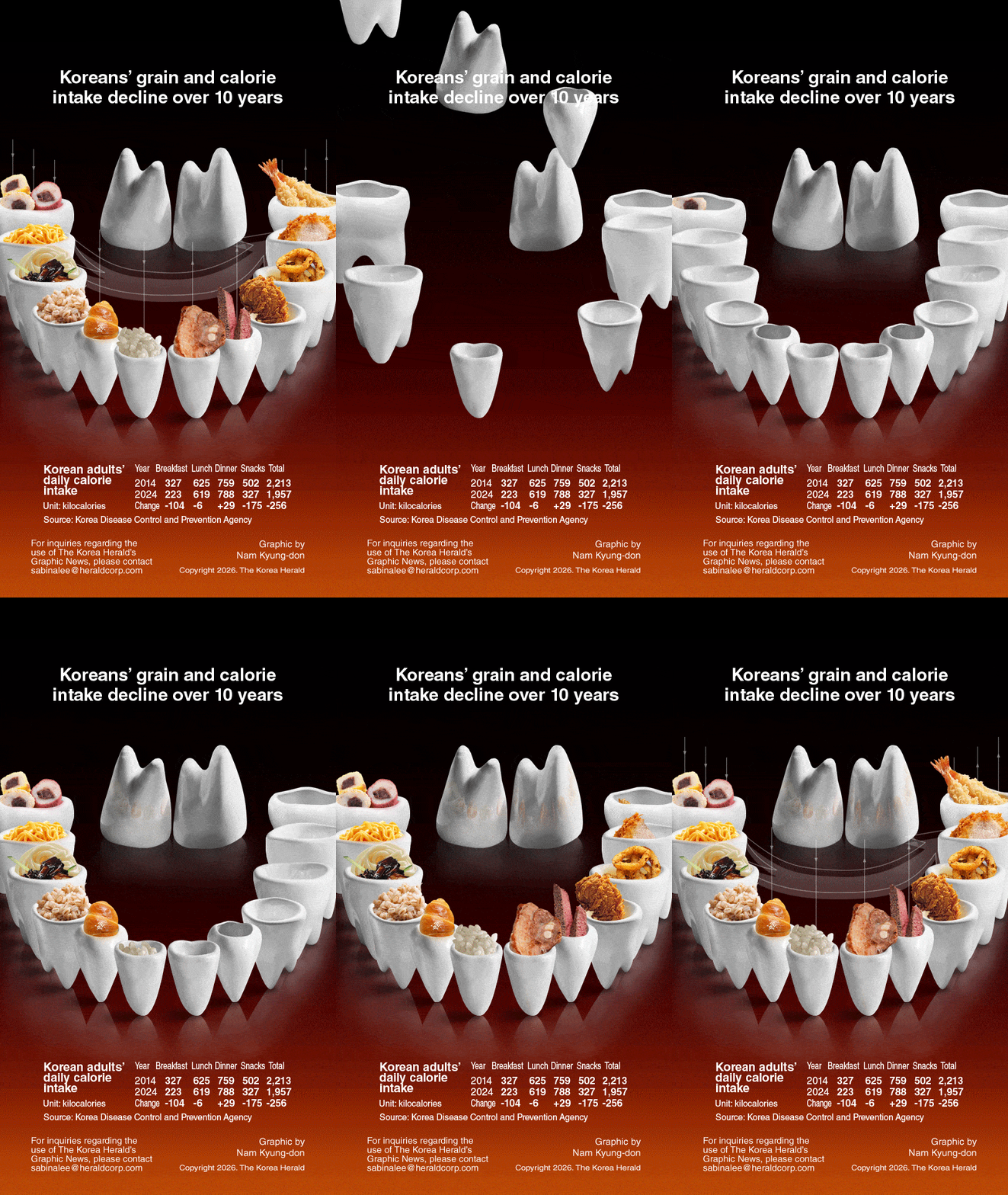
Grain consumption and daily calorie intake among South Koreans aged 20 to 49 declined over the past decade, government data showed, amid rising living costs and changing eating habits.
According to the Korea Disease Control and Prevention Agency, daily grain consumption fell from 298 grams in 2014 to 255 grams in 2024, while average daily calorie intake dropped from 2,213 kilocalories to 1,957.
The growing number of single-person households and rising food prices are cited as key factors behind the shift. Single-person households totaled 8 million in 2024, accounting for 36.1 percent of all households, while dining-out prices rose by more than 3 percent annually for four consecutive years.
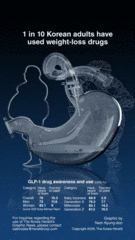
Despite the decline in calorie intake, the adult obesity rate rose from 34.8 percent in 2016 to a provisional 39 percent in 2025, highlighting a growing gap between calorie consumption and weight trends.
Experts point to deteriorating dietary quality as a possible explanation, with consumption of beverages and meat increasing while that of grains and fruit declined. The figures suggest that eating fewer calories does not necessarily translate into healthier dietary habits.
don@heraldcorp.com