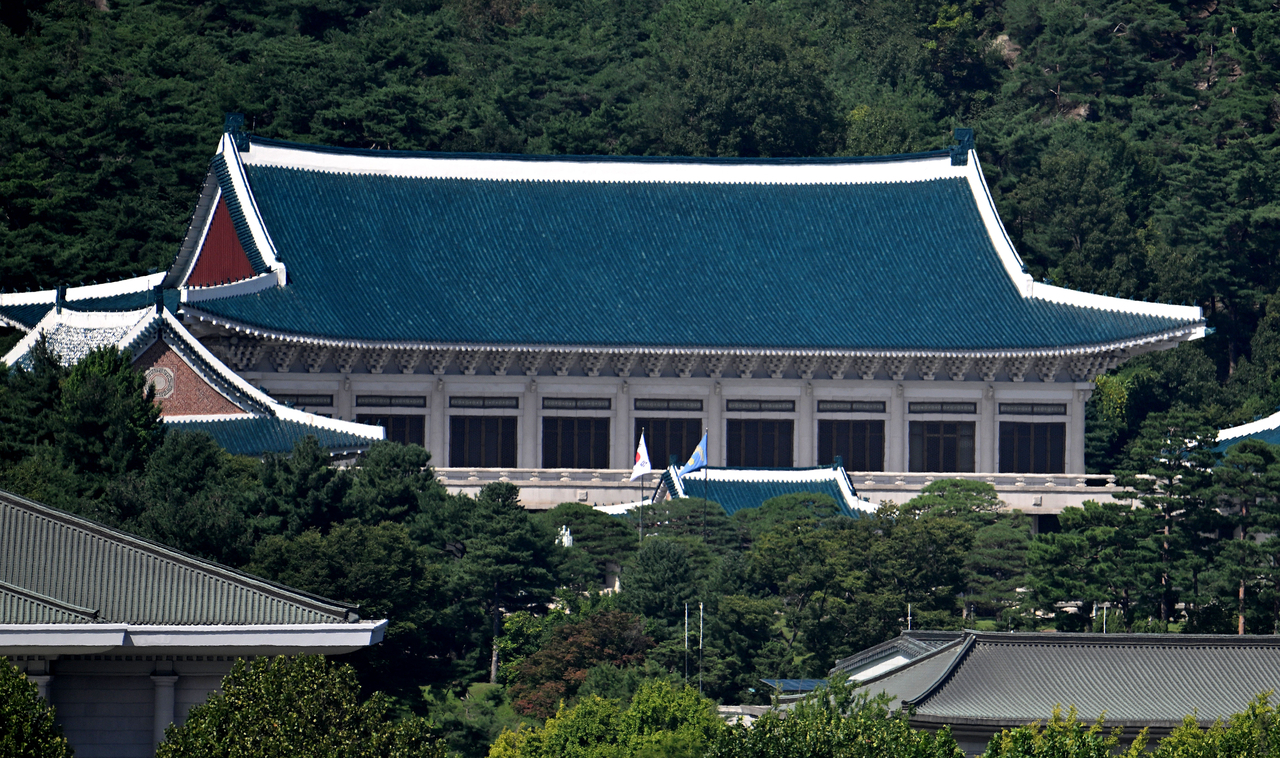
South Korea's presidential office said Thursday that the US midterm election results would not affect the bilateral alliance, pledging close cooperation with the US administration and Congress.
“The Korea-US alliance is a relationship that has developed into a strong and steadfast partnership over more than 70 years, with bipartisan support from the US,” senior presidential spokesperson Kang Yu-jung said during a press briefing.
“We do not believe the outcome of any particular election will affect the South Korea-US alliance,” she said when asked whether President Lee Jae Myung and his senior aides had discussed the potential implications of the US midterm elections for South Korea’s foreign policy during their weekly meeting held earlier in the day.
Democrats secured control of both the Senate and the House of Representatives in Tuesday's midterm elections, with a blue wave dealing a major political setback to US President Donald Trump and his Republican Party.
The election results have raised questions about potential changes to Washington's trade and foreign policies, as well as the implications for Seoul's economic and security cooperation with the Trump administration.
"The government will continue to closely communicate and cooperate with the US administration and Congress while analyzing changes in the political landscape following the midterm elections to ensure the continued development of the Korea-US alliance," Kang said.
Kang reaffirmed Seoul's commitment to its $350 billion investment package in the US under a bilateral Joint Fact Sheet.
"The government will continue to pursue strategic investments in the US based on agreements reached between the two countries," she said. "Individual projects, however, will be reviewed in accordance with relevant procedures and commercial rationality, with national interests as the top priority."
The Democratic takeover of both chambers of Congress could strengthen scrutiny of US investment projects and funding, potentially giving Seoul more room to negotiate the pace, scale and commercial terms of its investments in the United States.
Analysts say the shift could introduce a new check on the Trump administration’s unilateral approach, offering Seoul greater leverage in responding to Washington’s investment demands, although it is unlikely to eliminate that pressure altogether.
At the same time, prolonged clashes between Congress and the administration under divided government could delay budget approvals, legislation and permitting procedures tied to US-bound investments, adding uncertainty for Korean companies.
Speaking at the National Assembly, Prime Minister Han Seong-sook also said Thursday that the election results were unlikely to bring major changes to bilateral relations, citing bipartisan support for the alliance.
However, Han said that "The Democrats' victory was much stronger than expected."
dagyumji@heraldcorp.com