
Governing is one thing. Making sure the public hears you — and feels heard — is another.
More than 500 days into his presidency, Lee Jae Myung is redoubling his efforts to connect directly with the public — engaging more frequently on social media, meeting informally with reporters and seeking more opportunities to speak with citizens face to face.
The renewed outreach comes as Lee presses ahead with ambitious reforms while acknowledging that his administration may not have done enough to explain its policies, address public concerns or stay in touch with the people affected by its decisions.
“The people and the realities on the ground are like the water in which a fish swims,” Lee wrote Wednesday on X, formerly Twitter, responding to a newspaper editorial urging him to meet reporters more frequently and take questions beyond formal news conferences.
“We will increase live broadcasts of government affairs, engagement with the press, field visits and social media activity,” he added.
For Lee, who has built much of his political following through social media since his years as mayor of Seongnam starting in 2010, direct online engagement is nothing new. But as president, he is using it more aggressively to promote government policies, counter criticism and defend contentious decisions.
His X posts on Wednesday illustrated that approach.
In a series of exchanges, Lee pushed back against criticism of his administration’s judicial reforms, defended prosecutorial independence and sought to reassure the public about fuel supplies amid the Middle East conflict.
Responding to objections over plans to allow the heads of the newly established Public Prosecution Office and Serious Crimes Investigation Agency to attend Cabinet meetings, Lee dismissed concerns that the arrangement could open the door to political interference in criminal investigations.
“Just as I do not give ministers specific instructions on permits and approvals, I will not direct investigations into individual cases, so there is no need to worry,” he wrote.
In another exchange, a user argued that inviting the two agency chiefs to Cabinet meetings would not make prosecutors obedient or loyal to the president.
“Thank you for your opinion,” Lee replied. “But prosecutors do not need to be loyal to the president, nor is there any need to make them loyal, and they must not be.”
Lee also turned to economic concerns, responding to a post about South Korea's fuel reserves amid the ongoing Middle East conflict.
“We are setting maximum prices for domestic fuel supplies and issuing administrative orders requiring refiners to maintain domestic supply volumes as emergency measures in response to the Middle East war,” he wrote. “The government will cover refiners’ losses.”
Lee has stepped up his activity on X since returning from visits to New York and Mexico, whereupon he pledged to expand his direct engagement with the public.
Political cost of losing touch
Lee’s intensified outreach follows a difficult stretch in his presidency.
His approval rating fell to 35.2 percent in a Realmeter survey released Oct. 12, amid controversies involving judicial independence, security and housing costs. It recovered modestly to 37.3 percent in a subsequent survey released Monday, but remained well below the level of support his administration had sought to maintain.
The decline has raised questions about whether the Lee administration has done enough to explain its policies, particularly contentious measures involving housing taxes and a nationwide survey of farmland ownership and use, which have raised concerns among those potentially affected even as the government maintains the policies serve the broader public interest.
Lee himself has acknowledged that the problem may lie partly in his own approach.
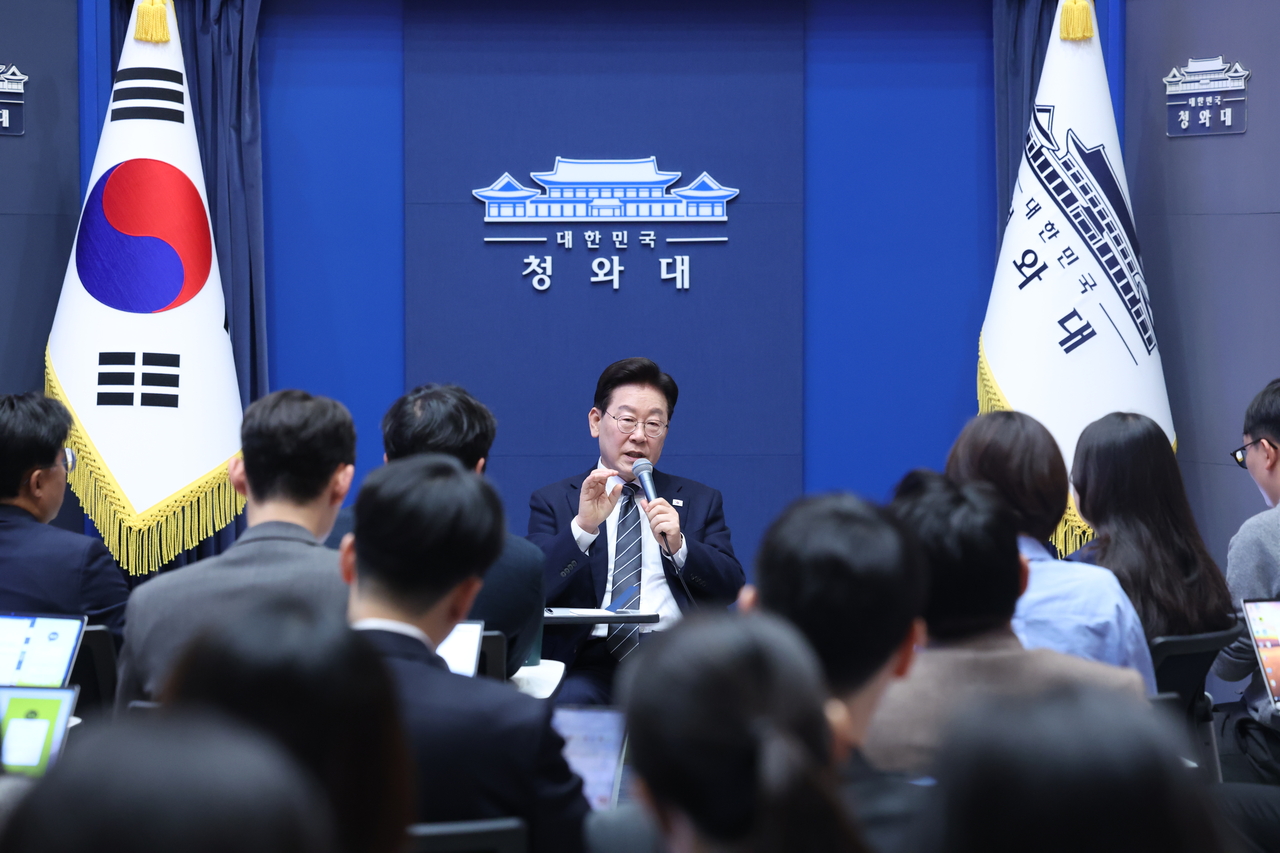
During an unscheduled meeting with reporters at the presidential office on Monday, Lee openly questioned whether his administration had become too confident in pursuing reforms without sufficiently considering those who might feel disadvantaged by them.
“I've grown too distant from what's happening on the ground. I've been reflecting deeply on whether our sincerity is getting through,” Lee said.
“The biggest cause lies with me,” he answered when asked about the greatest obstacle confronting his administration.
Those remarks offered an unusually personal explanation for a change in the president's public engagement strategy.
Rather than treating the communication problem solely as a failure of government publicity, Lee suggested that effective policymaking also required persuading the public, recognizing grievances and maintaining a connection with people affected by government decisions.
Social media has become a central part of that effort.
On Monday, Lee pushed back against suggestions that frequent social media posts were beneath the dignity of the presidency.
“Would there have been a President Lee Jae Myung without social media?” he asked reporters, describing it as “something of a lifeline.”
“In the end, the lifeline that can save you at the last moment is communication with the people,” he added.
Lee has acknowledged some of those limitations, however.
“Twitter is not necessarily a good medium,” he told reporters Monday, referring to X's former name, describing text-based exchanges as emotionally limited and often sharper in tone than intended.
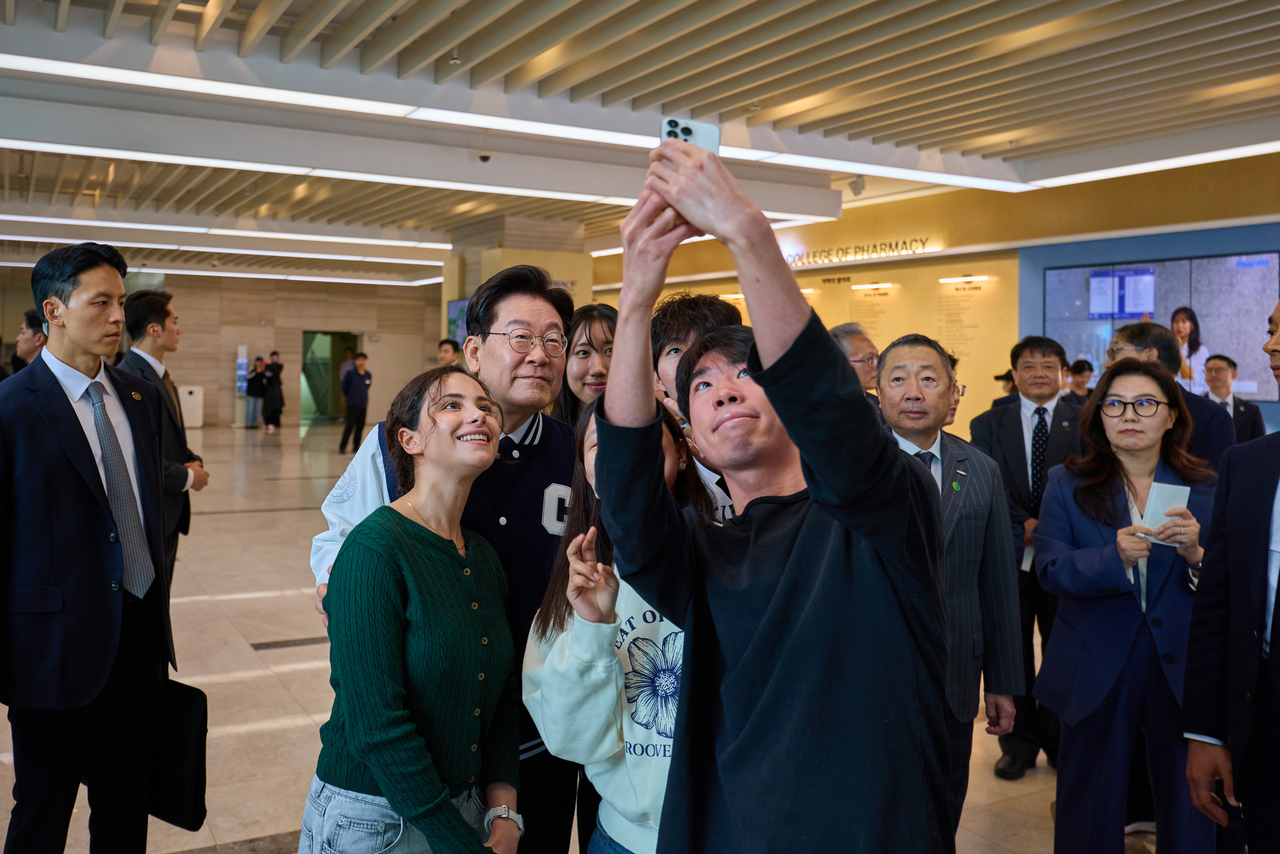
“We are looking at diversifying the ways we communicate,” he said, adding that he wanted more opportunities to meet people face to face.
Lee seeks more in-person meetings
The presidential office is now exploring public discussions organized around specific policy issues rather than geographic regions, according to officials.
The idea is to move beyond the format of previous regional town halls, which officials believe can constrain open debate, and create opportunities for more direct exchanges between the president and the people affected by particular government policies.
Lee has also increased his visits outside the presidential office.
On Tuesday, he visited the Gyeyang new town development site in Incheon, where he met prospective residents ahead of their planned move into the newly built housing complex later this year.
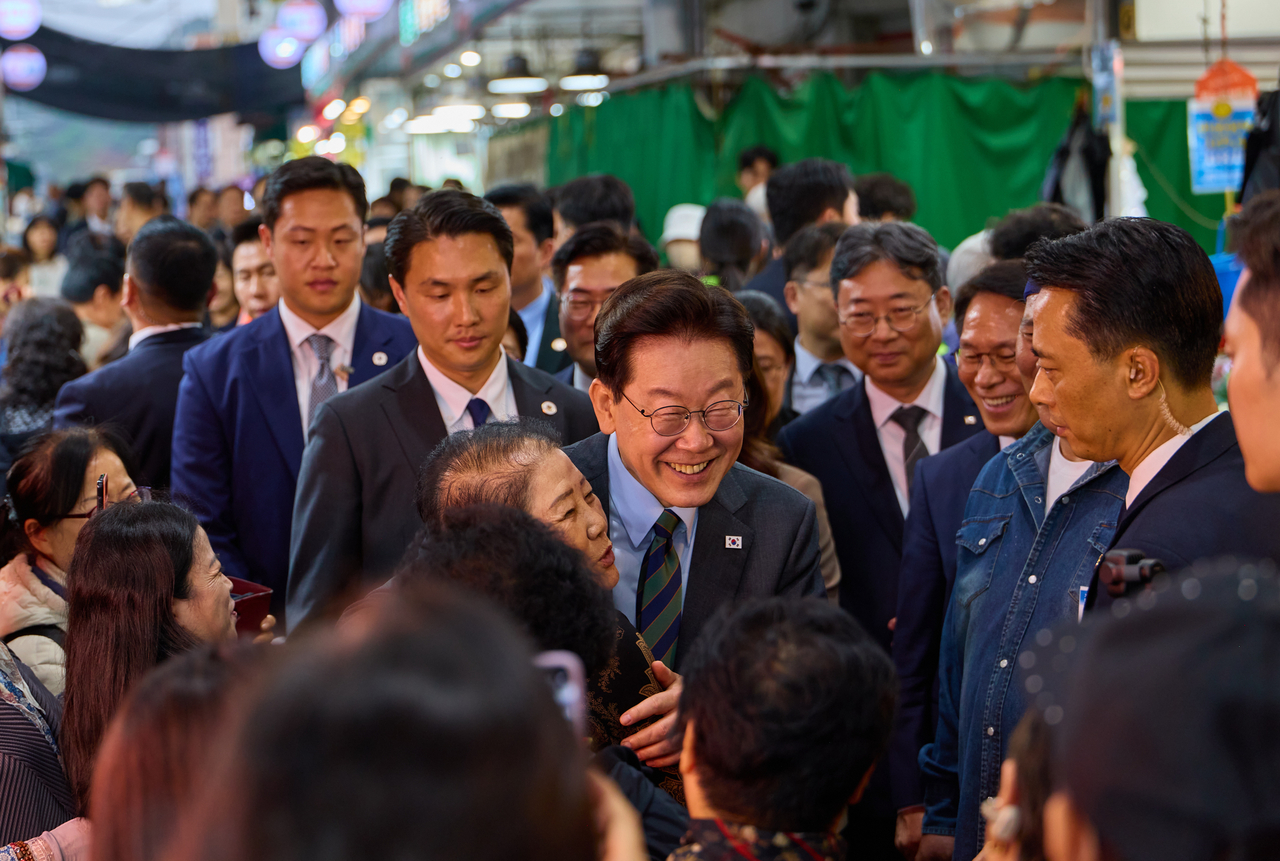
Later in the day, Lee visited a traditional market in Incheon, shaking hands with residents and hearing firsthand concerns from workers and small-business owners about wages, government support and bureaucratic hurdles.
The push for more direct engagement is accompanied by a broader effort to overhaul how the administration communicates its achievements.
During a closed-door cabinet meeting Tuesday, Lee instructed Culture Minister Choi Hwi-young to rethink the government's publicity strategy, according to senior spokesperson Kang Yu-jung.
During the meeting, Lee called for more contemporary and effective ways of reaching the public, and urged ministries to stop presenting lengthy catalogs of achievements and instead focus on a smaller number of meaningful results. Lee further emphasized the importance of explaining government policies in ways that could win public understanding and support.
The instructions suggest that Lee sees the challenge as extending beyond his personal communication style to the way the entire administration presents its work.
Lee has also encouraged presidential aides and ministries to make greater use of social media to communicate government policies and accomplishments.
The renewed emphasis on direct communication appears to have taken shape during Lee’s visit to Mexico in late September, where President Claudia Sheinbaum’s approach to engaging with the public left an impression on him.
Sheinbaum regularly takes the podium at 7:30 a.m. for a nationally broadcast news conference, fielding questions from reporters and addressing government policies.
On the flight back to Seoul, Lee reflected on what he had seen.
“I realized I needed to reflect on myself,” Lee said, according to Seong Ghi-hong, his senior presidential secretary for public communication. “I need to make a greater effort to communicate with the people. I need to engage with them more directly.”
Days later, in a Sept. 30 post on X, Lee pledged to “reach out to the people more closely, empathize with them and communicate through news conferences, debates, field visits, Roosevelt-style fireside chats and live YouTube broadcasts.”
“Ultimately, it is the people who make politics happen,” Lee added.
dagyumji@heraldcorp.com