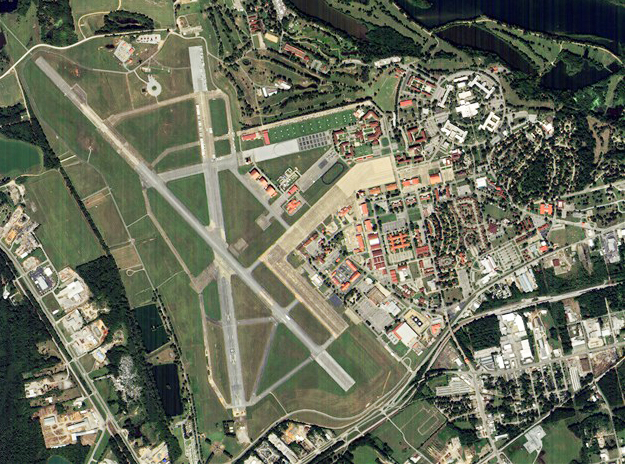
A constellation of five South Korean microsatellites successfully captured and transmitted its first images to a ground station within a day of launch aboard the country's homegrown Nuri space rocket last week, the space agency said Thursday.
The five New-space Earth Observation Satellite Constellation for National Safety (NEONSAT) microsatellites transmitted their first images just 14 hours and 29 minutes after liftoff from the Naro Space Center in the southwestern coastal town of Goheung on Oct. 7, according to the Korea AeroSpace Administration.
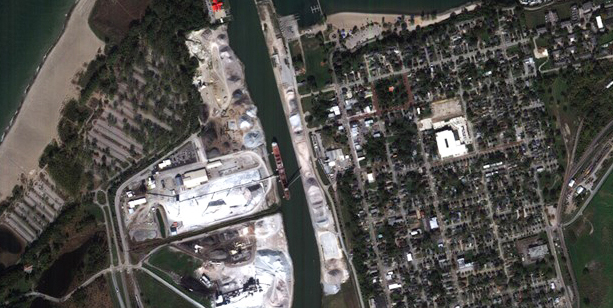
The early acquisition of imagery confirmed the normal operation of the satellites and their optical payloads, marking a milestone in South Korea's efforts to establish its first domestically developed microsatellite constellation.
The satellites are maintaining stable communications with ground stations, with their power generation and attitude control systems operating normally, KASA said.
Following additional payload checks, KASA and the Korea Advanced Institute of Science and Technology will begin initial operations. The five satellites will be gradually positioned at regular intervals to form a constellation.
Once initial operations are completed, control will be transferred to the National Satellite Operation Center on Jeju Island next year. The satellite imagery is to be used for national security and disaster response.
The NEONSAT constellation will eventually comprise 10 satellites. Another five are scheduled for launch aboard the Nuri rocket's sixth flight next year. (Yonhap)