
South Korea will launch a dedicated semiconductor policy office next week to fast-track major chip investments and strengthen industry competitiveness as the US, China and Japan intensify their race for advanced chip production.
The director-general-level office, to be established under the Ministry of Trade, Industry and Resources, will oversee semiconductor policy, coordinate large-scale investments and implement a new industry-support law, following Cabinet approval of the reorganization on Tuesday.
A key priority will be supporting semiconductor production clusters backed by Samsung Electronics and SK hynix, which are expected to invest a combined 800 trillion won ($595.5 billion) in facilities across the Seoul metropolitan area and southwestern Korea.
The new office, tentatively named the Semiconductor Innovation and Growth Support Office, will bring together three divisions covering semiconductor policy, advanced-chip competitiveness and the broader supply chain, including materials, components and equipment suppliers.
It will also coordinate infrastructure development for major chip complexes, addressing bottlenecks involving electricity, water, transportation and environmental approvals that could delay construction and production.
Particular attention will go to a planned semiconductor cluster in southwestern Korea, part of the government's efforts to diversify chip production beyond its traditional manufacturing hubs near Seoul.
The office will oversee implementation of the Special Act on Strengthening and Supporting the Competitiveness of the Semiconductor Industry, including drafting a national competitiveness strategy, operating a high-level policy committee and designating strategic semiconductor clusters.
The legislation provides a framework for investment incentives, infrastructure development, research, workforce training and supply-chain security. Consolidating these responsibilities under a single office is intended to accelerate decision-making and improve coordination between the government and industry.
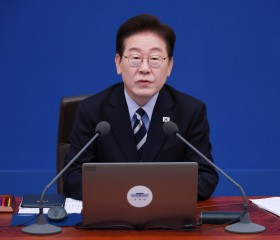
"Semiconductors are an essential supply chain for all industries, including AI, automobiles and home appliances," Industry Minister Kim Jung-kwan said. "The new office will support corporate investment and technological innovation and further strengthen our competitiveness."
Separately, the ministry will establish an India Trade Cooperation Division to deepen economic ties following an April bilateral summit.
The new division will identify investment opportunities, support Korean companies operating in India and coordinate industrial cooperation, including efforts to improve the countries' Comprehensive Economic Partnership Agreement and strengthen energy and resource security.
"We will turn the momentum created by the summit into tangible results for Korean companies," Kim said.
herim@heraldcorp.com