23-year-old rediscovers her attacking style to reach the final, and now wants Olympic gold for her parents
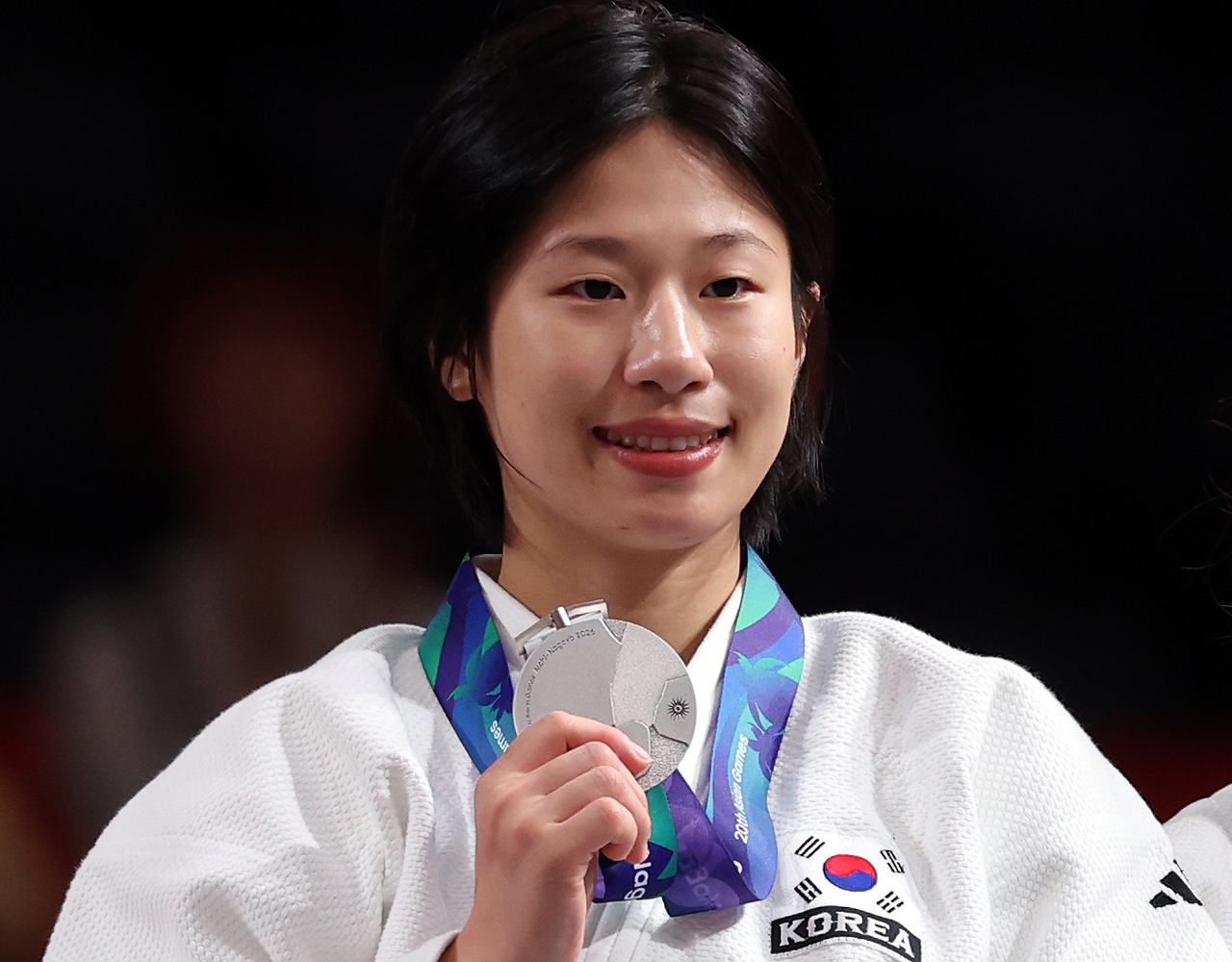
Jang Se-yun wanted people to know her name.
But the 23-year-old judoka arrived at her first Asian Games knowing her better-known teammates would draw most of the attention. She understood why, but being overlooked still hurt.
“I understood why I got less attention. I hadn’t competed at the Olympics, and this was my first Asian Games,” Jang told reporters after winning a silver medal in the women’s -52-kilogram judo event on Wednesday. It was South Korea’s first judo medal of the Asian Games.
“But honestly, it hurt. So I trained as hard as I could. I wanted to win a medal on a stage where people would notice me and want to know more about me.”
And she knows she can do better.
“I wanted to win gold for my parents. I’m disappointed I couldn’t,” Jang said. “At the 2028 Summer Olympics, I’ll make sure I bring home a gold medal for them.” In Wednesday's final, Jang took her Uzbek opponent to extra time but lost after receiving a third penalty.
Her performance through the Asian Games gave them reason to take notice.
She won her opening bout against Kyrgyzstan’s Sabira Kozomberdiyeva in just 16 seconds, throwing her opponent for ippon, which ends the match immediately. She won by ippon again in the quarterfinal against China’s Xu Xiaoyu, with 46 seconds remaining.
The semifinal brought a tougher challenge. She faced Japan’s Kokoro Fujishiro, who had beaten Jang in all three of their previous meetings.
This time, Jang won. Fujishiro received a third penalty 2 minutes and 54 seconds into extra time, sending Jang into the final.
The final brought the opposite result against an opponent she had always beaten.
“I beat Fujishiro, whom I’d never beaten, and lost to Sita, whom I’d never lost to,” Jang said after the match. “That’s judo.”
Jang’s silver may have surprised those who had paid little attention to her before the Asian Games. For her, it came from continuous effort to return to the attacking style that had once served her so well.
At Korea National Sport University, she had thrived by going on the attack. But once she began chasing Olympic qualification, she grew more concerned about her ranking. Afraid of losing, she became more defensive.
Before the Games, she watched footage of her university bouts every night, studying how she moved quickly, took hold of her opponent first and kept looking for chances to throw.
She gradually regained that confidence before the big game and returned to the attacking approach that took her to the final.
Watching from the stands was someone who knew how hard she had worked to get there.
Her mother, Yoo Hee-joon, competed at the 1992 Barcelona Olympics and won gold in the women’s 48-kilogram event at the 1997 Asian Championships. Her father, Jang Chul-jin, helped win the men’s team gold at the 1995 World University Games.
“She couldn’t eat much because she was trying to make weight,” Yoo said. “When she comes back home, I’ll make her plenty of doenjangjjigae (Korean soybean paste stew) and kimchijjim (braised kimchi).”
junheee@heraldcorp.com