Korea leads OECD in higher education attainment among young adults
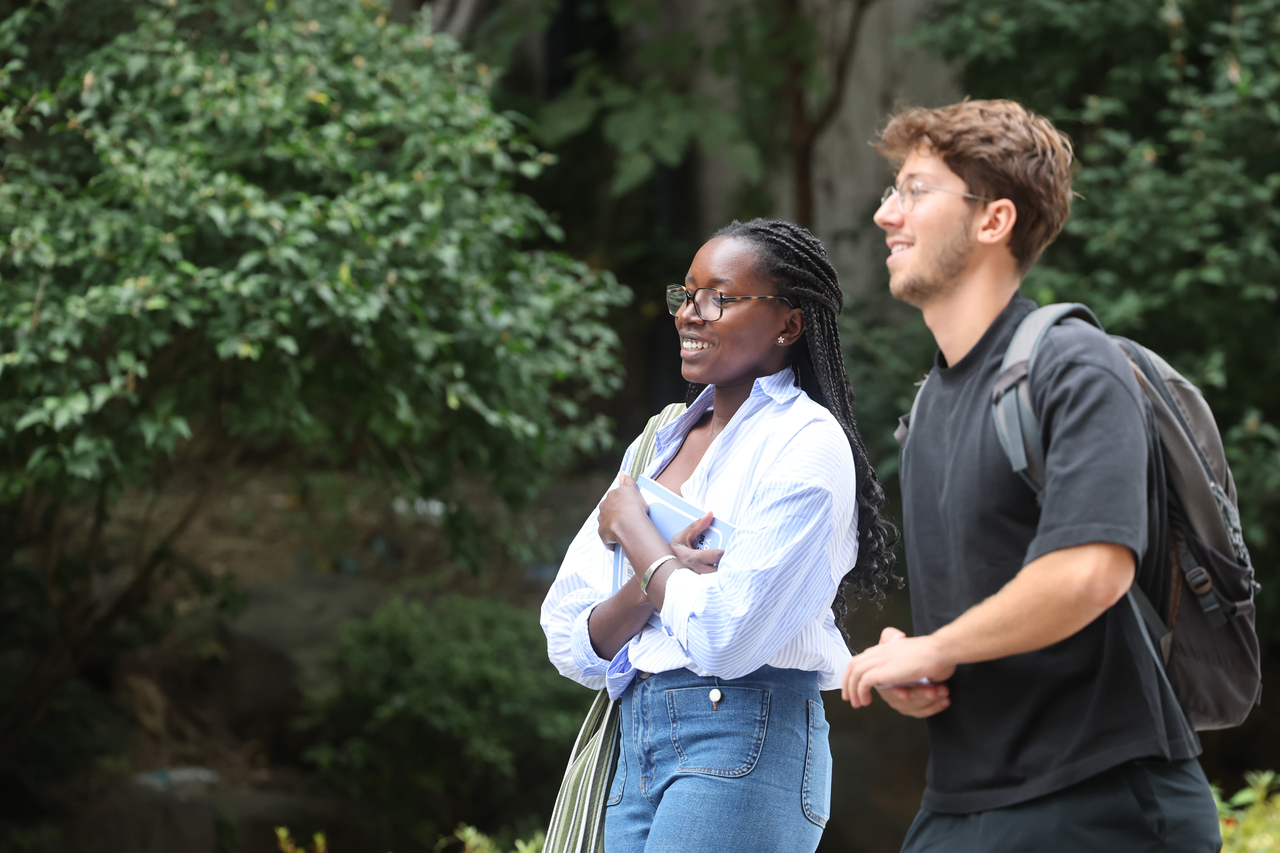
Foreign students are taking up a growing share of spots at Korean universities, but their presence remains less than half the OECD average, new data showed Tuesday.
They accounted for 5.3 percent of Korea’s higher education enrollment in 2024, compared to an average of 12.1 percent among members of the Organization for Economic Cooperation and Development, according to the OECD’s Education at a Glance 2026 report.
Korea’s share has risen sharply from 1.7 percent in 2015. The OECD average also increased over that period, from 8.5 percent.
The comparison comes as Korea has stepped up efforts to attract students from overseas amid a shrinking domestic college-age population. The government has also increasingly positioned international students as a source of skilled workers and regional talent.
The figures exclude foreign students enrolled in short-term programs such as language courses and exchange programs.
There is also a difference in how countries classify students. Korea is among eight countries that use nationality, while 30 OECD countries, including the United Kingdom and France, define international students by whether they moved abroad to study.
The report also showed that Korea continued to lead OECD countries in higher education attainment among young adults. Some 71.1 percent of Koreans aged 25 to 34 had completed higher education in 2025, compared with the OECD average of 47.5 percent.
Korea spent more on education as a share of its economy than the OECD average. Public and private spending from elementary school through higher education amounted to 4.9 percent of gross domestic product in 2023, compared to the OECD average of 4.7 percent.
Spending per higher education student rose 12.1 percent from a year earlier to $16,479 in 2023 on a purchasing power parity basis, though it remained below the OECD average of $22,878.
Classroom conditions presented a mixed picture. Korea had more students per teacher than the OECD average in elementary and middle schools, as average class sizes at both levels were also larger.
seungku99@heraldcorp.com
![[Exclusive] S. Korean Embassy to US woos Trump allies to expedite skilled visa talks](https://wimg.heraldcorp.com/news/cms/2026/09/29/rcv.YNA.20260924.PGT20260924167001009_R.jpg?type=h&h=120)
![[Exclusive] Enhypen to return with new album in November, agency confirms](https://wimg.heraldcorp.com/news/cms/2026/09/29/news-p.v1.20260929.41760e88b0f048fcb5fa3e0dd9b75524_R.jpg?type=h&h=120)