
Set designer Saul Kim’s 'glass house' takes on a new dimension in New York
Korea Herald correspondent
NEW YORK — Since its 2024 premiere, “The Cherry Orchard” has traveled across Asia and Australia, but New York offers something the production has not yet encountered: a theater without a fixed stage.
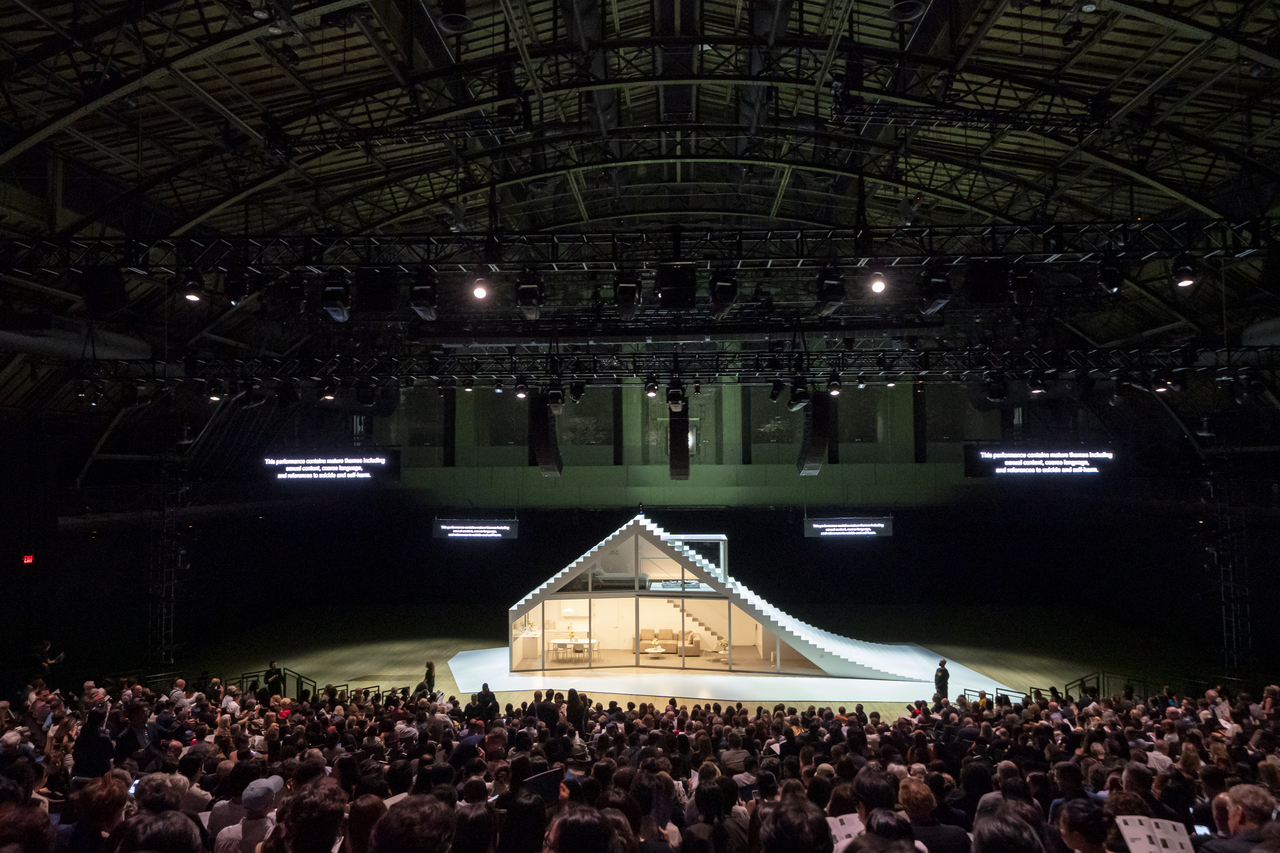
At Park Avenue Armory, the glass house at the center of the production remains much as it was in previous performances. But with the white walls and floor removed, the historic architecture of the Wade Thompson Drill Hall is now part of the view.
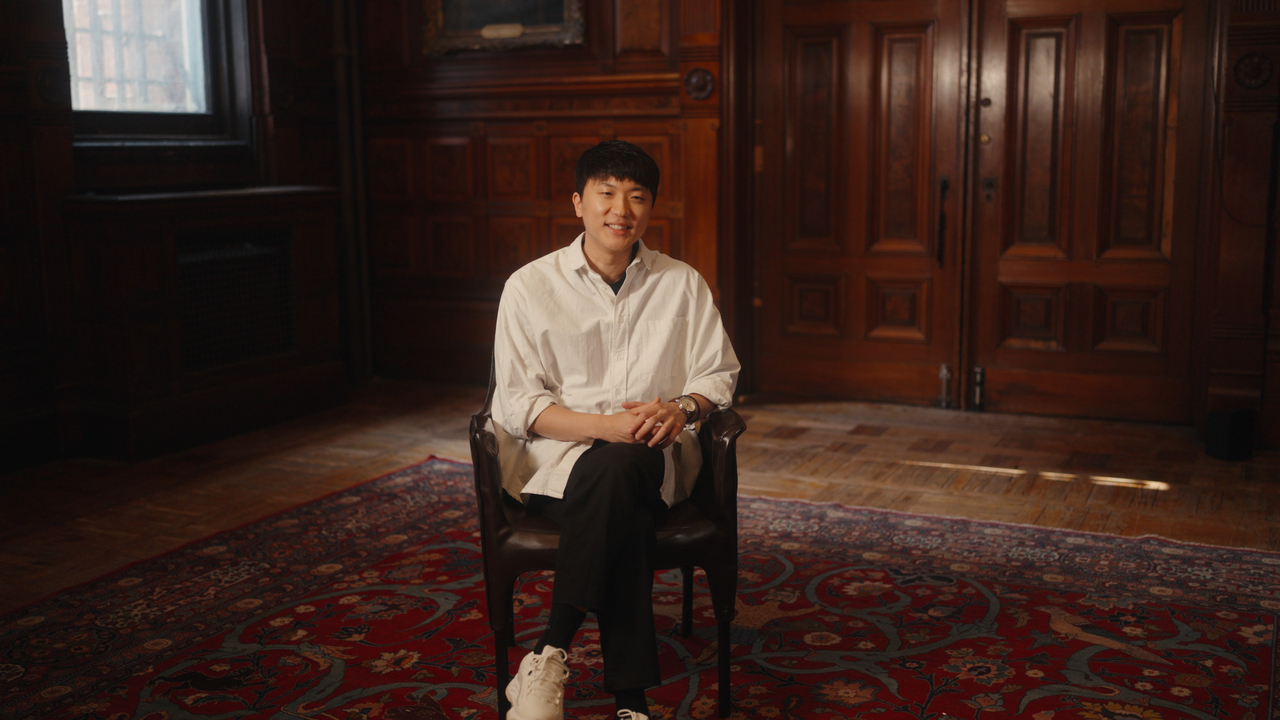
“This stage has a different kind of appeal. It’s almost formed like an island,” set designer Saul Kim said during a group interview with Korean reporters ahead of the play's North American opening.
“The Cherry Orchard,” Starring Jeon Do-yeon and Park Hae-soo, premiered at LG Arts Center in 2024 before traveling to Busan, Hong Kong, Singapore and Adelaide. But New York was the first city that gave Kim the opportunity to work with the space itself.
Reminiscent of the original Grand Central Depot and the great train stations of Europe, the Wade Thompson Drill Hall was built in the 19th century as a military drill hall. Its 16,500 square meters of open, column-free space make it one of the city's largest unobstructed theater spaces.
For the New York production, a black curtain hangs at the back, while sections of the Armory remain visible, creating a contrast between the modern glass house and the old industrial space around it.
“Simon (Stone) wanted to expose as much of the historic theater space as possible,” Kim said. “If the house used to sit on the stage, now the house sits on a small base. The Korean stage felt like a photograph taken inside a light box. This one feels like a stage happening under a spotlight."
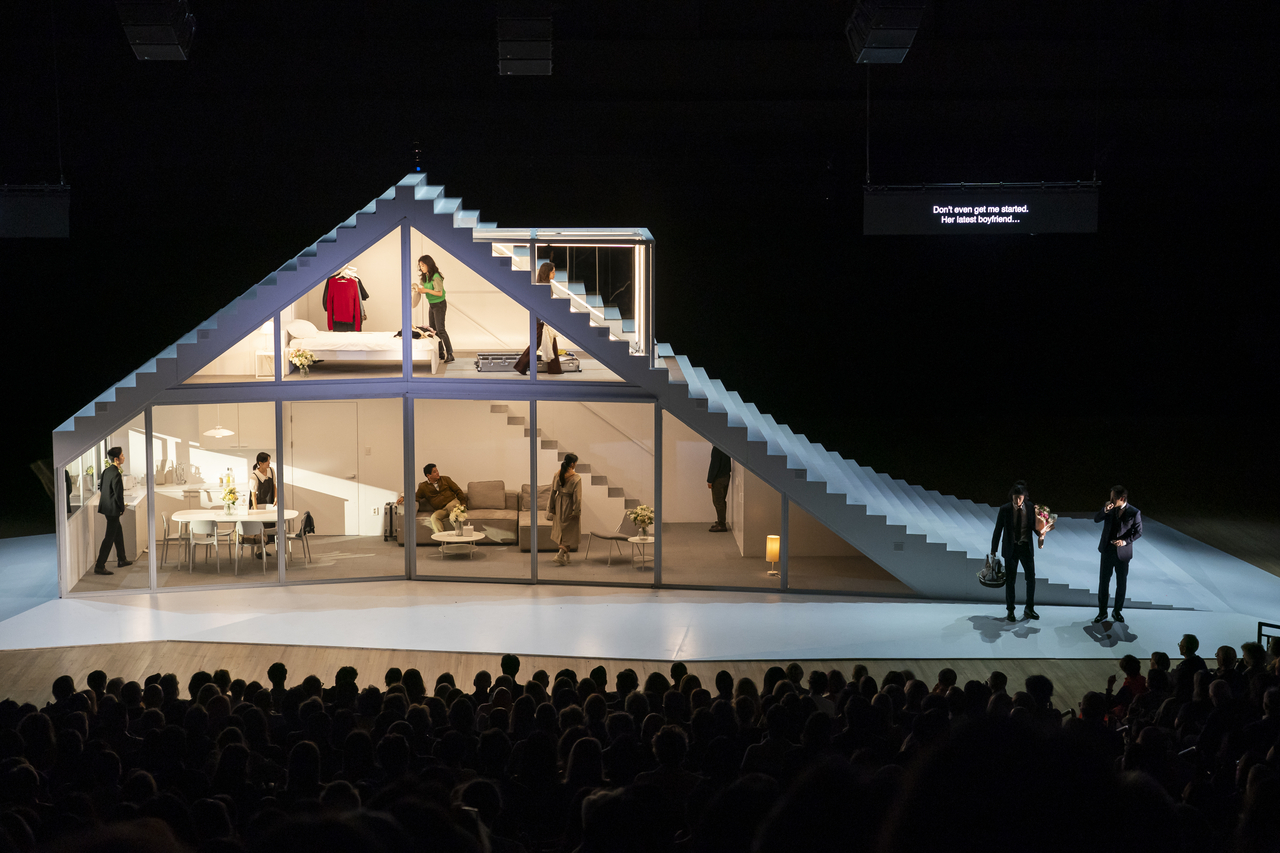
The distinctive set, with its roof doubling as a staircase, has drawn attention since the Seoul premiere. The asymmetrical, transparent glass house, topped by a white triangular roof, was designed to hold two opposing ideas at once: shelter and instability.
On one side, the roof meets the ground, creating a sense of refuge. On the other, the ground falls away, turning the edge of the roof into a cliff.
“The house has this feeling of being a refuge, but on the left side, the roof breaks off and becomes a cliff."
Kim now works across architecture, stage design, furniture and exhibition design, but he began his career as an architectural designer. Stone first contacted him after seeing his work on Instagram, where Kim has more than 180,000 followers and regularly shares images of his designs. He is currently working on a house in Bali and an observation tower in Goes, a small town in the Netherlands.
“I’m grateful to Simon for seeing those images and believing that they could become a stage,” Kim said.
Theater also offered Kim a world with far fewer rules. In architecture, safety regulations dictate everything from the size of evacuation doors to the dimensions of stairs. Onstage, a roof can have no railing and stairs can vary in height, as long as the actors know how to use them.
“It allowed me to design very freely,” Kim said. “As an architect, if I see a house like this, the first things I think about are, ‘Where are the drainage pipes?’ and ‘Where does the water go?’ Waterproofing and insulation are very important in architecture. I liked the freedom of the stage because you don’t have those limitations.”
There is another fundamental difference between architecture and stage design: one is built to last, while the other is meant to disappear. After the New York run, the glass house will be dismantled. But Kim said he does not feel particularly sentimental about the stage disappearing.
“The drawings and ideas are eternal,” he said. “As long as they are documented, I don’t feel too sad about it.”
In some ways, he added, the temporary nature of theater can offer something architecture cannot.
“Architecture is often privately owned, so you don’t necessarily get to see how people actually use it,” he said. “With a stage, the actors can use it creatively and play with it. In that sense, you get to watch something much more interesting — and it’s very rewarding.”
hwangdh@heraldcorp.com