
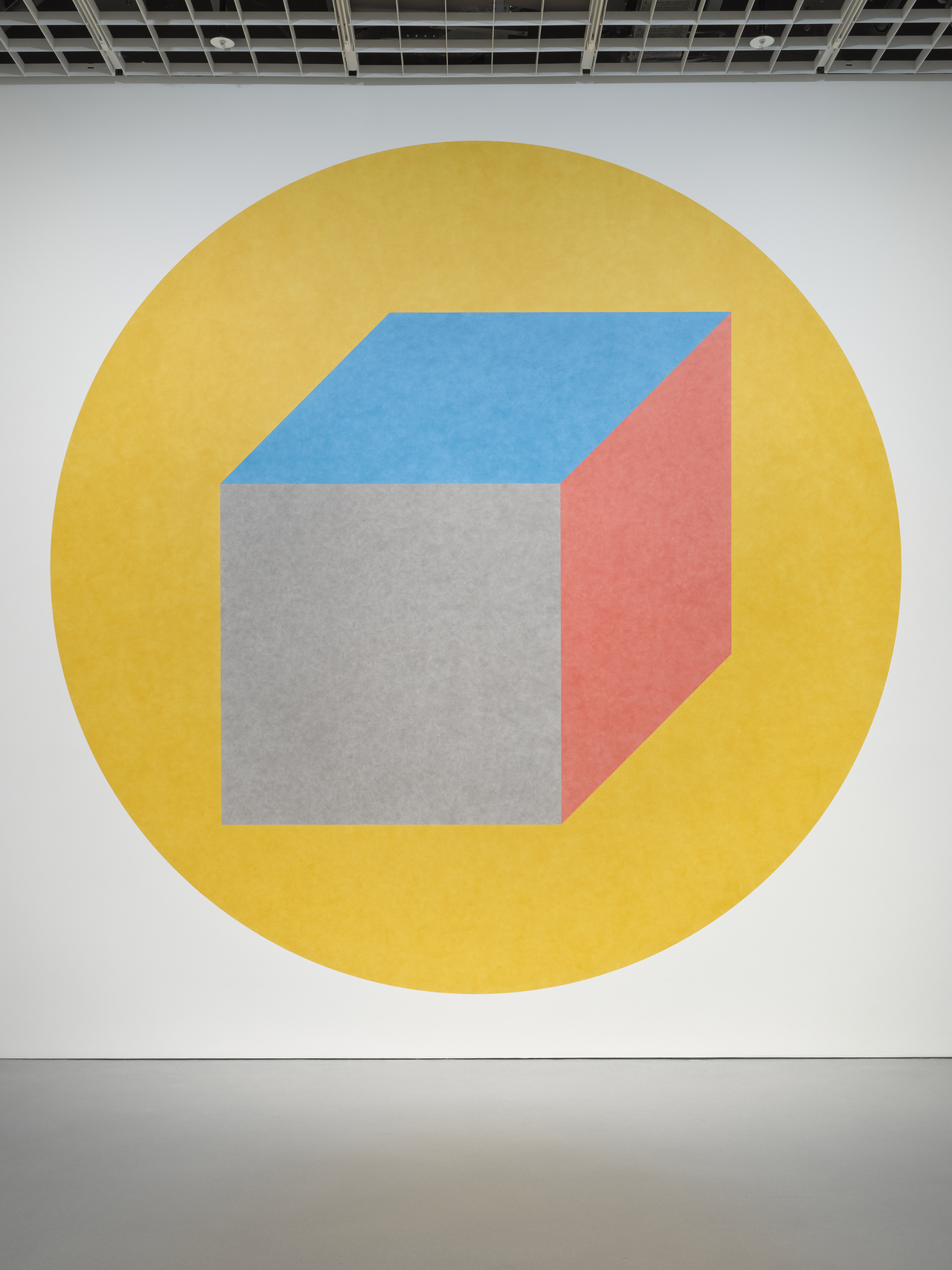
Amorepacific Museum is presenting Sol LeWitt, a pioneer of conceptual art, bringing together a range of his works, including structures, paintings, prints and archival materials, as well as wall paintings that continue to be recreated according to instructions left by the artist.
"Sol LeWitt: Open Structure" covers the American artist's practice over nearly five decades, from his early open cube structures to the later works featuring more varied colors and forms.
Organized in collaboration with The LeWitt Estate, the Seoul exhibition is based on a traveling exhibition that originated at the Museum of Contemporary Art Tokyo, with an expanded selection of works and archives by the Amorepacific Museum.
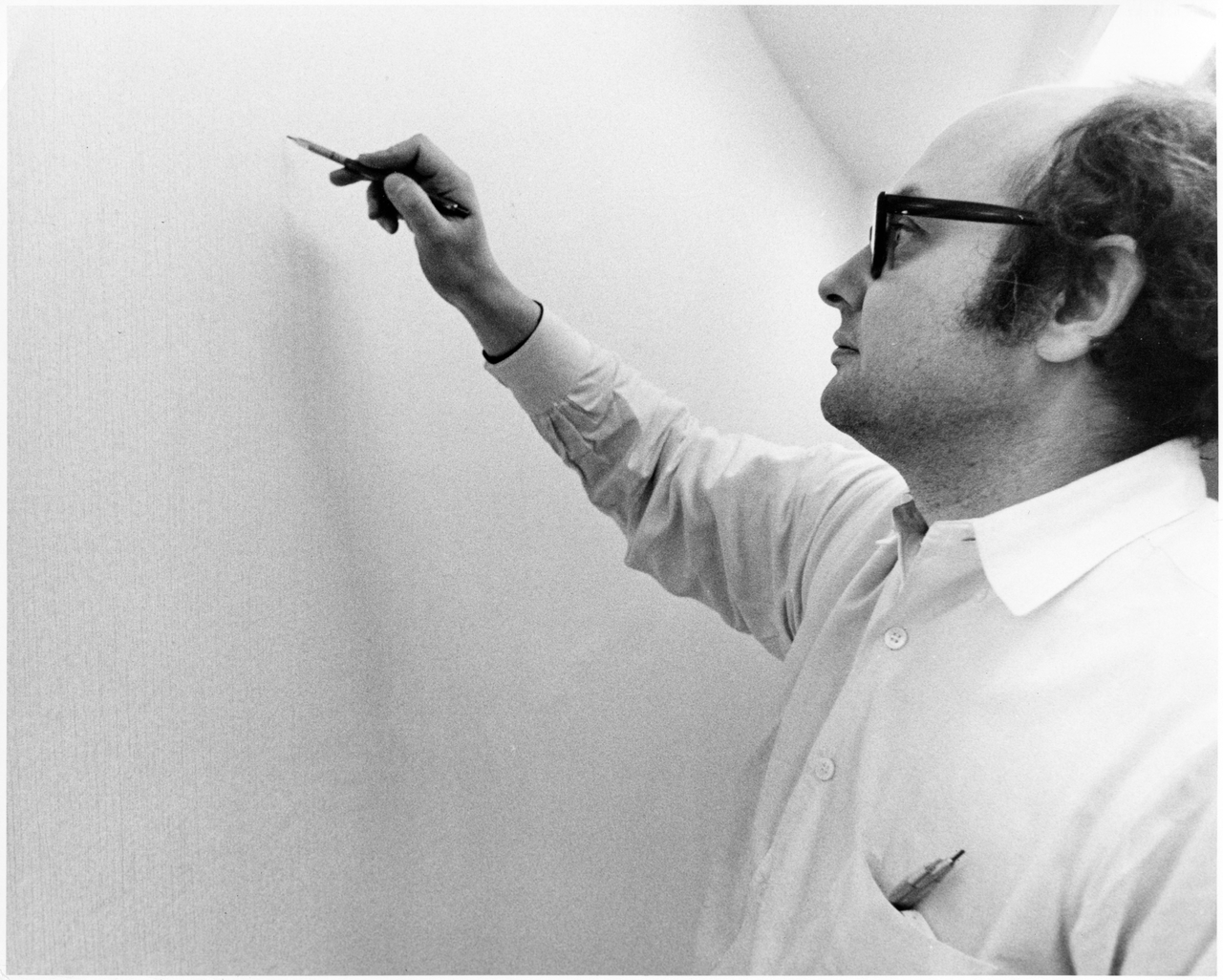
LeWitt, born in 1928 in Hartfold, Connecticut, studied art at Syracuse University before serving in the US Army in the Korean War, where he designed recruitment and propaganda posters.
Inspired by war, civil movements, mass production and consumerism in 1950s New York, LeWitt explored the separation between an artist's ideas and their physical execution.
In his practice, which he labeled as "conceptual art," lines, geometric forms, colors and spatial relationships develop according to predetermined rules rather than subjective composition. The rules allow the same concept to produce different physical results depending on the space and the "participants" who carry out the instructions.
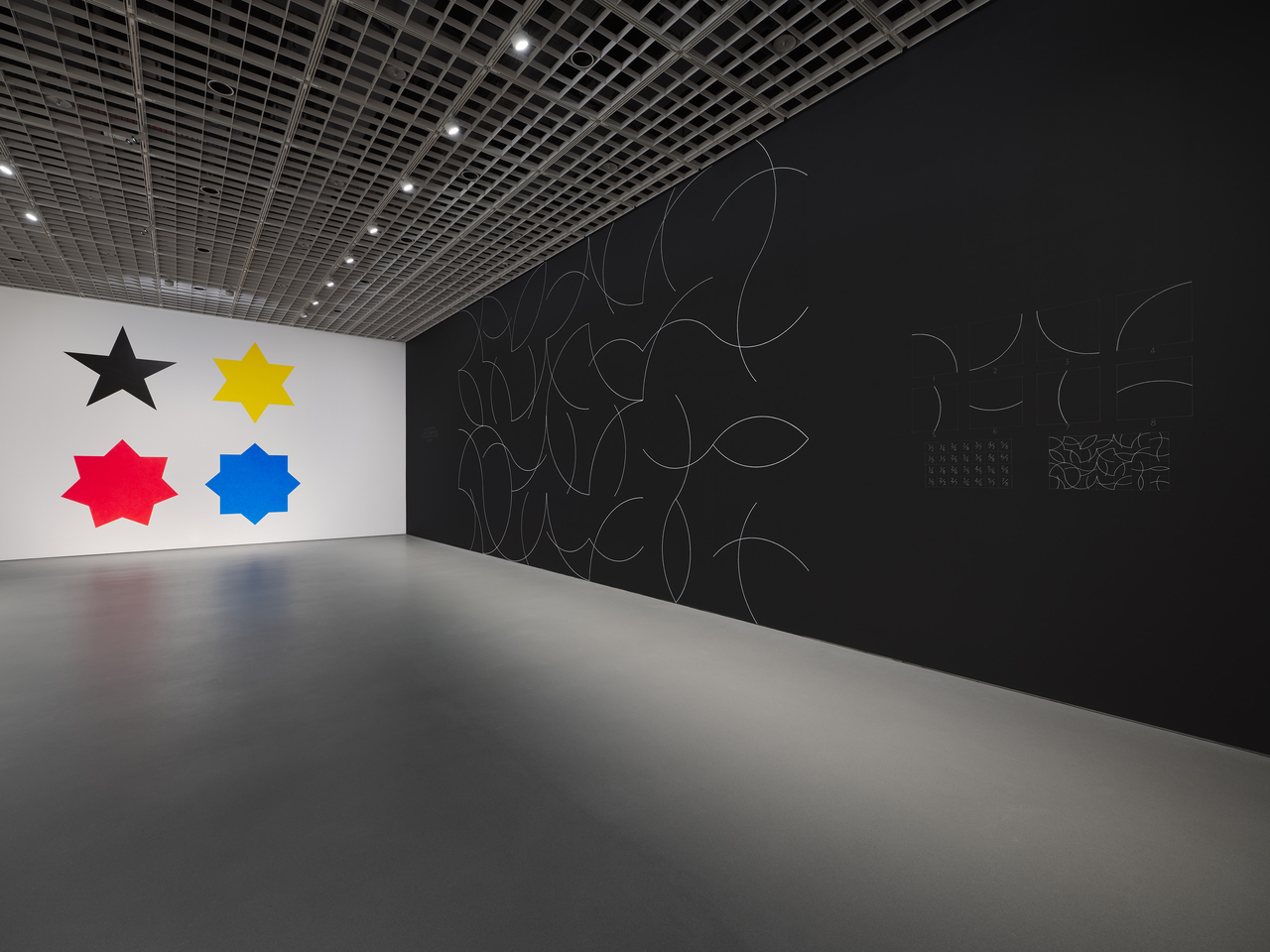
The Wall drawings are the centerpieces of his works rooted in such conceptual artistry.
For the Seoul exhibition, 23 art students from Korean universities and graduate schools took part in producing the wall drawings through the museum's APMA Makers program, working with seven participants from The LeWitt Estate.
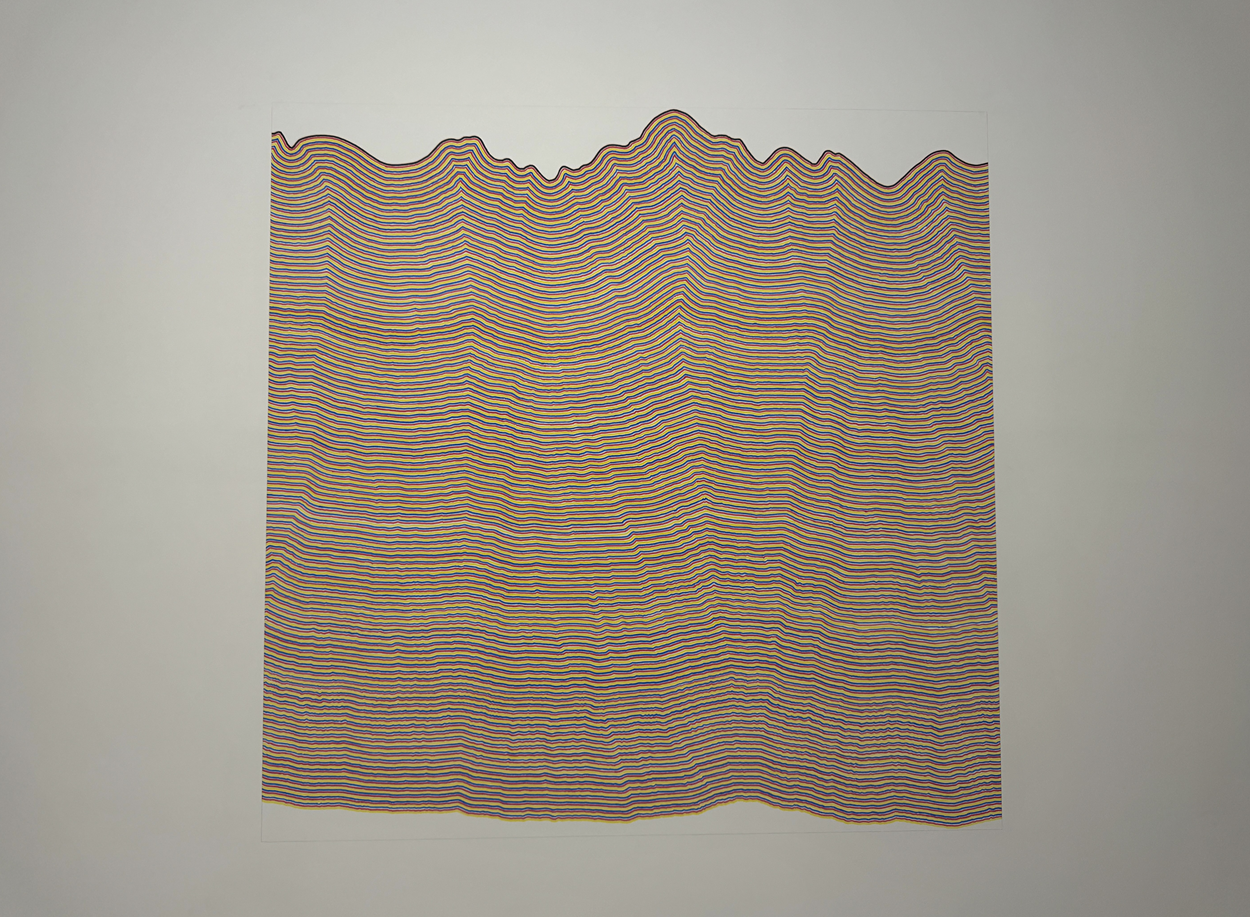
In "Wall Drawing #869A," all 30 participants contributed. One participant began by drawing a nonstraight line in black, followed by others who traced it as closely as possible in red, yellow and blue.
LeWitt's instruction to draw a nonstraight line leaves room for variation. Each participant's drawing a line changes the work as it develops, turning the work from a command into a collaborative structure.
The wall paintings are destroyed after an exhibition, but the works are not considered lost. The instructions define the work and are recreated in another space and under different conditions.
"The idea becomes a machine that makes the art. This kind of art is not theoretical or illustrative of theories. ... It is usually free from the dependence on the skill of the artist as a craftsman," LeWitt wrote in a 1967 essay.
The exhibition runs through Feb. 28 at the Amorepacific Museum in Yongsan-gu, Seoul.
mjcha@heraldcorp.com

![[Room Tone] Monopoly’s less famous cousin](https://wimg.heraldcorp.com/news/cms/2026/09/15/news-p.v1.20260427.66c40f4b14054f6a8c036bfc20e046c9_R.jpg?type=h&h=120)