Markets, like people, eventually become what they repeatedly reward. Thirty years after its launch, South Korea’s tech-heavy Kosdaq has become a market that rewards survival more readily than success.
시장은 사람과 마찬가지로 반복적으로 보상하는 모습을 닮아가게 된다. 한국의 기술주 중심 증시인 코스닥은 개장 30년이 지난 지금 성공보다는 생존을 더 우대하는 시장이 되었다.
That is an awkward legacy for an exchange created to finance the country’s next generation of innovators. As the Kosdaq marks its 30th anniversary on Wednesday, celebration gives way to an uncomfortable question: Why has the country's growth market stopped growing?
차세대 혁신 기업들에 투자를 유도하고자 만들어진 증시에 있어서는 난처한 유산이다. 코스닥이 수요일 출범 30주년을 맞는다. 그러나 축하보다는 한국의 성장 시장은 왜 성장을 멈추었는가라는 불편한 의문이 앞선다.
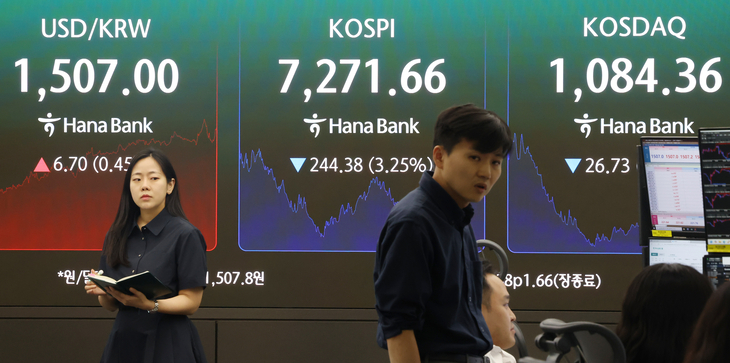
Few figures better capture the market's imbalance than this. Through June 29, the Kospi had surged 94.79 percent this year, climbing from 4,309.63 to 8,394.65 after reaching a record high above 9,100 earlier in June. The Kosdaq, by comparison, slipped 2.64 percent, falling from 945.57 to 920.57.
코스닥의 불균형을 가장 잘 보여주는 수치 중 하나는 이것이다. 6월 29일 기준 코스피는 올해 들어 94.79퍼센트 폭등했다. 4,309.63에서 8,394.65까지 오르며 6월 초반 역대 최고치인 9,100을 기록하기도 했다. 반면 코스닥 지수는 945.57에서 920.57으로 2.64퍼센트 하락했다.
This divergence reflects more than a semiconductor boom. It suggests that Korea’s flagship growth market is no longer allocating capital where future growth is most likely to emerge.
이러한 격차는 단순한 반도체 호조 그 이상을 반영한다. 한국의 대표적인 성장 시장이 가장 미래의 성장이 대두될 가능성이 높은 곳에 더이상 자본을 배분하고 있지 않음을 시사한다.
Much of the Kospi’s remarkable ascent has been driven by the extraordinary earnings boom of Samsung Electronics and SK hynix. Investors simply followed profits into semiconductor stocks. Projected net profits now differ by roughly 73 times between the two markets.
코스피의 놀라운 상승세 중 상당 부분은 삼성전자와 SK하이닉스의 이례적인 실적 호조에 기인한다. 투자자들은 단순히 이윤을 좇아 반도체주에 발을 들였다. 두 주식 시장 간의 예상 순이익은 이제 약 73배 차이를 보인다.
The concentration also carries risks. The 26 sidecar activations recorded on the Kospi this year reflect a growing level of volatility. The Bank for International Settlements has warned that concentrated AI investment could amplify future financial instability and trigger a prolonged investment slowdown if expectations fail to match reality.
이러한 쏠림 현상에는 위험이 따른다. 올해 코스피에서는 26차례 사이드카가 발동되어 점차 커지는 변동성 수준을 보여준다. 국제결제은행은 현실이 기대 수준을 충족시키지 못한다면 AI에 집중된 투자가 향후 자본 불안정성을 높이고 장기적인 투자 둔화를 촉발할 수 있다고 경고했다.
The Kosdaq’s weakness, however, cannot simply be blamed on semiconductor enthusiasm. The deeper problem is investor trust. Weak companies remain listed while stronger ones increasingly migrate to the Kospi. Instead of becoming a destination for long-term capital, the Kosdaq has acquired a reputation as a market where money becomes trapped.
그러나 코스닥의 약점을 반도체 투기 열풍 탓으로만 돌릴 수는 없다. 더욱 근본적인 문제는 투자자 신뢰다. 부실 기업들은 상장을 유지하는 반면, 우량 기업들은 점점 더 코스피로 이전한다. 장기 자본이 모이는 곳이 되는 대신 코스닥은 돈이 묶이는 시장이라는 평판을 얻게 되었다.
The growing presence of zombie companies lies at the heart of that problem. Nearly one-third of Kosdaq-listed companies cannot generate enough operating profit to cover interest expenses, almost double the share on the Kospi.
늘어나는 좀비 기업들의 존재가 문제의 핵심이다. 코스닥 상장 기업의 3분의 1에 가까운 회사들이 이자 비용을 감당할 만큼의 영업이익을 내지 못하고 있다. 코스피의 약 2배에 달하는 수준이다.
Research by the Bank of Korea suggests this is more than an accounting concern. A 1-percentage-point increase in the share of zombie firms reduces investment and employment growth at healthy companies by 0.14 to 0.18 percentage points over the following two to three years, because scarce capital remains tied to businesses with little prospect of recovery. A market designed to finance innovation instead preserves stagnation.
한국은행의 조사에 따르면 이는 회계상의 우려에 그치지 않는다. 좀비 기업의 비중이 1퍼센트포인트 증가하면, 향후 2-3년에 걸쳐 우량 기업의 투자 및 고용 성장률이 0.14-0.18퍼센트포인트 감소한다. 회복 가능성이 적은 사업들에 부족한 자본이 묶여있기 때문이다. 혁신에 자본을 공급하기 위해 만들어진 시장이 외려 침체를 고정화시키는 것이다.
The government’s latest reform plan includes stricter delisting standards for penny stocks and a new promotion and relegation system dividing the Kosdaq into premium, standard and regulatory segments.
정부의 최신 개혁안은 동전주 대상의 좀더 엄격한 상장 폐지 기준 그리고 코스닥을 우량, 일반, 관리군으로 구분하는 새로운 승강제를 포함하고 있다.
They are necessary but insufficient to restore investor confidence or revive the market's original purpose.
필요한 조치이기는 하나 투자자 신뢰를 회복하거나 시장의 본래 목적을 되살리기에는 역부족이다.
Venture investors rightly caution that innovative startups often look financially weak during their early years. A regulatory framework that relies too heavily on backward-looking financial metrics could discourage precisely the kind of high-risk entrepreneurship the Kosdaq was created to foster.
벤처 투자자들은 혁신 스타트업들이 초기에는 재정적으로 부실해보이는 경우가 종종 있다는 타당한 우려를 제기한다. 후행 지표에 지나치게 의존하는 규제 체계는 코스닥이 본래 육성하기 위해 만들어진 고위험 창업정신 자체를 위축시킬 수 있다.
The goal is not to maintain a tidier exchange populated only by mature companies, but to nurture a trusted market where promising firms can raise capital while persistently uncompetitive ones leave without delay.
목표는 성숙 기업들만 존재하는 좀더 정돈된 증권거래소를 유지하는 것이 아니다. 지속적으로 경쟁력을 갖추지 못한 회사들은 지체없이 떠나는 한편 유망한 회사들은 자본을 조달할 수 있는 신뢰받는 시장을 육성하는 것이다.
Regional competitors offer useful lessons. China’s ChiNext and STAR markets have combined registration-based listings, greater governance flexibility and firm enforcement against fraud to build more dynamic financing ecosystems for innovative companies. Korea should learn from its experience and recognize that efficient entry matters little without equally efficient exit.
지역 내 경쟁자들이 유용한 가르침을 준다. 중국의 차이넥스트, 스타 시장은 혁신 기업들을 위한 좀더 역동적인 자본 생태계를 구축하고자 등록제 기반 상장, 좀더 유연한 거버넌스, 부정행위에 대한 엄벌을 결합해왔다.
Thirty years is long enough for any market to reveal its character. The Kosdaq has spent too much of that time preserving inefficient firms instead of reallocating capital to more dynamic ones.
30년은 한 시장의 특성을 드러내기에 충분히 긴 시간이다. 코스닥은 자본을 좀더 역동적인 기업들에 재배분하는 것이 아니라 부실 기업을 지키는데 지나치게 많은 시간을 허비했다.
No reshuffling of market tiers can change that. Only a system that allows capital to leave failing firms as readily as it enters promising ones will give Korea the innovative marketplace it set out to build in 1996.
어떠한 시장 구조 개편도 이를 바꿀 수는 없다. 유망 기업으로 자금이 유입되는 것만큼 부실 기업으로부터 자금 회수도 원활히 이루어지는 시스템만이 한국이 1996년에 만들고자 했던 혁신 시장을 구축하게 해줄 것이다.
purgatory 지옥
divergence 갈림, 차이
stagnation 침체
penny stock 투기적 저가주, 동전주
promotion and relegation system 승강제
khnews@heraldcorp.com