
Tax policies on savings accounts have become a point of contention after a government proposal to reexamine their tax status came under fire.
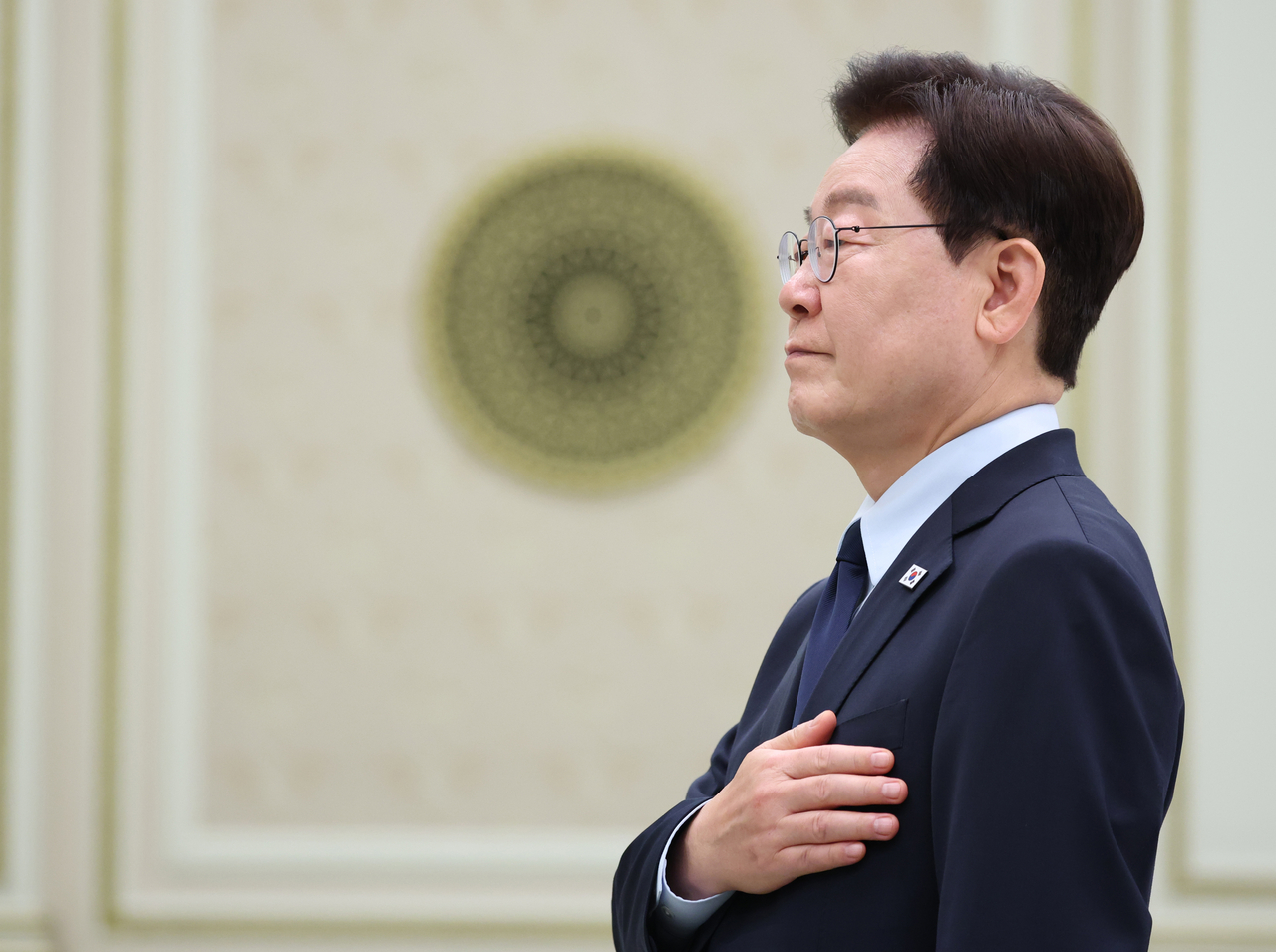
President Lee Jae Myung called Friday for review of the plans to individual savings accounts (ISAs) after they were criticized for defeating the purpose of the accounts.
ISAs were brought in to encourage long-term investment in stocks, bonds and equities by easing tax burdens for those who invest in them for at least three years.
The ruling Democratic Party of Korea also hinted at the change during a press conference Sunday.
"We've been discussing ways to leave the (existing) ISAs untouched," said Rep. Han Jeoung-ae, policy chief of the ruling Democratic Party of Korea.
Her remarks came days after Lee reportedly ordered budget authorities in a closed-door meeting to review the proposed change from scratch, reprimanding his senior aides for failing to prepare properly.
Introduced in South Korea in 2016, the ISA program had drawn over 8 million account holders as of February, according to the Korea Financial Investment Association.
At present, subscribers can hold up to 100 million won ($70,800) in an ISA, with up to 20 million won a year deposits qualifying for tax benefits.
The accounts give a tax exemption on up to 2 million won a year in dividend and interest income — or 4 million won under extraordinary circumstances for lower-income groups. Capital gains and transaction taxes are unaffected.
For gains beyond that amount, a tax rate of 9.9 percent is applied, but this is lower than the 15.4 percent rate applied to other holdings, and is not payable until the account is closed.
There is no limit on how long ISAs can be held for, but the recent proposal suggested a maximum of five years, starting next year. This means that ISA holders would have to close their accounts after five years, pay due taxes, after which they could open a new account.
Moreover, the 20 million won a year limit can be averaged out, so that an investor who deposited 10 million won one year could deposit 30 million won the next year and still gain exemptions on the entire amount. The proposed revision suggested an end to this, with no tax benefits on any deposits above 20 million won in a single year.
The new proposal also signaled the launch of a new type of ISA: No tax would be imposed on income from dividends and interest and the investment limit would be set at 200 million won.
But the new ISA, tentatively named "ISA for productive finance," would come with a 10-year time limit, and be restricted to investments in Korean equities and funds.
Han of the Democratic Party said the launch of the new type of ISA could be a matter of choice for the authorities.
The proposal had faced criticism from both sides of the aisle.
Rep. Ahn Cheol-soo of the main opposition People Power Party has said the proposed change "ruthlessly slaughtered" ISAs in South Korea, adding it deprived the younger generation of an opportunity to pursue lifetime investment and savings, and disrupted the retirement plans of those in their 40s and 50s.
The ruling party's Rep. Lee Un-ju said in a Facebook post Thursday that depriving ISA holders of tax benefits "should not be pushed through," adding it would otherwise lose the public's trust in parties concerned in the capital market here.
The liberal lawmaker said Saturday that she welcomed the Lee Jae Myung administration's decision to review the proposal from scratch, adding the promise to the long-term investors must be kept.
Changes concerning ISA holders were just some of the revisions brought under the spotlight.
President Lee also reportedly ordered a review of a proposal to stop the controlling shareholders of a listed company from deliberately suppressing share prices in order to avoid inheritance and gift taxes, saying the proposal "defeats the original purpose."
Democratic Party Reps. Lee Hoon-ki and Lee So-young welcomed Lee's decision to review the policy, which they described as providing guidance for tax dodgers.
Rep. Park Sung-hoon of the People Power Party on Saturday blasted the ruling bloc for failing to check their own policies and making changes only once the public criticized their announcements.
“Without public backlash, these sloppy policies would have been pushed through,” Park noted.
consnow@heraldcorp.com