Ahead of KNSO debut, Spanish conductor reflects on World Cup celebrations, Manuel de Falla, why Korean audiences keep drawing him back

Ask Antonio Mendez to explain his country's passion for soccer and music, and he laughs at how hard the question is.
"It's difficult to talk about things that are so within you," he told reporters ahead of the Korean National Symphony Orchestra's concert on Friday at the Seoul Arts Center. "For us, it's so natural."
That passion, he suggested, shows up in a soccer match as much as in a piece of music.
When Spain won the World Cup, he wasn't even in the country. He watched Spanish television anyway, just to feel the mood from home. What he loved about the win was that "everyone was together, everyone was united toward the same thing," he said. It's the same passion, he suggested, that Spaniards bring to the things they love.
That instinct for bringing people together, it turns out, is also what drew him to conducting. Born in 1984, Mendez did not grow up in a musical family. As a kid, all he wanted to do was play soccer — until he got a keyboard for Christmas, moved to piano, and later took up violin simply because his piano teacher also happened to teach violin.
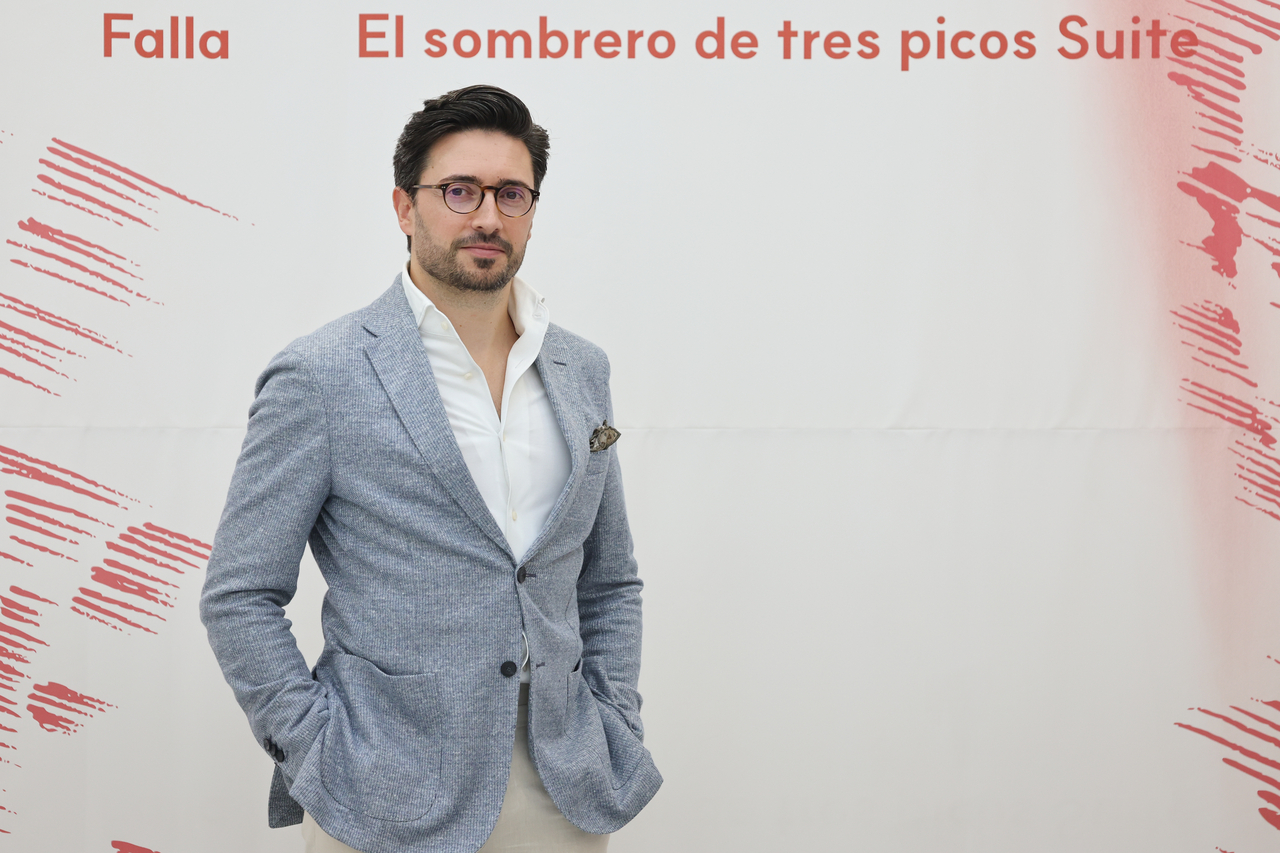
The turning point came at 16, watching Simon Rattle conduct Mahler's Second Symphony on television. He had already spent years enjoying the sound of the orchestra from inside it as a violinist, but that broadcast made him want something more: not just to play within the sound, but to shape it.
"This is what I really want to do," he remembered thinking — to stand in front of 80 or 100 musicians and lead them, rehearsal after rehearsal, toward one shared vision.
That drive paid off. In 2012, Mendez won the Malko Competition in Copenhagen, one of the most prestigious prizes in conducting, and the following year was named a finalist for the Salzburg Festival's Karajan Young Conductors Award. He has since led the Tonhalle Orchestra Zurich, the Bavarian Radio Symphony Orchestra and the Mahler Chamber Orchestra, and in 2017 won an Echo Klassik award for a recording with the SWR Stuttgart Radio Symphony Orchestra. From 2018 to 2021, he served as principal conductor of the Tenerife Symphony Orchestra.
This is the young conductor's sixth visit to Korea since he first came in 2016, but his first with the KNSO — and this time, he's leading an all-Spanish program. It's not repertoire Mendez reaches for often — by his own admission, he doesn't program Spanish music as much as his nationality might suggest — but when the KNSO asked him for an all-Spanish concert, he decided to center it on Manuel de Falla (1876-1946), calling him perhaps the biggest symphonic work in the Spanish canon and the anniversary too good to pass up.
The concert opens with Chabrier's "Espana," written after the French composer's own travels through Spain, followed by Lalo's "Symphonie Espagnole," with Spanish violinist Leticia Moreno as soloist. The second half turns entirely to Falla, marking the 150th anniversary of the composer's birth this year: the Interlude and Dance from his opera "La Vida Breve," and both suites from his ballet "The Three-Cornered Hat."
Mendez has described Falla as the one who took flamenco and folk elements and truly wove them into the orchestra, and Andalusia — hot summer afternoons, the smell of lemon and orange trees — as inseparable from how the music should feel.
The same passion he described in Spanish soccer and Spanish music, it turns out, is something Mendez has had time to test here. Having conducted three different Korean orchestras over the past decade, he's noticed that audiences here erupt the moment a piece ends — a short, explosive burst of applause he associates more with Spain and Italy than with the steadier applause he receives in Germany.
It's part of why he keeps coming back. "There is this huge applause, and this is really comforting for the musician, as a conductor," he said of Korean audiences. "If I could come home every year, I would."
gypark@heraldcorp.com