[THE INVESTOR] North Korea’s nuclear test on Friday is expected to rattle the reclusive state’s relations with the surrounding nations, particularly China which has been seeking to resume dialogue for denuclearization.
On the heels of the North’s fifth nuclear test, South Korea, the US and Japan agreed to pursue additional sanctions against North Korea, in renewed unity that was promoted during multilateral and bilateral summits over the past week.
An official from the Foreign Affairs Ministry said that Minister Yun Byung-se talked with US State Secretary John Kerry and agreed that a strong countermeasure is needed against Pyongyang’s actions.
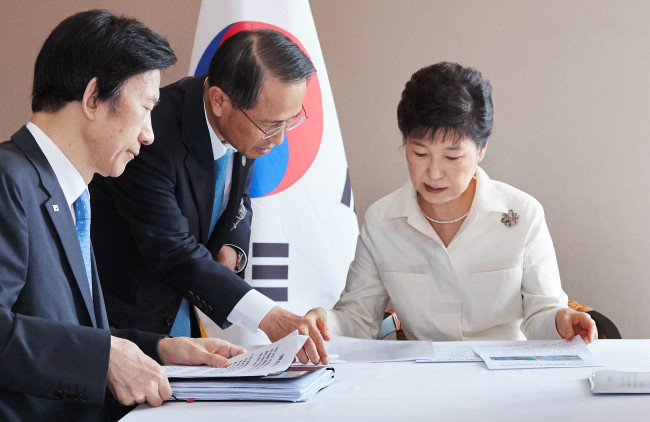
They vowed to work toward closing “loopholes” of the UN Security Council resolution 2270, which encompasses economic sanctions against the North, to find ways to make the impact on Pyongyang “more painful.”
Pyongyang’s actions has put China in a spot, as Beijing has been stressing the need to pursue dialogue in parallel to the sanctions.
The Chinese Foreign Ministry released a statement Friday criticizing the North for its “disregard” of international objections.
Beijing’s Vice Foreign Minister Liu Zhenmin told Japanese media that the test is a clear violation of the UNSC resolution, which bans the communist country from any nuclear or ballistic missile programs.
Liu said the North’s test was “unexpected,” indicating that Pyongyang may have carried it out without the consent of its biggest ally.
North Korea’s relations with China have been faltering since the North’s execution of pro-Chinese politician Jang Seong-thaek, Pyongyang’s former second-in-command and the uncle of leader Kim Jong-un.
After Pyongyang’s nuclear test in January, experts like Shi Yinhong, a professor of international relations at Renmin University, said that Chinese leader Xi Jinping would be “furious” at Kim’s actions. It was reported that Pyongyang did not alert Beijing of its plans at the time.
Such fallout was also displayed in China’s participation in the international sanctions against the North, following the latter’s fourth nuclear test on Jan. 6.
It is yet unclear whether China will agree to even stronger sanctions against the North, or if it will shift its position on the upcoming deployment of the Terminal High Altitude Area Defense system here.
Cheong Seong-chang, a senior researcher at the Sejong Institute, said that the North may have believed that the dispute among South Korea, the US and China over THAAD would allow it to conduct the nuclear test without any repercussions.
“Although the South Korean government said that the ‘most powerful sanctions ever’ would lead to denuclearization of the North, the test showed that such sanctions have limits,” he said.
By Yoon Min-sik/The Korea Herald (minsikyoon@heraldcorp.com)