
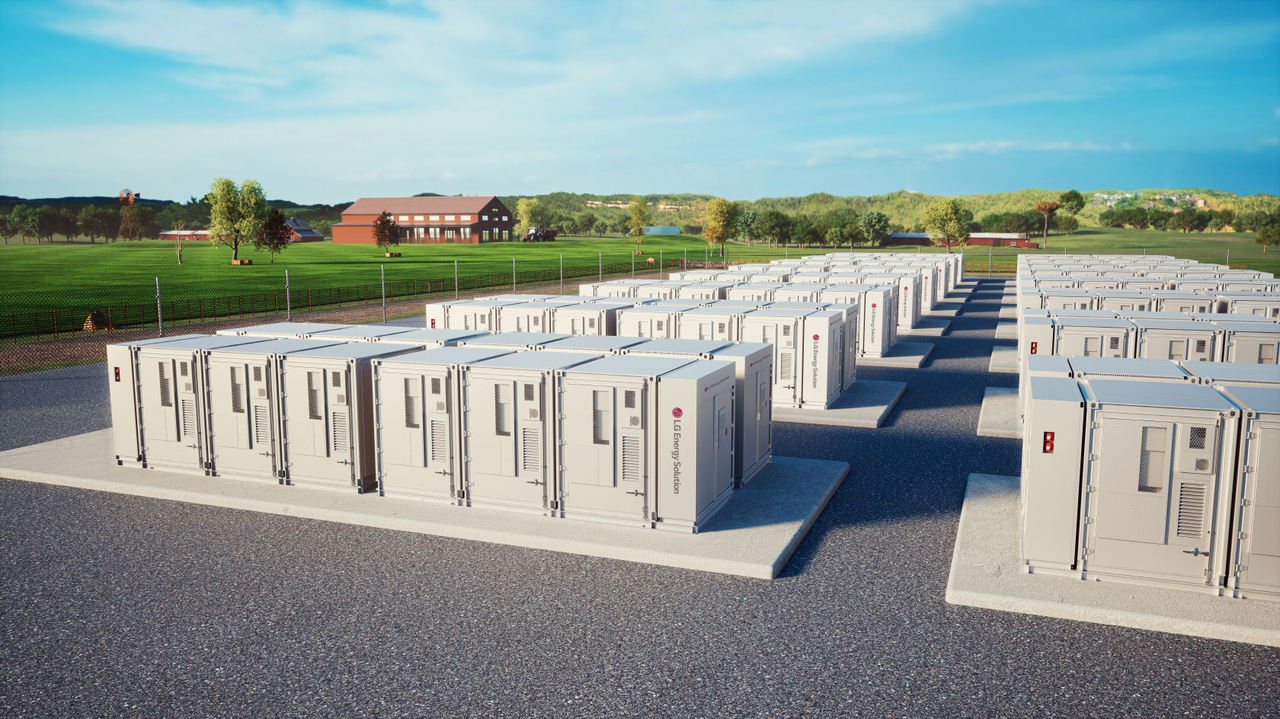
LG Energy Solution said Friday it has been selected as an operator for a government-backed project to develop artificial intelligence-based energy storage systems, with the goal of increasing power grid capacity across South Korea’s southwestern region.
The South Korean battery maker said it was chosen for the Ministry of Climate, Energy and Environment’s program for AI-powered ESS, connected to the electricity distribution network.
LG Energy Solution participated in the bidding process by forming a consortium with Shinhan Asset Management.
The program marks the first government-supported project in South Korea dedicated to deploying ESS facilities directly on the distribution network. It is designed to reduce grid congestion and allow more renewable energy facilities to access the network.
A total of nine operators covering 32 distribution lines were selected under the program. LG Energy Solution secured seven distribution lines with a combined storage capacity of 140 megawatt-hours, the largest allocation awarded to a single operator.
The eight other operators are VPP Lab, Kepco KDN, SK Eternix, HD Hyundai Electric, Gridwiz, Korea East-West Power, Korea Midland Power and Hyundai Engineering & Construction. Among them, six selected Samsung SDI cells, the largest number for any battery supplier, while the remaining two chose SK On cells. LG Energy Solution will use its own batteries for its project.
By capacity, projects using Samsung SDI cells made up about 66 percent of the total awarded volume, followed by LG Energy Solution at about 22 percent and SK On at 12 percent.
Samsung SDI plans to supply its Samsung Battery Box 1.5, an all-in-one ESS solution that integrates high-nickel NCA prismatic cells, modules, racks and safety equipment in a 20-foot container ready for grid connection.
Under its project, LG Energy Solution will supply high-performance batteries and oversee the construction and AI-based operation of the storage systems. Commercial operations are scheduled to begin in 2027, with the facilities expected to operate for 20 years.
The company said the project is expected to enable the connection of 40 megawatts of solar power facilities in the Honam region that are currently waiting for access to the grid.
It is also expected to allow the regional power network to accommodate an additional 52.4 gigawatt-hours of renewable electricity annually.
“We will accelerate the growth of our business based on our AI-powered ESS operating capabilities and contribute to stabilizing the national power grid,” Kang Chang-beom, head of LG Energy Solution’s ESS battery division, said.
sahn@heraldcorp.com