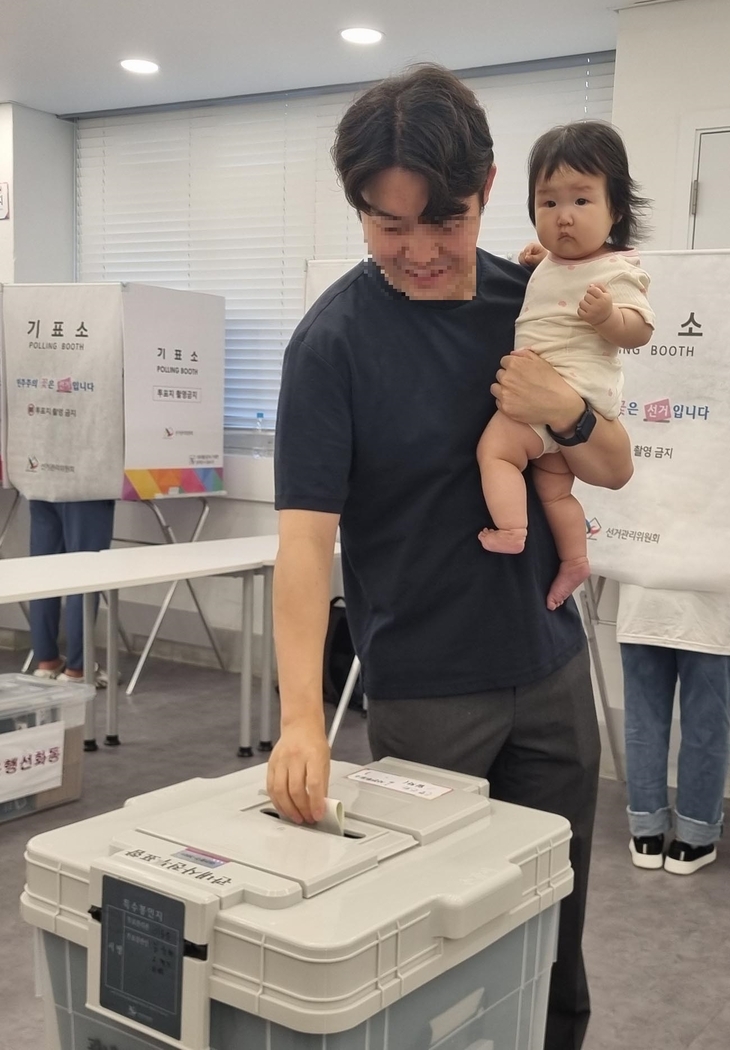
Most South Koreans support the idea of fathers taking parental leave, but more than half are reluctant to recommend that their own male colleagues do so, according to a recent report by a state-affiliated think tank.
정부 산하 싱크탱크가 최근 발표한 보고서에 따르면 대다수의 한국인은 남성 육아 휴직 사용에 찬성하지만, 절반 이상은 자신의 남성 동료에게 육아휴직을 권하기는 꺼려하는 것으로 나타났다.
Researchers at the Korea Institute of Public Finance conducted the study to explore ways to expand men’s use of parental leave. Men accounted for 36.5 percent of parents taking leave in 2025. The survey was conducted from Sept. 12 to 19 that year with 900 workers across the country in both the private and public sectors.
한국조세재정연구원 연구진은 남성의 육아휴직 사용 확대 방안을 모색하기 위해 이번 연구를 진행했다. 2025년 9월 12일부터 19일까지 전국 민간 및 공공 부문 근로자 900명을 대상으로 한 설문조사에 따르면, 당해 육아휴직 사용자 중 36.5%가 남성이었다.
Only 46.4 percent of respondents said they would recommend that a male co-worker take parental leave for childcare, substantially lower than the 63.2 percent who said they would support a female co-worker doing so.
남성 직장 동료에게 육아휴직은 권유하겠다고 답한 응답자는 46.4%에 그쳤으며, 이는 여성 동료의 육아휴직을 지지하겠다고 답한 비율(63.2%)보다 훨씬 낮은 수치다.
This contrasted with the high level of general support for men taking parental leave, with 81.4 percent of all respondents saying they supported the idea.
이는 전체 응답자의 81.4%가 남성 육아휴직 사용을 지지하는 것과 상반되는 결과이다.
Some 30.2 percent of respondents said they wanted male colleagues to take three months or less for childcare, higher than the 17.9 percent who said the same for female colleagues.
응답자의 약 30.2%는 남성 직장 동료가 3개월 이하로 육아휴직을 사용하기를 바란다고 답했으며, 이는 여성 동료에 대해 동일하게 응답한 비율인 17.9%보다 높았다.
“The results can be interpreted as workers showing low support for male colleagues actually taking a leave of absence due to specific workplace costs, such as increased workloads, difficulty finding replacements and pressure to meet performance targets,” the study said.
연구진은 “이러한 결과는 업무량 증가, 대체 인력 확보의 어려움, 실적 달성에 대한 압박 등 구체적인 직장 내 비용으로 인해 근로자들이 남성 육아휴직 사용을 꺼리는 것으로 해석할 수 있다”고 설명했다.
Reluctance toward male workers taking parental leave was particularly strong among respondents who were concerned about finding suitable replacements.
남성 직장 동료의 육아휴직 사용에 대한 거부감은 적절한 대체 인력 확보에 우려를 표하는 응답자들 사이에서 특히 강하게 나타났다.
The study also found that people with a greater awareness of the country’s low birthrate problem tended to be more supportive of male parental leave.
연구는 국가의 저출산 문제에 대한 인식이 높은 사람일수록 남성 육아휴직 사용을 더 지지하는 경향이 있다는 것도 확인했다.
The report also noted that workers at private companies were less open to male parental leave than those in the public sector.
보고서에 따르면 공공 부문의 근로자보다 사기업 근로자들이 남성 육아휴직 사용에 대한 지지도가 낮은 것으로 나타났다.
Researchers said policymakers should focus on addressing stereotypes about gender roles, rather than simply expanding the system itself.
연구진은 정책 설계자들이 제도를 확대하기보다는 성 역할에 대한 고정관념을 깨는 것에 집중해야 한다고 말했다.
Since unpaid parental leave for men was introduced in 1995, the government has repeatedly revised the system to increase financial support for fathers.
남성 육아휴직이 도입된 1995년부터 정부는 아버지에 대한 재정적 지원을 늘리기 위해 끊임없이 제도를 개정해 왔다.
While the use of parental leave by fathers has increased in recent years, Korea is still seeking to build a workplace culture in which workers of both genders can freely take time off to care for children.
최근 몇 년 동안 남성 육아휴직 사용이 증가하고 있지만, 한국은 여전히 남녀 근로자 모두 아이를 위해 자유롭게 휴가를 쓸 수 있는 직장 문화를 구축하기 위해 노력하고 있다.
The study called for effective measures to address increased workloads, including government subsidies and incentives for companies that improve their workplace culture.
이번 연구는 정부 보조금이나 직장 문화 개선 기업에 대한 인센티브 등 늘어나는 업무량에 대응할 수 있는 실질적인 대책 마련을 요구했다.
Tip words
1. parental – 부모의
2. substantially – (양, 중요성이) 상당한
3. contrast – 대조하다, 대비시키다
4. performance targets – 성과 목표
5. suitable – 적합한
6. awareness – 의식, 관심
7. stereotype – 고정 관념
8. revise – 변경하다, 수정하다
9. workplace culture – 직장문화
10. subsidy – 보조금
khnews@heraldcorp.com