The warning did not arrive with a stock market crash, but with a quiet breach in bonds. For South Korea, the implications could be serious, calling for policymakers to brace for a global yield surge and rising financial volatility.
경고는 주식 시장의 폭락이 아니라 채권 시장에서의 조용한 균열과 함께 모습을 드러냈다. 한국에 있어 그 함의는 심각할 수 있다. 정책 당국은 글로벌 채권 금리 급등과 커지는 금융 변동성에 대비해야 한다.
One of the clearest signals came from the US 10-year Treasury rate, which rose above 4.6 percent, its highest level in more than a year. The 30-year yield crossed 5 percent for the first time since before the global financial crisis. Similar moves appeared in Japan, Europe and Britain.
가장 분명한 신호 중 하나는 미국 국채 10년물 금리가 1년여만에 최고치인 4.6퍼센트를 넘어선 것이었다. 30년물 금리는 글로벌 금융 위기 이후 처음으로 5퍼센트를 넘어섰다. 일본, 유럽, 영국에서도 비슷한 움직임이 보였다.
What may look technical is more fundamental. Borrowing costs are rising across the world, reshaping how money flows. This shift challenges assumptions that have underpinned markets for more than a decade.
기술적으로 보일지 모르나 본질적인 문제다. 대출 비용은 전세계적으로 오르며 돈의 흐름을 재구성하고 있다. 이러한 변화는 십년 넘게 시장의 근간이 되어온 고정관념을 깨는 것이다.
The timing is awkward for South Korea. A brief rebound in first-quarter growth and the Kospi’s recent surge had lifted sentiment. That optimism is now colliding with a harsher external environment.
한국으로서는 곤란한 시기에 일어난 변화다. 1분기 성장이 일시적으로 반등하고 코스피가 최근 급등해 투자 심리가 개선되었다. 그러한 낙관론은 더 가혹한 외부환경과 충돌하고 있다.
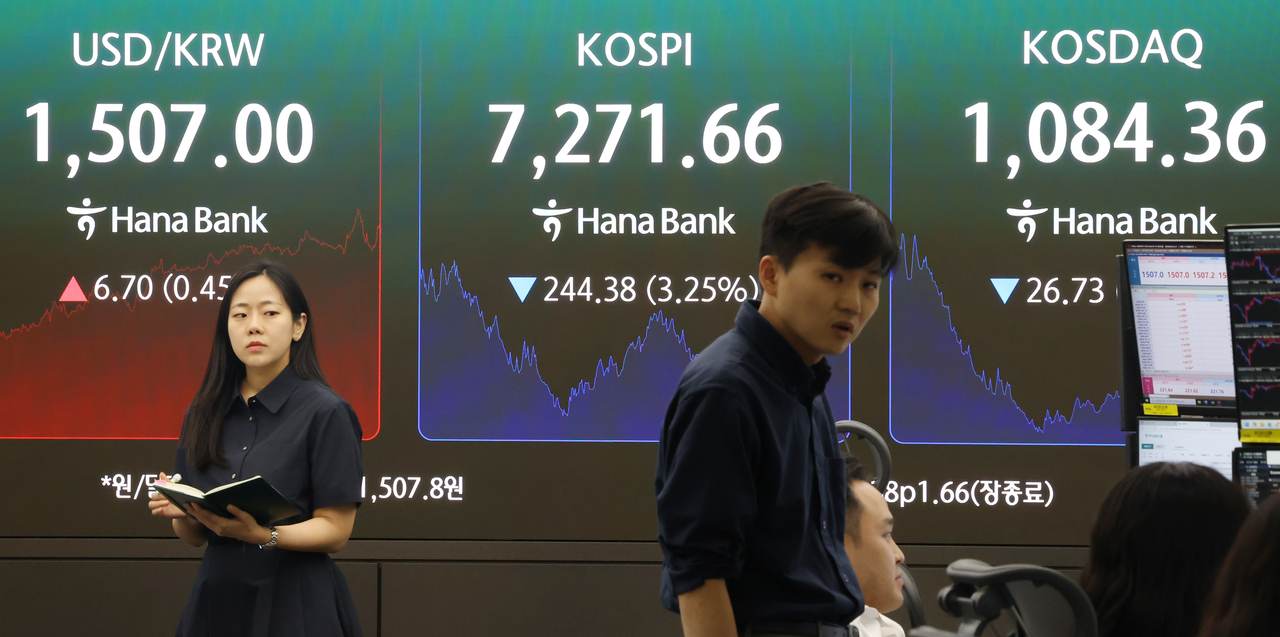
Foreign capital is leaving, the won has weakened beyond 1,500 per dollar and stocks have turned volatile. On Tuesday, the benchmark Kospi closed down 3.25 percent, hurt by a foreign sell-off of major tech stocks. A market that recently celebrated record highs is now confronting a test of risk tolerance.
외국 자본은 한국을 떠나고 있고 원화는 달러당 1천5백원선을 넘어 약세를 보이며 주가는 등락을 지속하게 되었다. 해외투자자들이 주요 테크 주식들을 대량 매도함에 따라 화요일 대표지수인 코스피는 3.25퍼센트 하락하며 마감했다. 사상 최고치를 연일 경신했던 증시는 이제 위험 감수 능력의 시험대에 올랐다.
The bond sell-off reflects surging oil prices amid prolonged conflict in the Middle East, with Brent crude above $112 a barrel. Inflation is proving stubborn, not fading as hoped.
채권 대량 매도는 중동지역 분쟁의 장기화에 따른 유가 급등을 반영한다. 브렌트 유가는 배럴당 112달러를 넘었다. 인플레는 바램처럼 꺾이지 않고 끈질기게 지속되고 있다.
In April, US consumer prices rose 3.8 percent from a year earlier and producer prices climbed 6.0 percent. Markets that once expected rate cuts are now weighing the chance of further increases.
4월 미국 소비자 물가는 전년 대비 3.8퍼센트 상승했고 생산자 물가는 6퍼센트 올랐다. 금리 인하를 기대했던 시장은 이제 추가 상승의 가능성을 점치고 있다.
At the same time, heavy government borrowing in major economies is adding supply to bond markets, pushing yields higher.
한편 주요 선진국들의 대규모 정부 차입으로 채권 시장에서 공급이 늘어나고 금리는 더 올랐다.
This matters because the cause of rising yields differs from the past. When borrowing costs rise on the back of strong growth, economies can absorb the pressure.
채권 금리 상승의 원인이 과거와 다르다는 점에서 중요한 문제다. 탄탄한 성장세로 대출 비용이 오르는 경우 경제는 그 부담을 감당할 수 있다.
Now the increase is driven by inflation and debt. That raises costs without boosting demand. Companies face higher interest costs, households pay more on loans and governments see debt servicing burdens grow.
그러나 작금의 상승은 인플레와 부채로 인한 것이다. 그로 인해 수요는 늘어나지 않으면서 비용만 늘게 된다. 기업들은 상승된 이자 비용을 부담해야 하고 가계는 대출에 더 많은 비용을 지불해야 하며 정부는 부채상환부담이 늘어난다.
In South Korea, the effects are already visible. Foreign investors have sold more than 30 trillion won ($20 billion) in local equities in recent sessions, accelerating currency weakness. The softer won could push up import prices and inflation.
한국의 경우 그 영향은 이미 가시적이다. 해외 투자자들은 최근 30조원이 넘는 국내 주식을 매도해 원화 약세를 가중시켰다. 약해진 원화는 수입 가격과 인플레를 상승시킬 수 있다.
Equally worrisome, domestic bond yields have climbed. The 10-year government bond has moved above 4 percent, with shorter-term rates also rising. Lending rates follow, increasing the strain on households and small businesses.
마찬가지로 우려되는 것은 국내 채권 금리 상승이다. 10년 만기 국채는 4퍼센트를 넘어섰고 단기 채권 금리 또한 오르고 있다. 대출금리도 이를 따라 가계 및 소상공인의 부담은 더욱 커졌다.
That strain is amplified by existing vulnerabilities. Margin trading has reached record levels, showing how much retail investors have relied on borrowed money. Even small rate increases can sharply raise debt burdens.
기존의 취약점으로 인해 그 부담은 더욱 가중된다. 신용거래는 사상 최대 수준에 달해 개인투자자들이 차입금에 얼마나 의존하고 있는지를 보여준다. 소폭의 금리 인상만으로도 부채 부담은 크게 늘어날 수 있다.
Meanwhile, foreign exchange reserves have declined from earlier peaks, limiting room for intervention if market stress intensifies. The buffers are thinner than before.
한편 외화보유고는 이전 고점 대비 줄어들어 시장의 불안감이 고조되더라도 개입할 여지는 제한적이다. 손실을 흡수해줄 능력이 과거에 비해 약해졌다.
Policy coordination is also under strain. The Bank of Korea faces pressure to keep rates high to contain inflation and limit capital outflows. Yet President Lee Jae Myung has signaled support for expansionary fiscal policy.
정책 조율 또한 삐걱거리고 있다. 한국은행은 인플레를 억제하고 자본 유출을 저지하기 위해 고금리를 유지하라는 압박에 처했다. 그러나 이재명 대통령은 재정 확대 정책에 지지의사를 표했다.
If these approaches diverge, markets may receive mixed signals, resulting in greater volatility.
이렇게 접근방식이 어긋날 경우 시장은 엇갈리는 신호를 받아 불안정성이 더욱 커질 수 있다.
The message from the bond market is straightforward. The era of cheap money is fading. Short-term fixes or attempts to support asset prices are unlikely to hold against a global rise in borrowing costs.
채권 시장이 주는 메시지는 단순하고 명확하다. 쉽게 돈을 구할 수 있던 시대는 저물어가고 있다. 자산 가치를 방어하기 위한 단기적인 해결책이나 시도는 차입비용이 전세계적으로 상승하는 상황에서는 유지될 가능성이 희박하다.
To navigate the challenge, Korea must anchor fiscal policy in discipline while keeping monetary policy focused on price stability. Authorities should also move to curb excessive borrowing, especially among households and weaker firms.
이러한 어려움을 헤쳐나가기 위해서 한국은 원칙에 기반한 재정 정책을 운용하며 금융 정책의 초점을 비용 안정에 두어야 할 것이다. 당국은 또한 특히 가계와 영세한 기업의 과도한 차입을 억제하는 조치를 취해야 한다.
The rise in bond yields marks a clear shift in the financial environment. For South Korea, the priority is not to restore past conditions but to adjust policy with speed and coherence, before tighter global funding conditions impose harsher constraints.
채권 금리의 인상은 금융 환경의 변화를 뜻한다. 한국에 있어 우선시되어야 할 것은 과거의 여건을 회복하는 것이 아니다. 글로벌 자금 조달 조건 악화로 상황이 더욱 어려워지기 전에 빠르고 일관성있게 정책을 조정하는 것이다.
breach 파괴, 어김
underpin 뒷받침하다
tolerance 내성
expansionary 확장적인
coherence 일관성
khnews@heraldcorp.com