New MMCA exhibition revisits Korea's language-driven avant-garde
Conceptual art emerged in the West in the 1960s, emphasizing artist ideas or concepts over the appearance or form of an artwork. It shifted attention from the visual to the realms of language and ideas.
"Language-based conceptual art began in New York, but when it arrived in different countries, it became connected to each country's political and social situation and was understood in different ways," curator Bae Myung-ji said on June 18 at the National Museum of Modern and Contemporary Art, Korea in Seoul.
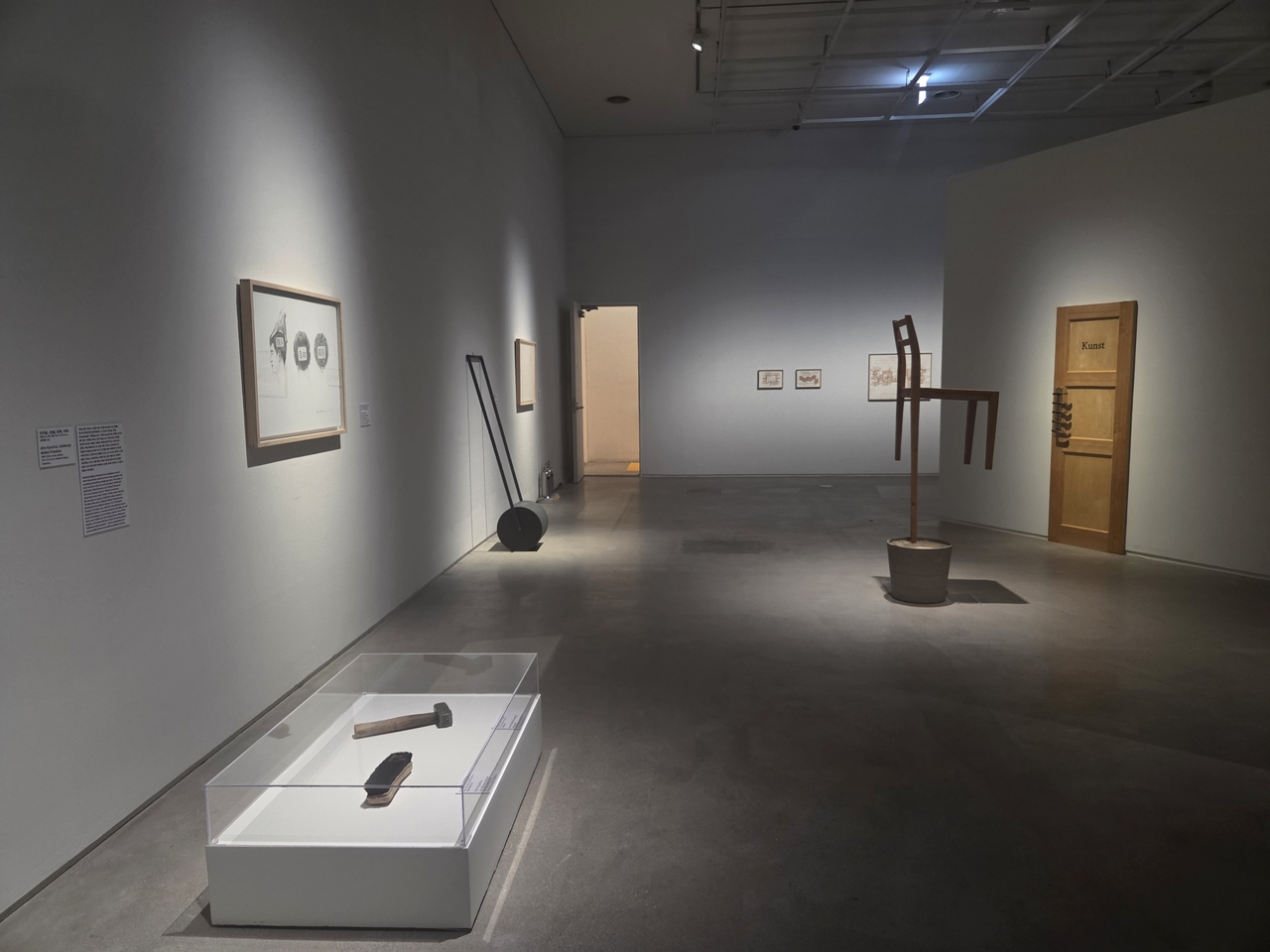
The state-run museum traces the development of conceptual art in South Korea from the 1970s through the 1990s in the exhibition "This Is (Not) Conceptual Art," focusing on how artists employed language as an artistic medium.
In Korea, artists used language, translation and wordplay to engage with political realities, rapid social transformation and evolving cultural identities, Bae said.
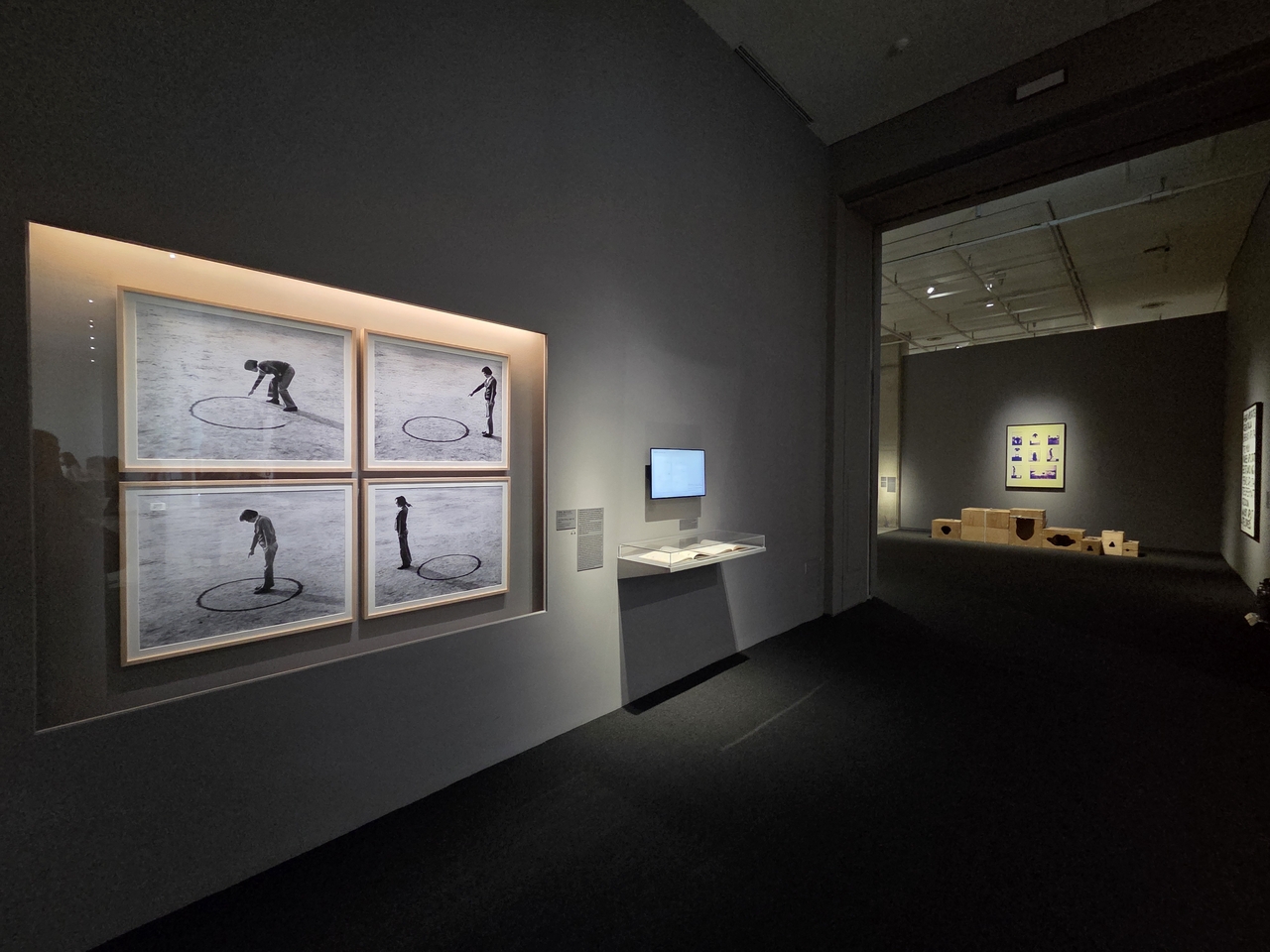
Photos of Lee Kun-yong premiering “Logic of Place” at the final AG (Avant-Garde Association) exhibition on Dec. 16, 1975, are displayed at the entrance.
The photos show how Lee drew a circle on the floor and, standing outside the circle, pointed toward the inside and called out “there.” Entering the circle, he then said “here,” and after stepping outside again, he pointed behind his back and said “over there.”
“For the artist, the notion of ‘place’ emerged only through the physical act of drawing a circle. The work shows how the same site can be understood as different events depending on positional context and the relationship established between the body and place,” Bae said.
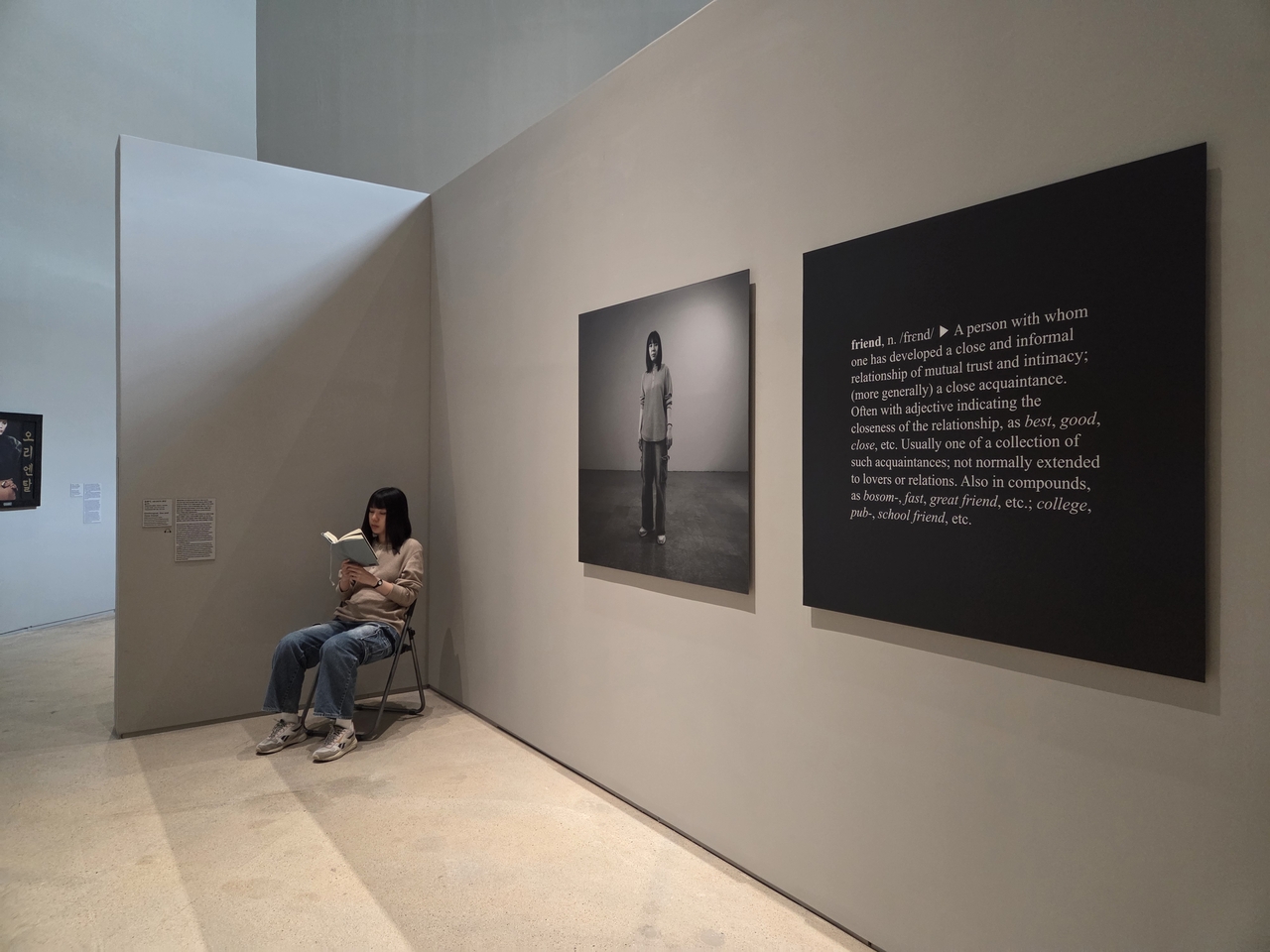
Language itself becomes the subject in the work of Kim Soun-Gui, the Korean-born artist who recently received the 2026 AWARE Prize from the Centre Pompidou. Her 1989 video work "Vide & O – Kunsthaus Hamburg" plays on multiple meanings embedded in the French word "video,” which also can be interpreted as "vide et eau (void and water)."
Through linguistic wordplay, Kim reimagined video as a potential space of emptiness, signifying not a lack but something capable of harboring all things without limit, like the “flow of water.”
"To her, emptiness is not simply nothingness," Bae said. "It is a space that embraces everything and allows something new to emerge."
“Eliminating Words/ Dong A Ilbo Dire” by Kim from 1975 shows the artist’s early exploration of language and censorship, produced at a time of tight state control over the media during the authoritarian Yushin era.
Translation is another recurring theme for Korean conceptual artists.
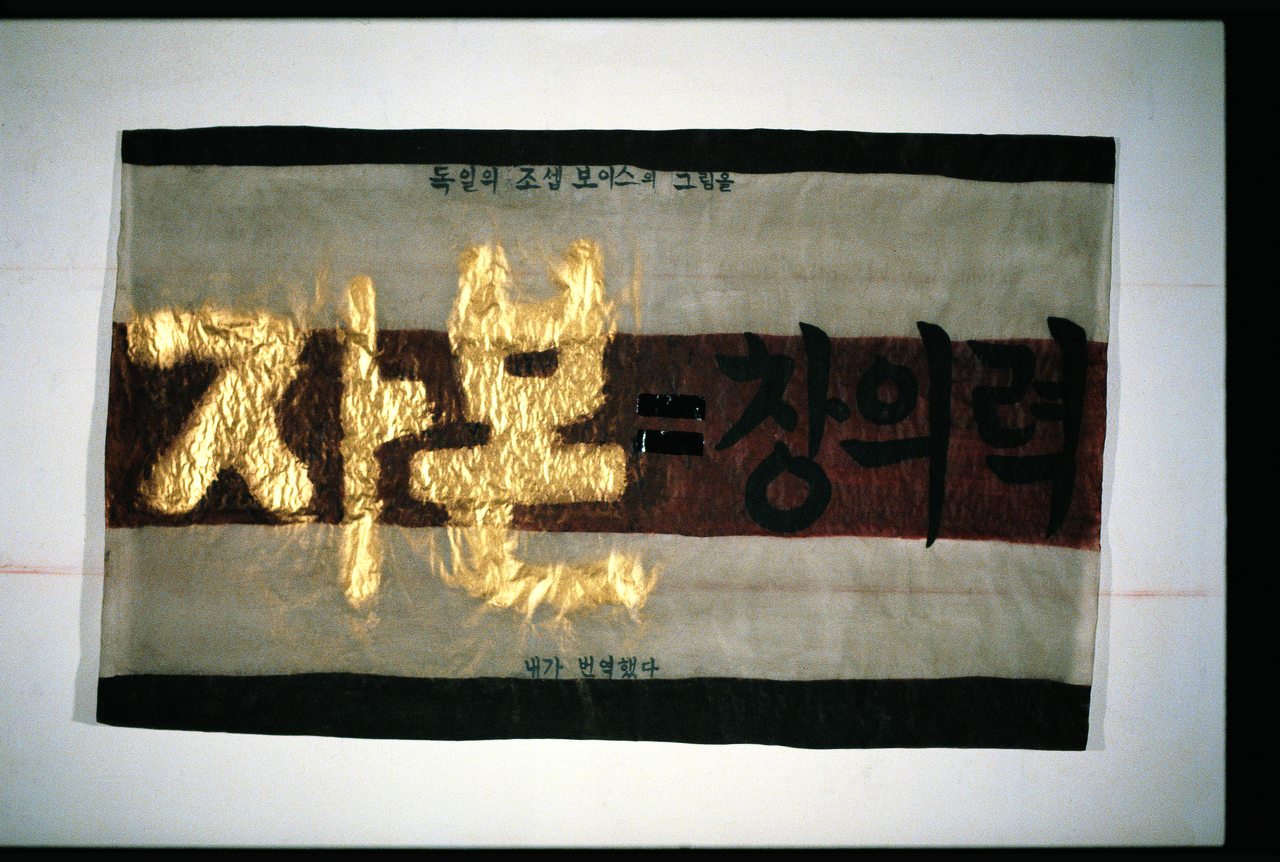
In Bahc Yi-so's "Capital=Creativity," the artist deliberately mistranslated Joseph Beuys' famous phrase "Creativity=Capital," reversing the word order to destabilize its meaning.
"We often experience the world through translation," the curator said. "What interested him was the space in between. The strange area that remains untranslated."
Running through Oct. 11 at MMCA Seoul, the exhibition brings together more than 140 works and archival materials by 28 artists, including Kim Soun-Gui, Bahc Yiso, Ahn Kyu-chul, Kim Beom, Lee Kun-yong and Sung Neung-kyung.
“We hope this exhibition will offer a new perspective on the history and contemporary significance of Korean conceptual art, while further deepening discussions on Korean contemporary art,” said MMCA Director Kim Sung-hee.
yunapark@heraldcorp.com