
While 'In Minor Keys' dwells in quieter emotional registers, this year's biennale is shaped by geopolitical fractures, public dissent and pressures of a world in crisis
Korea Herald correspondent
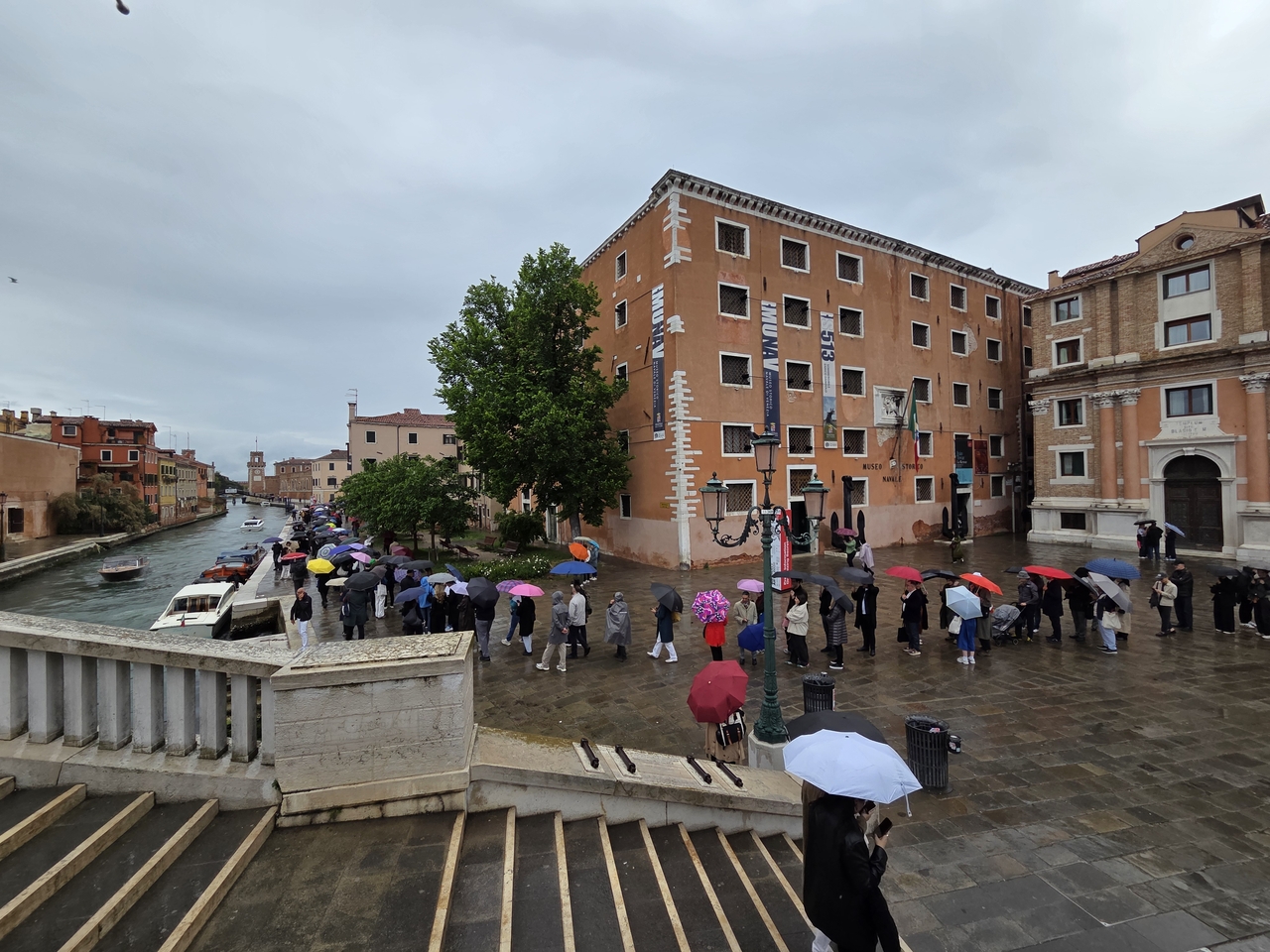
VENICE, Italy — As if reflecting this year's theme, the weather in Venice was gloomy and rainy as the 2026 Venice Biennale opened Wednesday under the title "In Minor Keys."
After Koyo Kouoh, artistic director of the 61st edition of the biennale, suddenly died of cancer last year, her curatorial team carried forward the exhibition, which runs through Nov. 22 and features 110 artists and collectives across the Giardini and Arsenale.
“The minor keys refuse orchestral bombast and goose-step military marches and come alive in the quiet tones, the lower frequencies, the hums,” Kouoh wrote in the exhibition text.
“In refusing the spectacle of horror, the time has come to listen to the minor keys.”
Rather than confronting war and violence through direct political slogans, the exhibition sought to focus on quieter emotional experiences — grief, memory, care and marginalized voices often overlooked within dominant narratives.
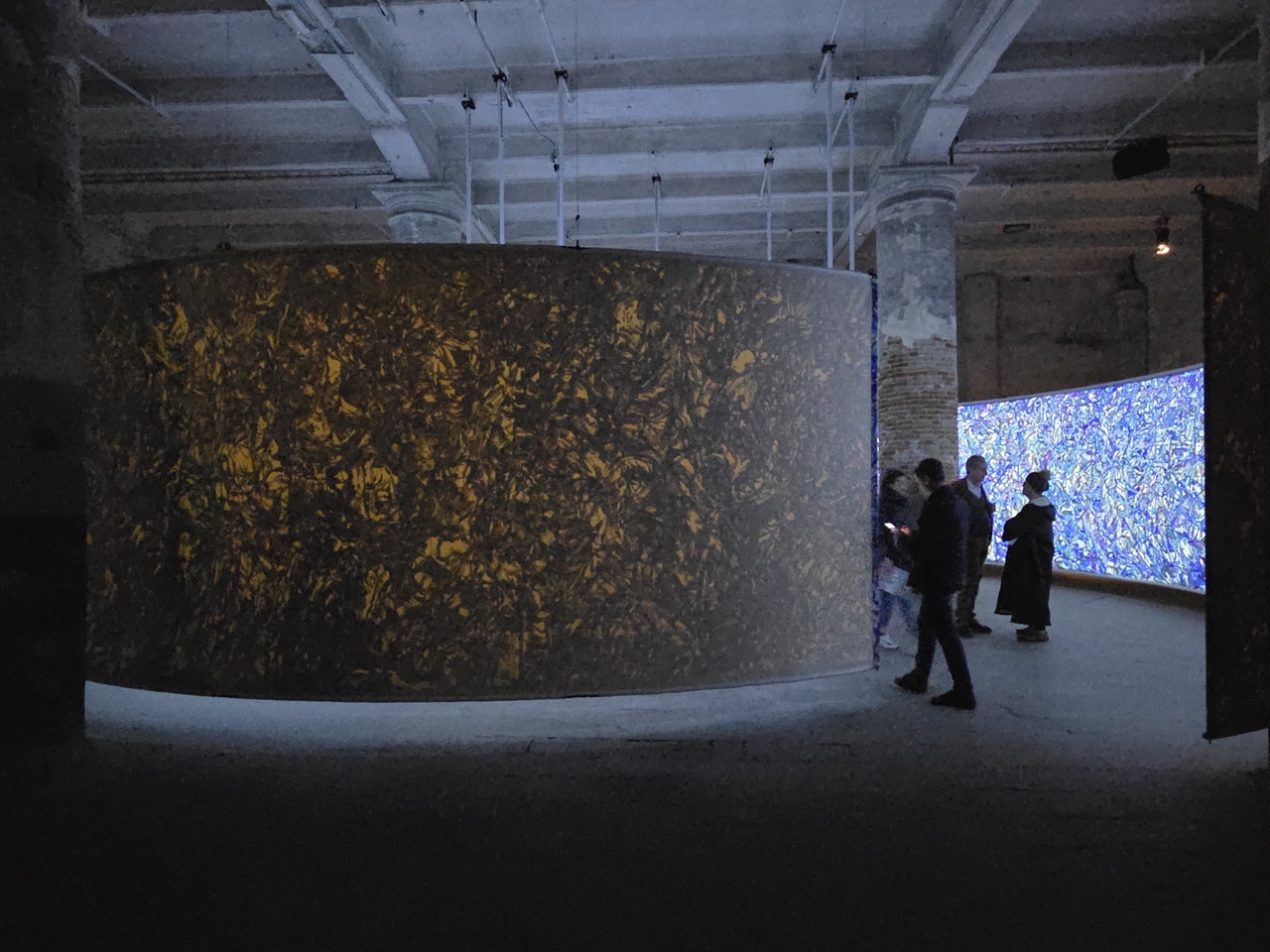
Surrounded by darkness upon entering the Arsenale exhibition, visitors first encounter Lebanese-Australian artist Khaled Sabsabi’s “Khalil,” a multi-channel video and sound installation exploring migration, spirituality and interconnected histories.
Drawing from the artist’s experience of displacement and the Lebanese Civil War, the immersive work layers fragmented imagery and meditative sounds into a contemplative space.
Large-scale collage installations by Kenyan artist Kaloki Nyamai — created with stitched textiles, newspaper and mixed materials — explore lineage, contradiction and repair.
The act of stitching becomes a way not only of repair, but of holding opposing forces together: beauty and violence, remembrance and loss, despair and hope.
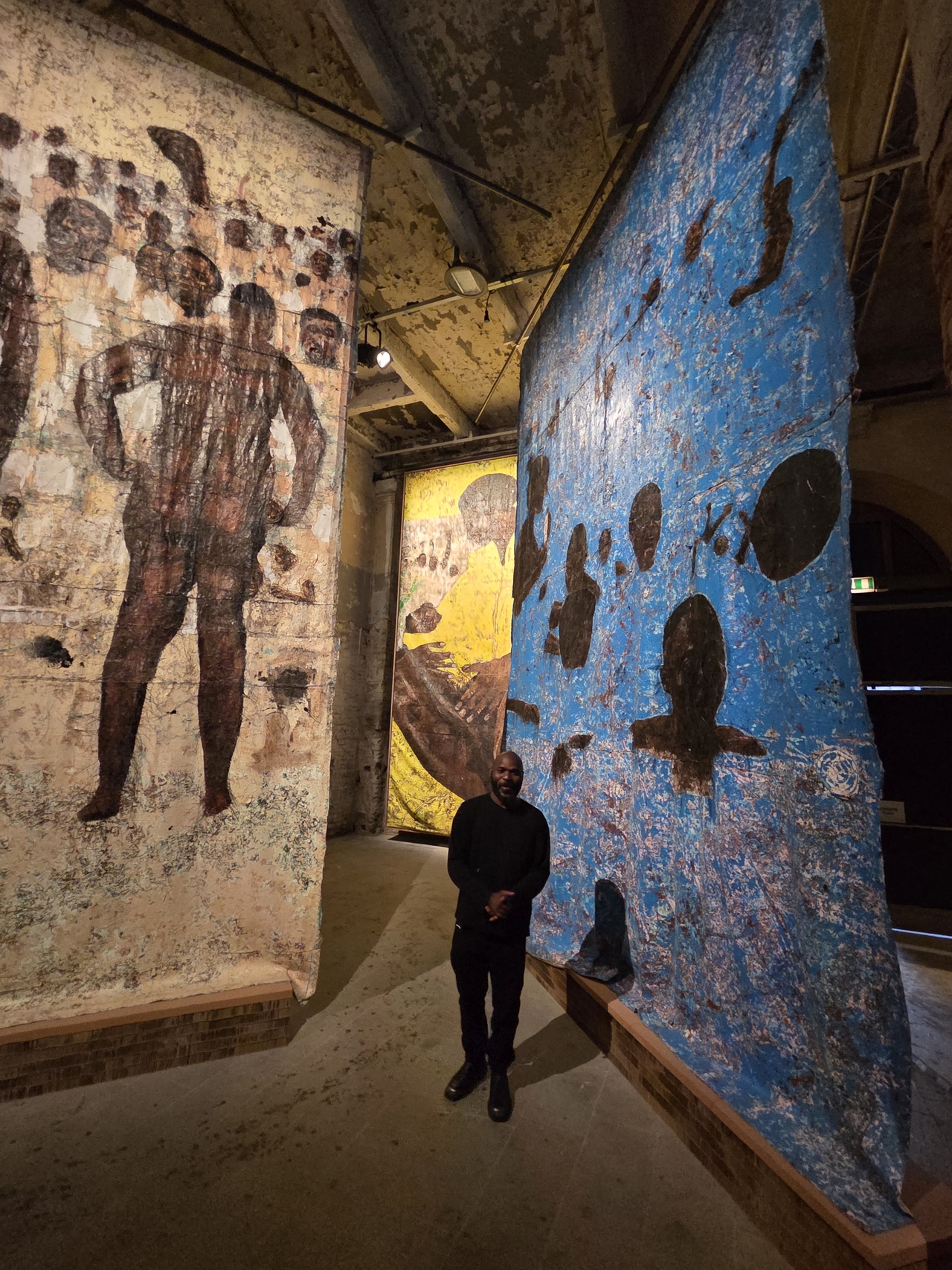
“The whole thing is about my past, the history about my lineage. I tried to present questioning the reality that we're living in,” Nyamai said of his works.
“For me, a minor key is something smooth with a bang — the voice is very small, but the small voice comes with a bigger sound."
Rather than relying on spectacle or overt political declarations, artists confront violence, discrimination and oppression in deeply personal ways.
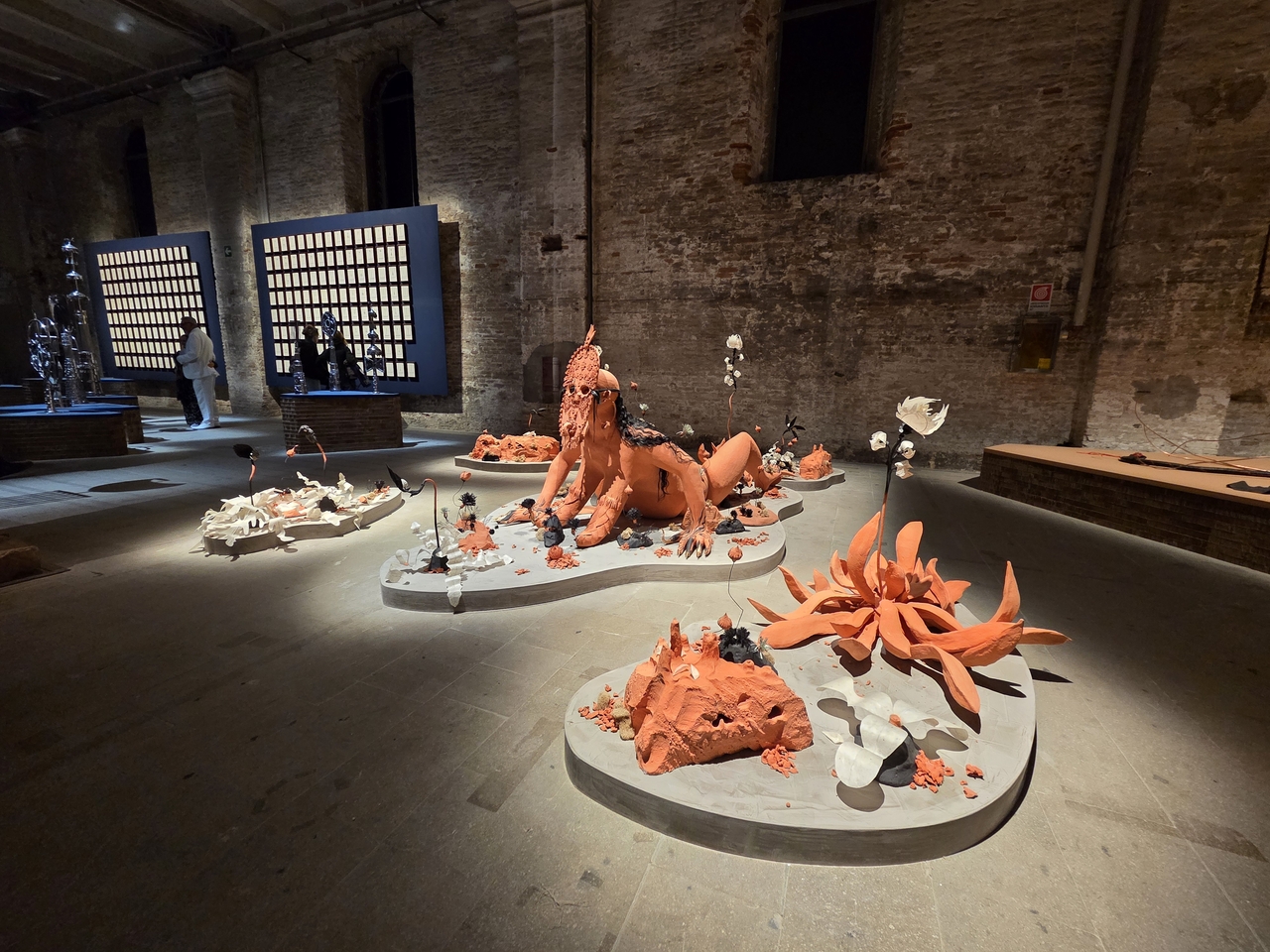
South African artist Nicholas Hlobo transforms rubber, leather and ribbons into strange hybrid bodies, named "Umrhubuluzi," that appear both vulnerable and unsettling.
Drawing from Xhosa culture and his identity as a gay Xhosa man, Hlobo reworks materials often associated with masculine labor into fluid sculptural forms that blur the boundaries between human, animal and myth.
Some artists interpret minor keys through subtler sensory and ecological experiences.

Korean American artist Michael Joo explores invisible relationships between nature, technology and the human body in his installations that combine fossil limestone, vibration devices and coral reef research.
“I think of minor keys as the black keys on a piano,” Joo said. “They don’t really carry the melody, but they create feeling and accent.”
“A lot of the artists in this exhibition, including myself, don’t really work within the major discourse of art,” he added. “I don’t make work where there’s just a centerpiece to look at.”
Russia, Israel's return ignites protests
While the centerpiece exhibition explores minor keys, quieter voices and marginalized histories, geopolitical tensions have overshadowed the biennale's national exhibitions.
Russia and Israel returned to the biennale this year, reopening their national pavilions and drawing protests during the opening days.
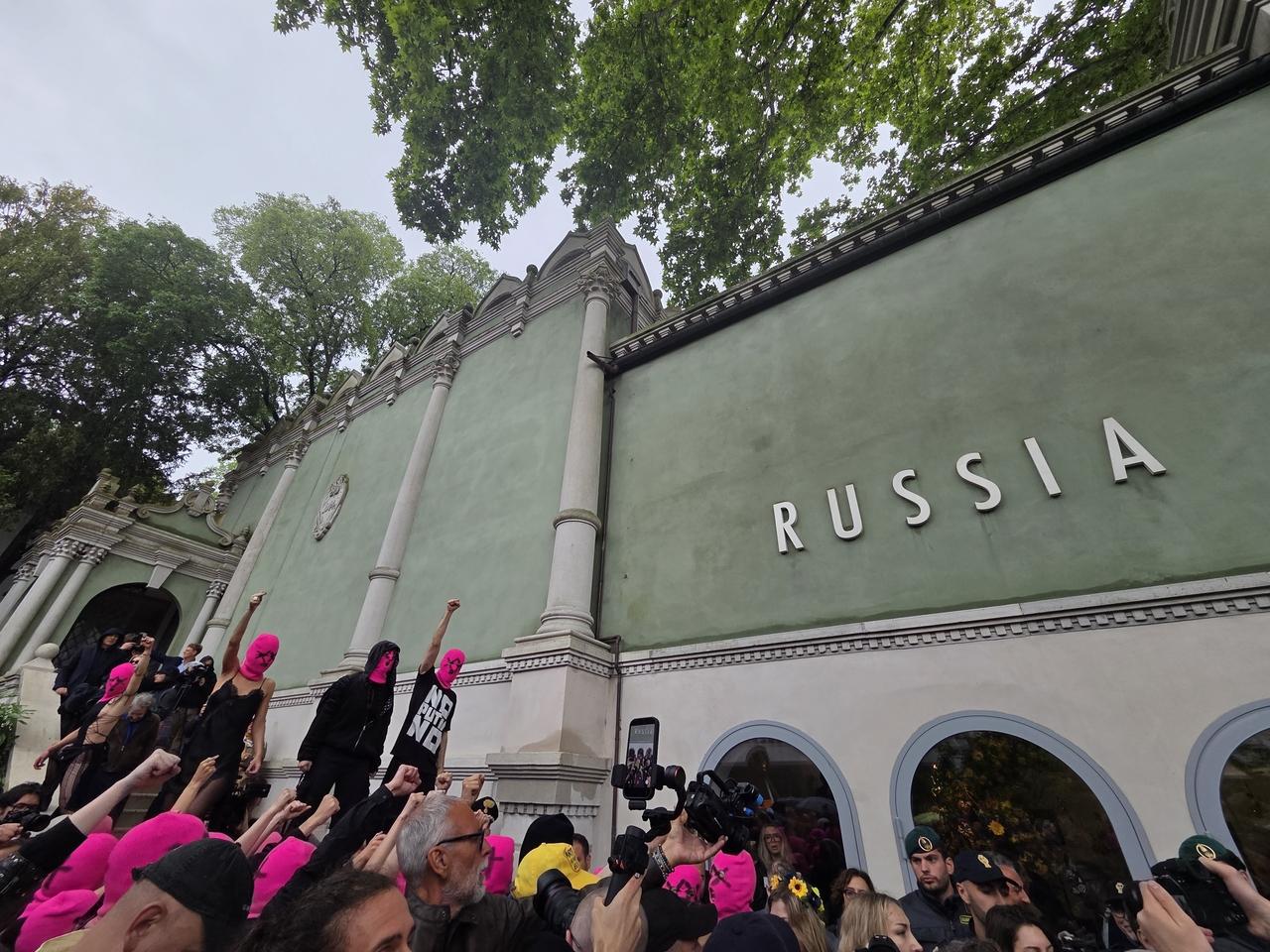
As soon as the biennale opened Wednesday morning, protestors wearing shirts “No Putin No” and bright pink balaclavas chanted and raised their fists atop the pavilion steps as crowds of journalists and visitors gathered below.
After years of absence amid international backlash over the war in Ukraine, Russia’s pavilion returned for the first time since 2022.
Israel Pavilion, which remained closed during the 2024 edition following the outbreak of the war in Gaza, also reopened this year.
Police officers were stationed throughout the Giardini — the main site for national pavilions, including the Russian Pavilion — as well as the Arsenale, where Israel opened a temporary pavilion while its permanent Giardini building undergoes renovation.
Asked whether the heavy police presence in front of the Israeli Pavilion in Giardini was intended to protect the site, officers declined to give a direct answer to The Korea Herald.

Political tensions also extended into the biennale’s governance.
On April 30, the entire five-member international jury resigned, refusing to award prizes involving countries whose leaders are under investigation by the International Criminal Court.
The jury had originally been scheduled to select the Golden Lion winners for best national pavilion and best participant in the main exhibition during the biennale’s opening days. The awards will now be decided by visitors and announced on the closing day, Nov. 22.
"As members of the jury, we also have a responsibility towards the historical role of the Biennale as a platform that connects art to the urgencies of its time," the jury said in a statement before resigning. It added that the decision was made "in solidarity" with late curator Koyo Kouoh’s curatorial vision.
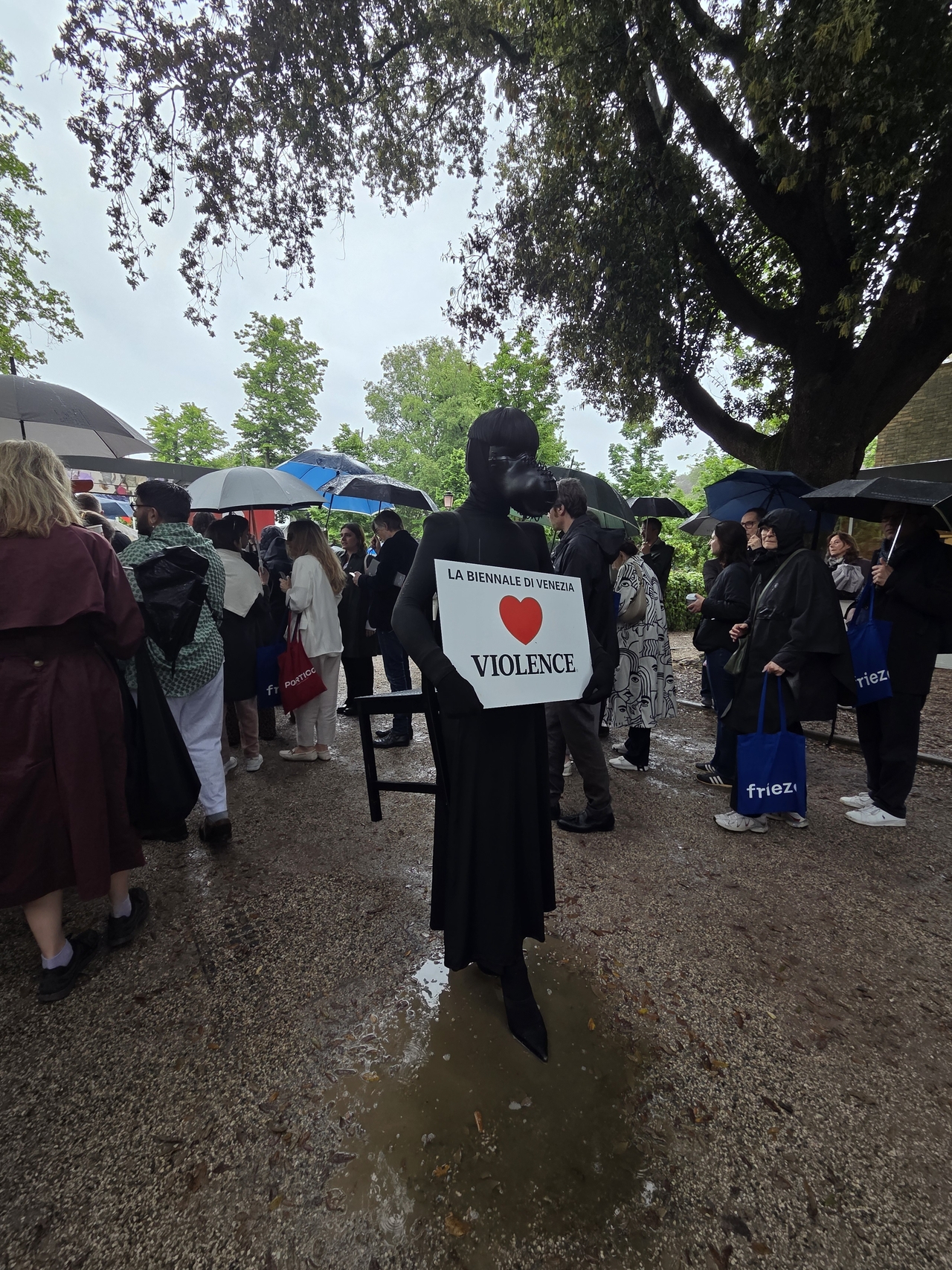
Among the people toward the entrance to the Giardini on Wednesday morning, a protester dressed in black stood silently holding a sign reading, "La Biennale di Venezia (heart) Violence," accusing the biennale of turning a blind eye to ongoing violence and war.
The Venice Biennale alternates annually between art and architecture editions.
yunapark@heraldcorp.com