
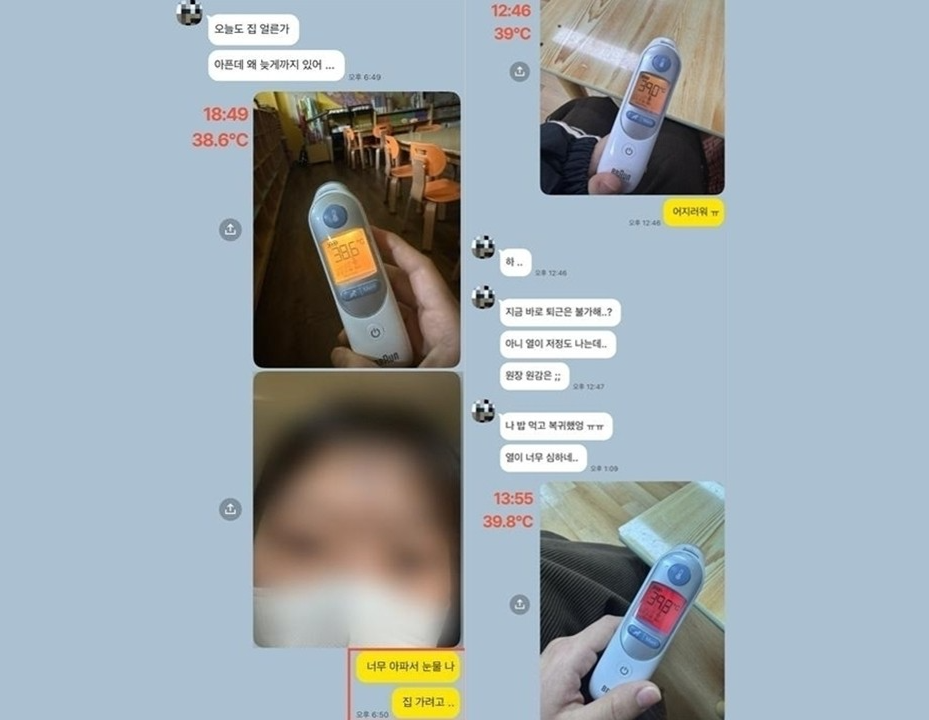
A review committee under the Teachers’ Pension Service is expected to decide this week whether the death of a kindergarten teacher who continued working despite having influenza and a high fever should be recognized as an occupational accident.
The Teachers’ Pension Service, a public institution under the Education Ministry that manages pension funds for private school teachers, said Tuesday it had convened a committee to review the case of the teacher, who died in February after contracting influenza while working at a kindergarten in Bucheon, Gyeonggi Province.
If her death is recognized as an occupational accident, her bereaved family may receive compensation and pension benefits under the Private School Teachers and Staff Pension Act.
The family claims the teacher’s death was work-related, saying she contracted influenza at the kindergarten and was unable to receive timely treatment due to an excessive workload.
According to data submitted by the family to the Teachers’ Pension Service, 43 of the kindergarten’s 120 children and two teachers contracted influenza between October 2025 and February 2026. The data was compiled by the family, based on student absence reports shared in a teachers’ group chat.
“Some 12 people contracted influenza between Jan. 26 and 29, around the same time she did,” the family said. “A group infection occurred because educational activities and meals took place in the same space, and because students practiced across classes in preparation for a recital scheduled for Feb. 6.”
The family added that the teacher had felt compelled to come to work despite being ill because she was relatively new, and more senior colleagues would have had to cover for her had she taken time off.
“Even her colleagues said they felt reluctant to use annual paid leave or sick leave,” the family said.
The teacher was diagnosed with influenza B on Jan. 27 but continued working for three days. She was later admitted to an intensive care unit after her symptoms worsened and died Feb. 14.
seungku99@heraldcorp.com



![[Exclusive] Ateez to return in November](https://wimg.heraldcorp.com/news/cms/2026/09/02/news-p.v1.20260902.76162fb0ba55493aad1c076f240d0750_R.jpg?type=h&h=120)