Korea has long been associated less with a sense of ease than with a culture of "bbali, bbali" ("hurry, hurry"). Speed often feels less like a preference than a condition of everyday life. The phrase has become familiar shorthand, echoed in everything from same-day delivery services to a digital ecosystem. Faster is better, waiting is discomfort and stillness feels like delay.
Yet, ironically, traditional Korean dance is still often trapped in a set of stereotypes as slow, dull, sleepy.
So choreographer Yun Hea-joung, who also serves as artistic director of the Seoul Metropolitan Dance Theatre, asks: How can Korean dance embrace the speed of this era?
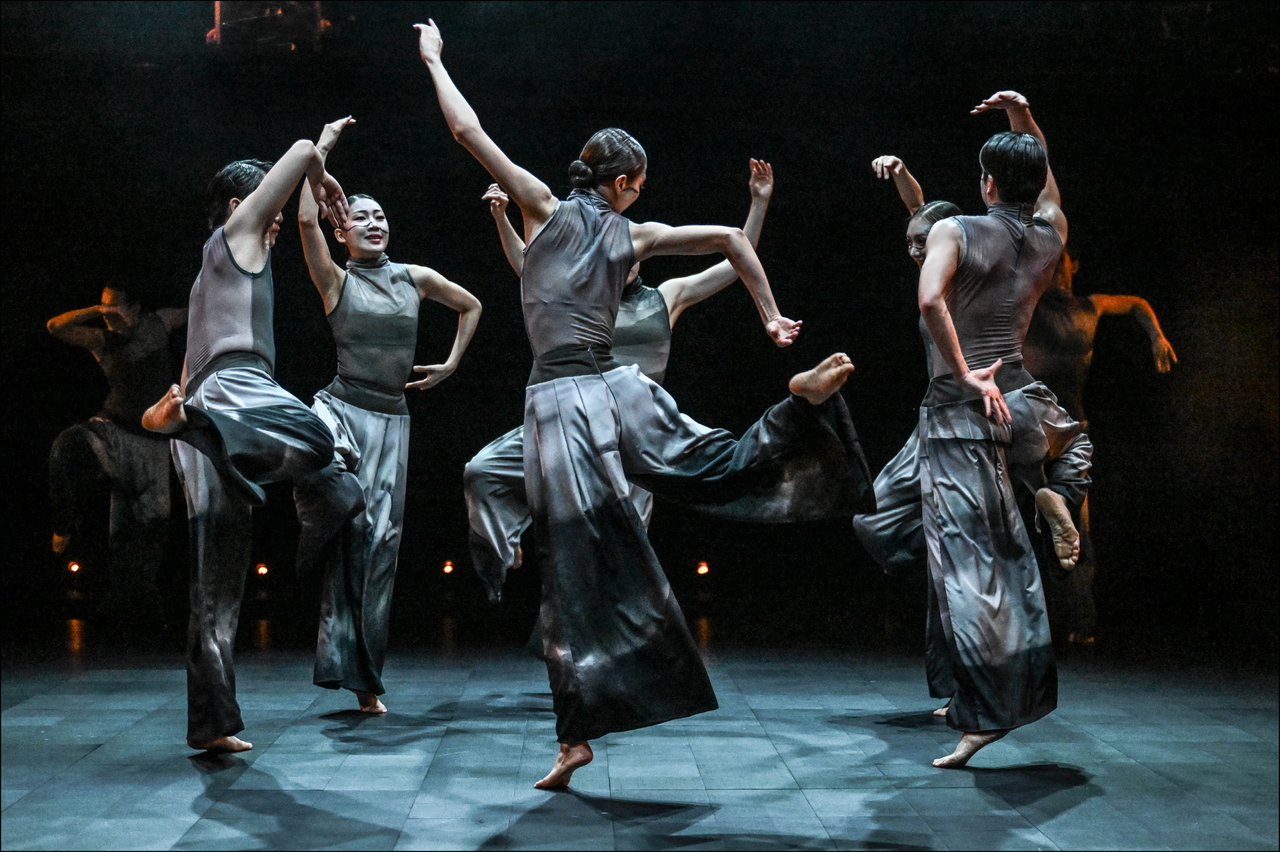
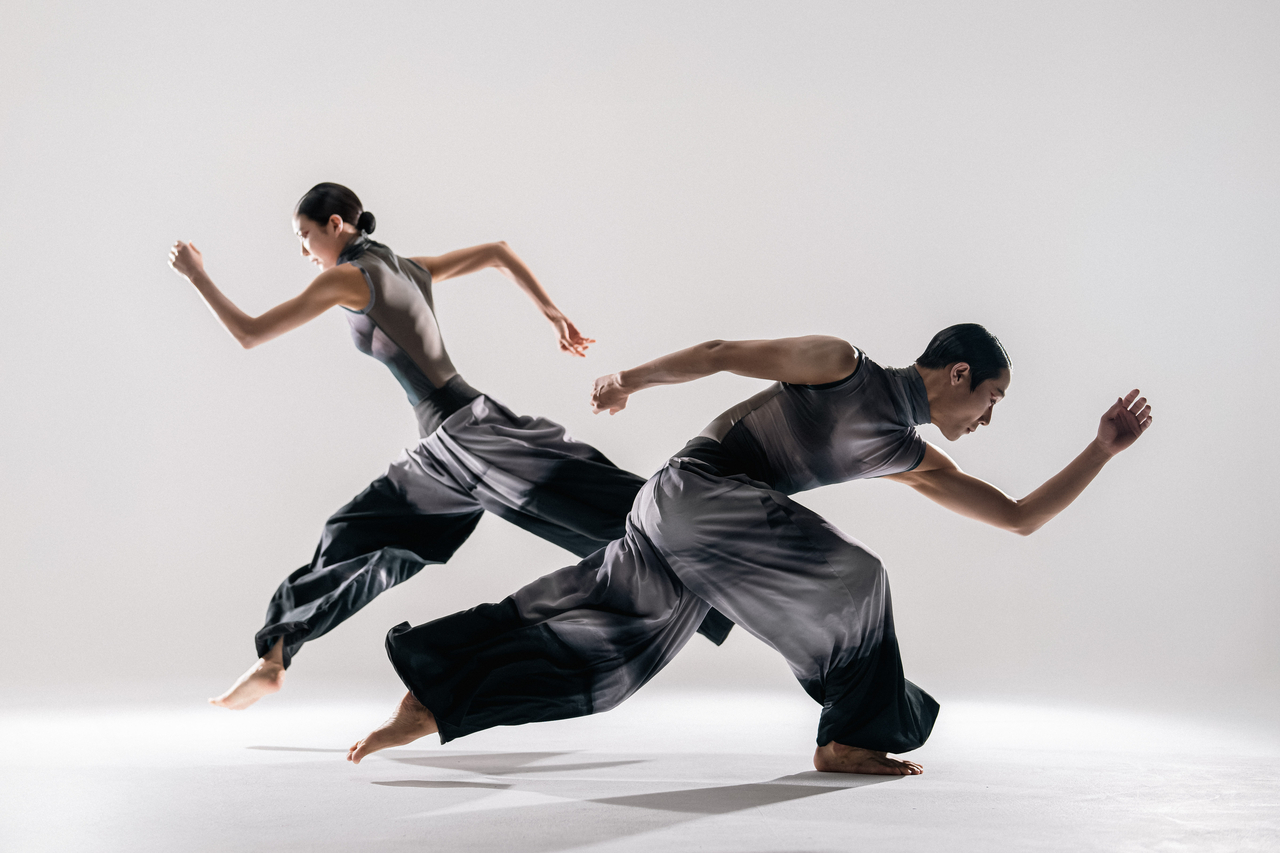
The city-run dance troupe presents "Speed" at the Sejong Center for the Performing Arts from Friday through Sunday, in a work that turns our obsession with acceleration into both subject and question. The work premiered last year in a small theater, and returns this season in a midsized venue with the stage and seating capacity doubled.
In Korean dance, speed is built on "jangdan," the rhythmic cycles that underpin traditional movement. These cycles are usually driven by the "janggu," an hourglass-shaped Korean percussion with two drumheads that produce contrasting tones.
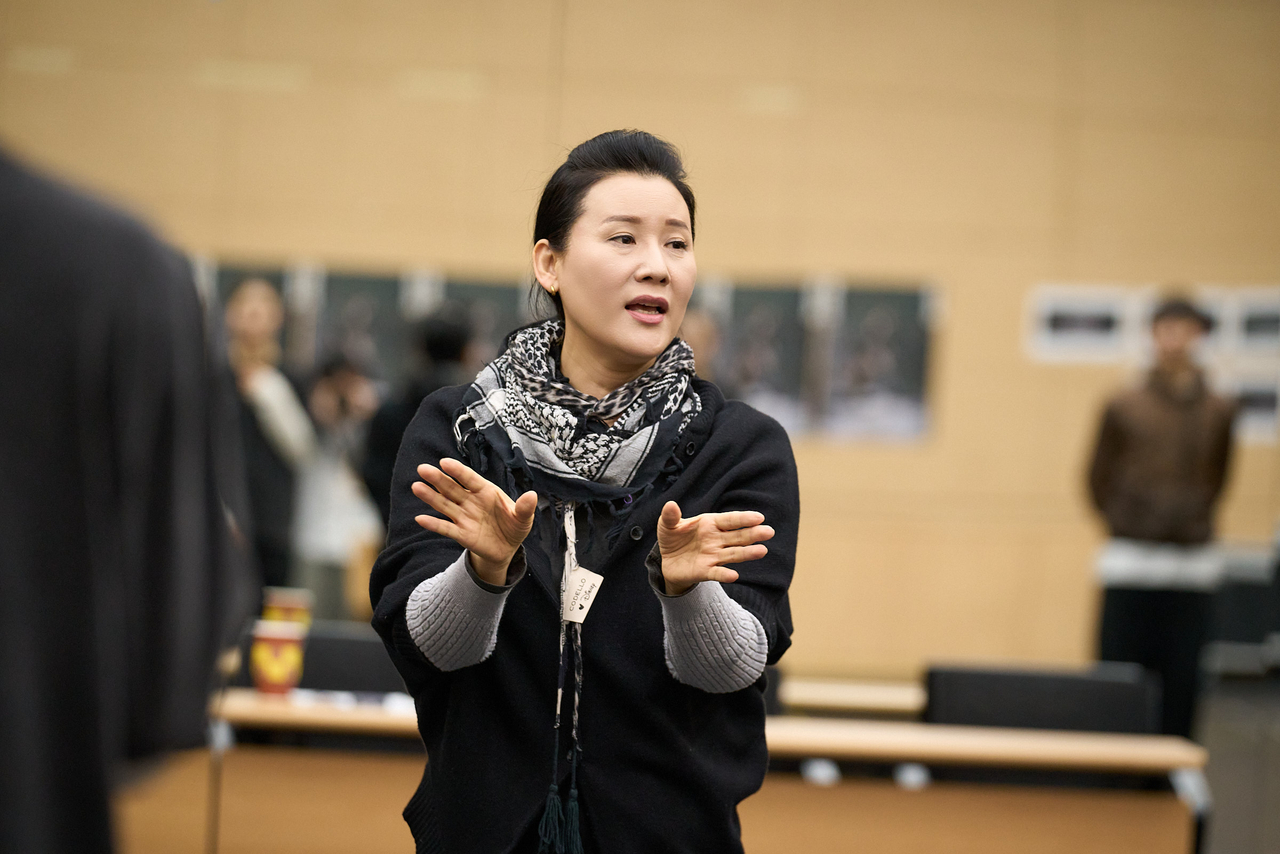
"From the very beginning, Korean dance has been inseparable from the rhythmic instrument. You could say it is part of its identity," explained Yun, speaking to The Korea Herald last week.
"I wanted to make these rhythmic cycles far more varied and push them toward extreme speed. How much can our dance change in response to this?"
She described the result as one of the fastest works in the company's repertoire.
"Everything is at full speed. The dancers pour out energy at such intensity that, after rehearsals, they collapse on the floor. It pushes speed to an extreme."
Midway through the work, the structure dissolves into improvisation. A single dancer enters without set choreography, as the music and visual media respond in real time to their movement. Dancers Kim Min-ji and Noh Yeon-taek alternate in performing the solo role.
"Improvisation is only possible with veterans," the choreographer said. "And it is also an essential part of Korean dance. I have complete faith in them."
Yun described the scene as one in which the dancer appears as a fully realized individual, entirely in control of both slowness and speed. She praised Kim as a highly flexible dancer with long limbs who executes fast movements with precision, and described Noh as a performer with exceptional concentration and striking bursts of speed and power.
The work reflects the choreographer's contemplation of what lies beyond speed.
"The underlying premise is that the dancers reach a kind of universe at full speed, exceeding the limits of the human body," Yun said.
"But once they arrive there, we meet a state of weightlessness. They find they can no longer move as they once did. Even what feels like the fastest movement on Earth becomes, in a sense, slow in outer space."
"In the end, I wanted to say speed is something inside you. Some people cannot keep up with the speed. But that doesn't make them failures. They simply move at a different rhythm."
hwangdh@heraldcorp.com