

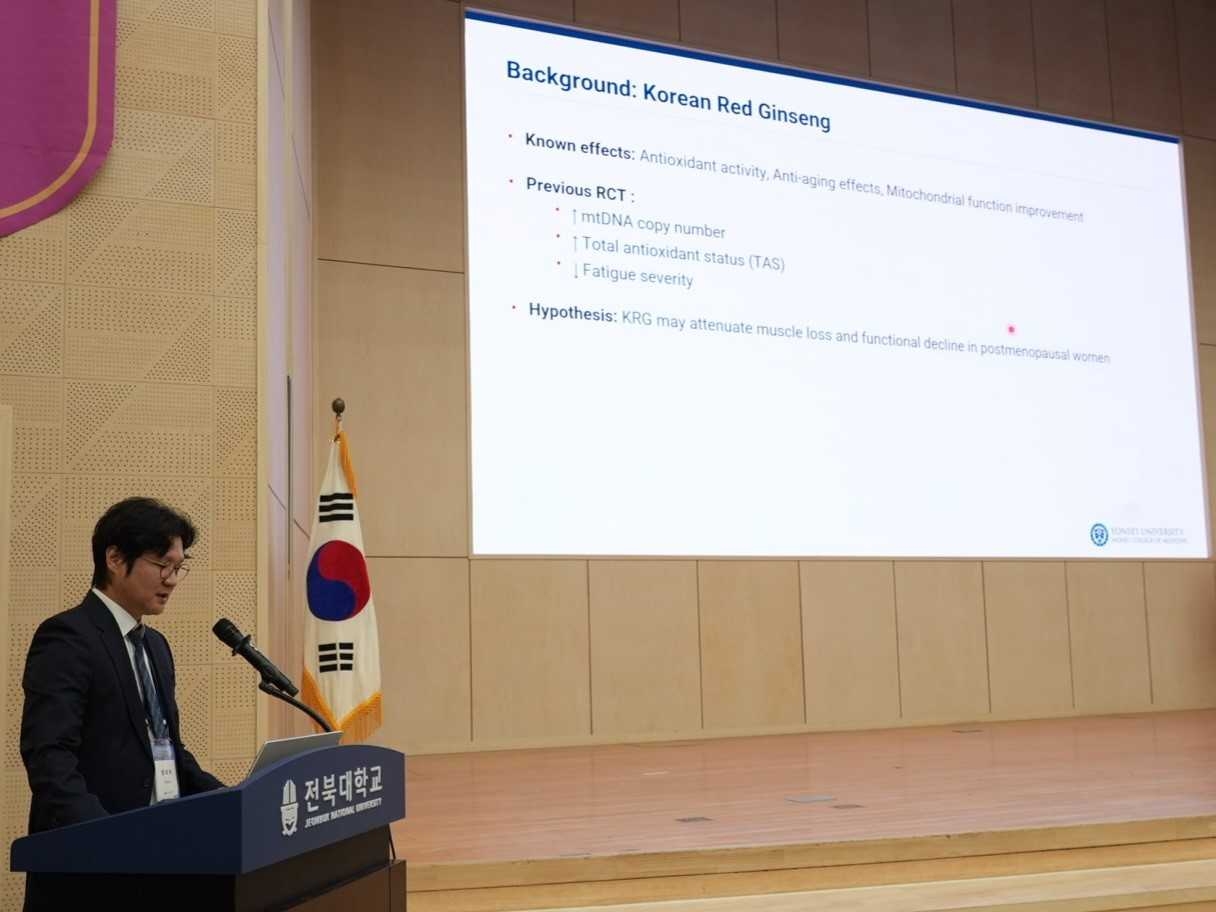
Red ginseng may help slow muscle loss and limit fat gain in postmenopausal women, while also improving metabolic indicators through changes in the gut microbiome, according to studies presented at a recent academic conference.
The findings were unveiled at the spring conference of the Korean Society of Ginseng held April 22 at Jeonbuk National University.
Sarcopenia, obesity and diabetes are key metabolic conditions linked to aging. Sarcopenia — the progressive loss of muscle mass and function — was classified as a disease by the World Health Organization in 2016 and recognized in Korea in 2021. Postmenopausal women are particularly vulnerable, with muscle mass declining by about 0.6 percent annually due to reduced estrogen levels.
A team led by Jung Tae-ha, professor at Yonsei University’s Wonju College of Medicine, conducted a double-blind, randomized controlled trial involving 51 postmenopausal women aged 50 and older.
Participants were assigned to either a red ginseng group or a placebo group, taking 2 grams daily for eight weeks.
Both groups experienced muscle loss, but the decline was significantly smaller in the red ginseng group. Median total muscle loss was 178 grams, compared with 595 grams in the placebo group. Fat mass rose significantly in the placebo group but showed no meaningful increase among those taking red ginseng.
The effect was more pronounced in non-obese participants, where both muscle loss and fat gain were significantly lower in the treatment group. No abnormal findings were observed in blood tests, supporting safety.
“The study demonstrates red ginseng’s potential to suppress age-related muscle loss and limit fat gain in postmenopausal women,” Jung said, adding that preventive use could help slow sarcopenia progression.
In a separate study, a team led by Moon Ki-sung of Korea National University of Transportation examined red ginseng extract in obese mouse models.
Mice given the extract showed lower weight gain, improved blood glucose and reduced insulin resistance. Microbiome analysis revealed increased levels of beneficial bacteria such as Roseburia intestinalis, suggesting gut microbiota changes may play a role in metabolic improvements.
The conference featured more than a dozen studies on red ginseng, including research on anti-inflammatory effects and hangover relief, with around 100 researchers in attendance.
minmin@heraldcorp.com