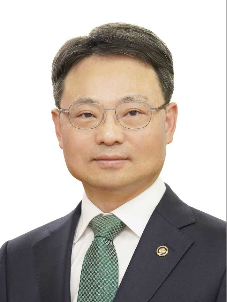
By Park Eun-sik
Minister of the Korea Forest Service
At the 44th meeting of the Green Climate Fund Board, recently held in Songdo, Incheon, the Asian Forest Cooperation Organization — an intergovernmental body established under the leadership of the South Korean government — was unanimously approved as a GCF Accredited Entity. Achieving accreditation within just eight years of its establishment is a notable milestone, underscoring AFoCO’s emergence as a trusted international platform for forest cooperation.
This accreditation represents more than an institutional milestone. It opens a new pathway for forest-based climate finance at a time when the climate crisis is no longer a distant threat, but an immediate reality, manifesting in large-scale wildfires, severe droughts, floods and biodiversity loss. Developing countries are particularly vulnerable, yet often lack the financial resources, technology and expertise needed to respond. The global community is now demanding not just commitments, but implementation backed by sustainable financing.
The GCF is the world’s largest multilateral climate finance mechanism, supporting developing countries in transitioning to low-emission, climate-resilient growth. Access to its resources is highly selective. Only institutions that demonstrate strong capabilities in fiduciary management, project execution, environmental and social safeguards and gender policy are accredited to directly manage GCF-funded projects.
With this approval, AFoCO becomes Korea’s fourth GCF Accredited Entity, joining the Korea Development Bank, the Korea International Cooperation Agency and SK Securities. The rigorous accreditation process — among the most demanding in global climate finance — affirms AFoCO’s financial systems, operational capacity and experience in international cooperation. Its track record in sharing Korea’s forest restoration expertise through official development assistance projects played a key role in this achievement.
Looking ahead, AFoCO is expected to lead large-scale forest and land-use projects worth tens of millions of dollars using GCF funding. Flagship initiatives — including the Landmark Program for Restoring Degraded Forests in Southeast Asia and the Kyrgyzstan Agroforestry Carbon Project, developed with Rabobank — are poised to gain further momentum. These projects go beyond reforestation, incorporating advanced technologies such as satellite-based monitoring, artificial intelligence and drone-enabled measurement, reporting and verification systems.
The accreditation also creates opportunities for Korean companies. By linking AFoCO’s corporate partnership platform, Friends of Asia and Asian Forests, with GCF financing, blended finance structures could mobilize private investment while supporting Korea’s Nationally Determined Contribution through internationally transferred mitigation outcomes.
Still, accreditation is only the beginning.
GCF projects are complex and resource-intensive, requiring strong capacity from project design to implementation and evaluation. Given AFoCO’s current organizational scale, challenges may arise in managing large, multicountry projects. Continued government support — both financial and institutional — along with broader public engagement, will be essential to ensure AFoCO can effectively drive forest-based climate initiatives across Asia.
In the face of a global climate crisis, no country can safeguard its forests alone. Wildfires, emissions and ecological disruption do not respect national borders. Forest cooperation is no longer optional — it is a strategic necessity. Through AFoCO, Korea now has a meaningful platform to expand its role as a global green leader. The Korea Forest Service must continue to lead this effort — strengthening international cooperation, advancing forest-based climate solutions and contributing to a more sustainable future.
Park Eun-sik is Minister of the Korea Forest Service. Views in this column are his own. -- Ed.
khnews@heraldcorp.com