

Marking 40th anniversary, troupe reflects on legacy as pioneer of Korean creative ballet
Becoming a "classic" is less a moment than a process — a long, uneven accumulation of revisions, failures and returns. Many of the works we now consider classics also required time to mature. "Swan Lake" was dismissed at its 1877 premiere and only entered the canon after years of reworking; "The Nutcracker," first staged in 1892, met a similarly chilly reception before becoming a seasonal staple. In ballet, as in all performing arts, endurance is earned over time.
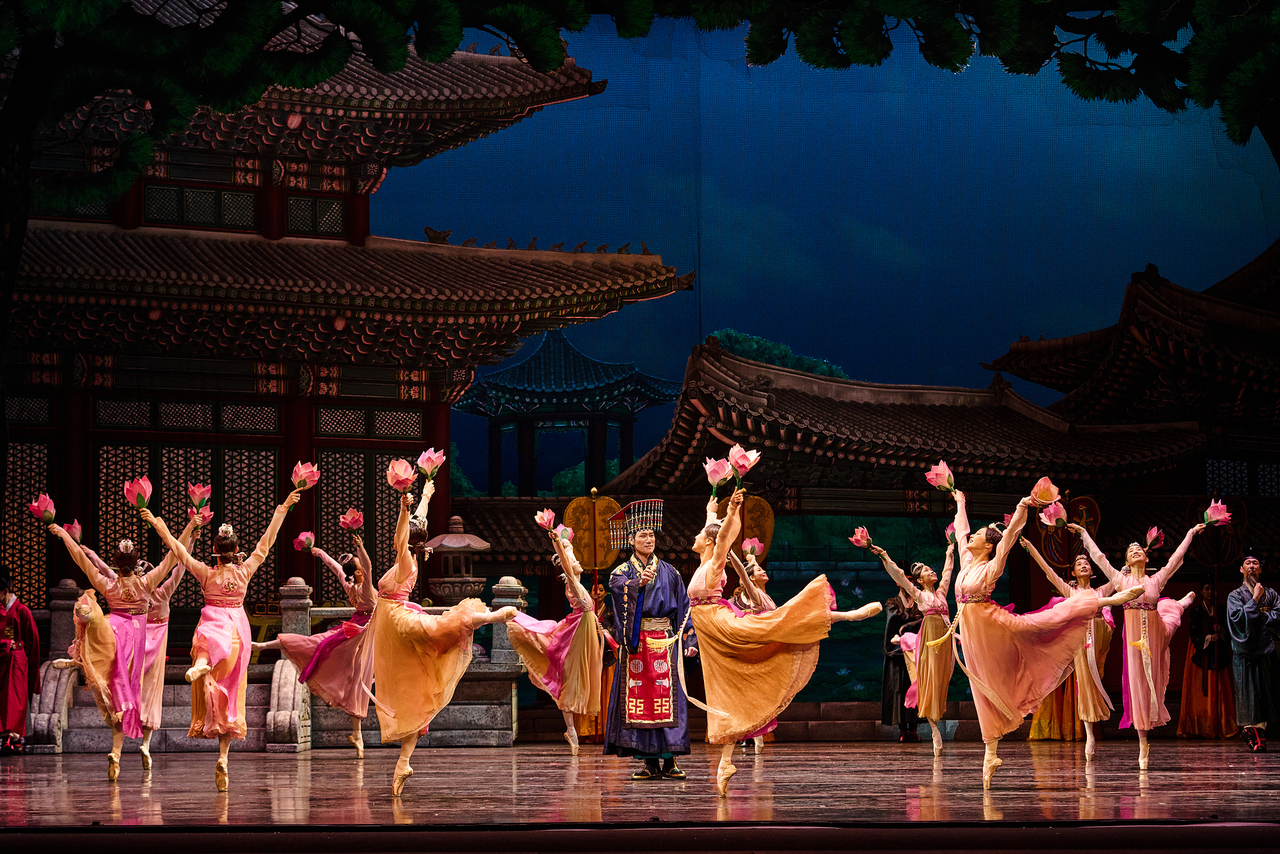
Now, in Korea, a homegrown work is staking its own claim to that lineage. "Shim Chung," created by Universal Ballet and having its premiere in 1986, turns 40 this year. Revived this week for five performances from Friday to Sunday, it is widely regarded as a landmark of Korean creative ballet — a work that has traveled to more than a dozen countries and some 40 cities, while steadily evolving in choreography, staging, sets and costumes. Above all, its significance lies in its distinctly Korean narrative.
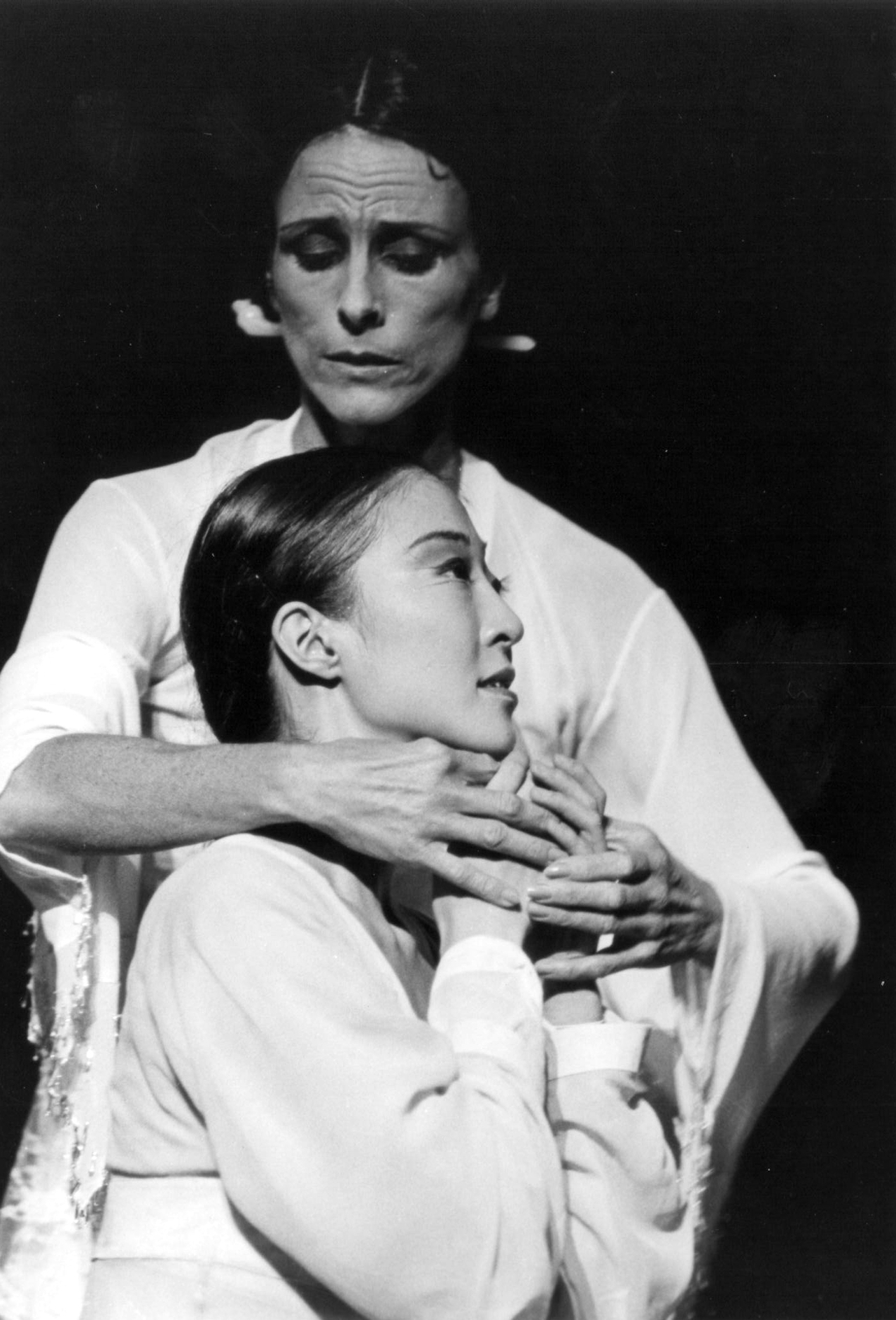
"To take a production from birth to legacy, to see it become a classic, is really rewarding. I'm just proud and it's very fulfilling to be able to care for a production for all these years," said Julia H. Moon, general director of Universal Ballet, in an interview with The Korea Herald. Moon also danced the title role at the ballet's 1986 premiere.
"In opera, there is 'Madame Butterfly' and 'Turandot' — works that bring Japanese and Chinese culture into the language of opera. In ballet, there is 'Don Quixote' with its Spanish flair, and 'La Bayadere,' which draws on Indian culture. The question 'Why not Korean culture?' was really the beginning of 'Shim Chung,'" she said.
Beginning with story that could travel
The company's founding artistic director, Adrienne Dellas, arrived in Korea in 1976 and spent years building dancers from the ground up. By the mid-1980s, she was looking outward.
"If you are going to go abroad, you need your own colors," she would say. The breakthrough came, almost incidentally, in a bookshop when she picked up the Korean folktale of filial devotion. The idea of "hyo" — the Korean ethic of filial piety — along with its emotional clarity and archetypal structure, made it, in her eyes, "a perfect vehicle for a ballet."
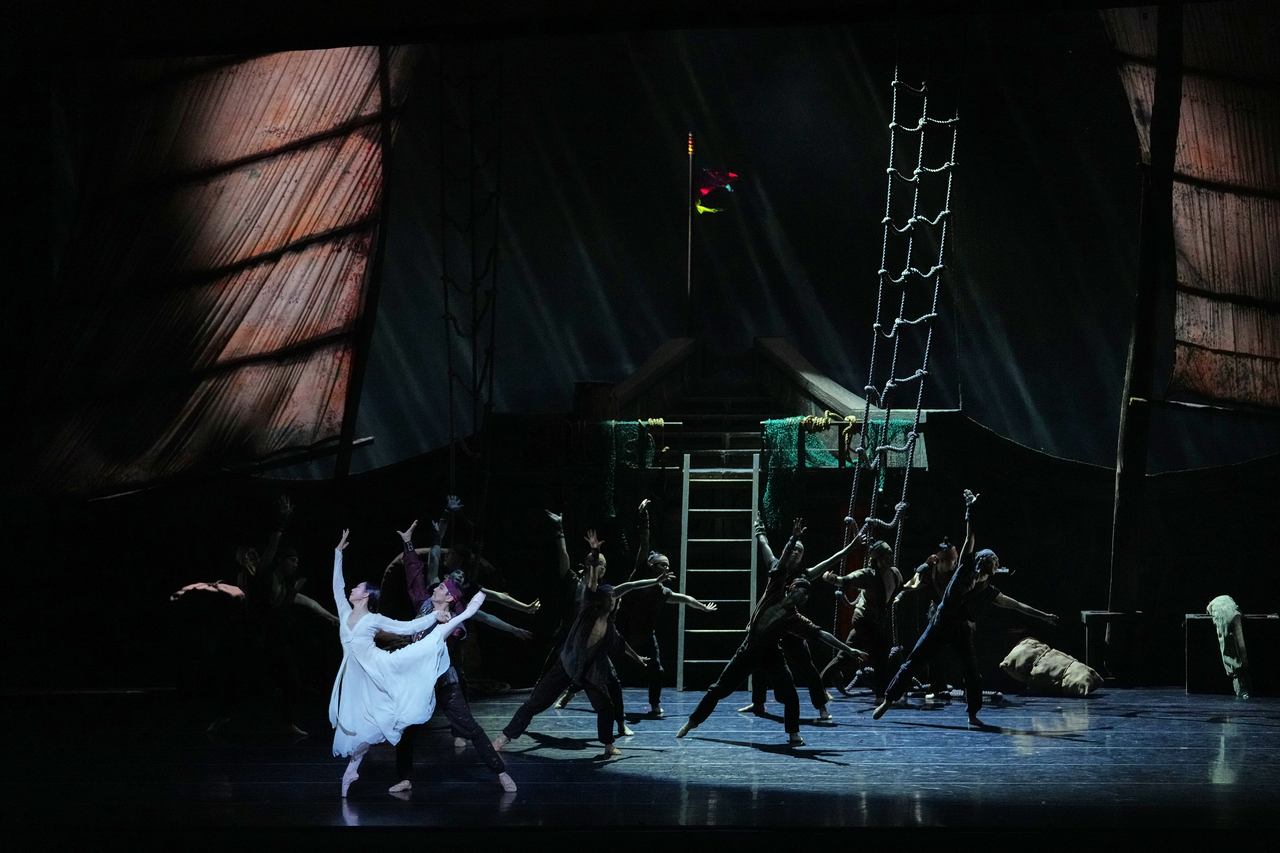
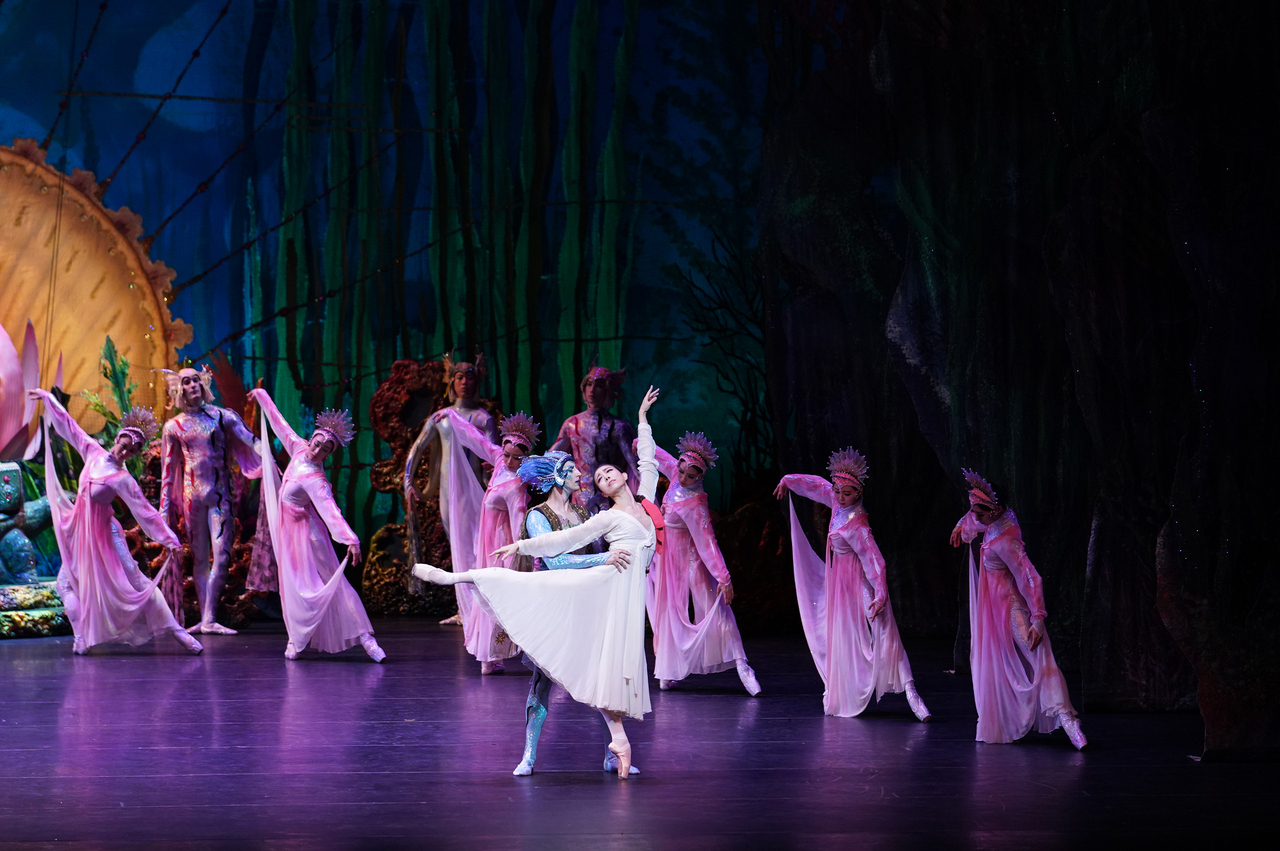
The story follows a young girl who sacrifices herself for her blind father after losing her mother at birth. Promised that 300 sacks of rice offered to a temple will restore his sight, Shim Chung agrees to be sent away as part of a human tribute. She is thrown into the sea, but is saved after the Sea Dragon King, moved by her devotion, returns her to the human world in a lotus. She falls in love with the king and later reunites with her father as well.
Growing with the company
When "Shim Chung" premiered, Moon recalled that Korea's ballet scene was still "very primitive," with little infrastructure and limited understanding of what it takes to run a ballet company.
"Over time, as the company matured, so did the production. 'Shim Chung' grew with us, evolving alongside the company," said Moon. "We have continuously revised and refined the work."
Over four decades, successive artistic directors layered the production with their own touches, contributing new choreography, structural revisions and visual refinements while incorporating more explicitly Korean court elements.
Music and design proved pivotal. A score once divided among three composers was unified in 1988 under Kevin Barber Pickard, giving the ballet greater cohesion and scale. Costumes, too, evolved to sharpen visual contrasts and deepen the work's aesthetic identity.
Moon also contributed choreographically, adding a scene in which royal consort candidates, dressed in traditional Korean ceremonial robes, perform a court dance — a moment that underscores the ballet's distinctly Korean identity.
Moon is confident that "Shim Chung" onstage today is the strongest version yet.
Not Odette, not Giselle, but Shim Chung
In the end, everything comes down to the drama and the emotion it carries.
In most classical ballets, a central male-female pair and their romance or tragedy anchor the narrative.
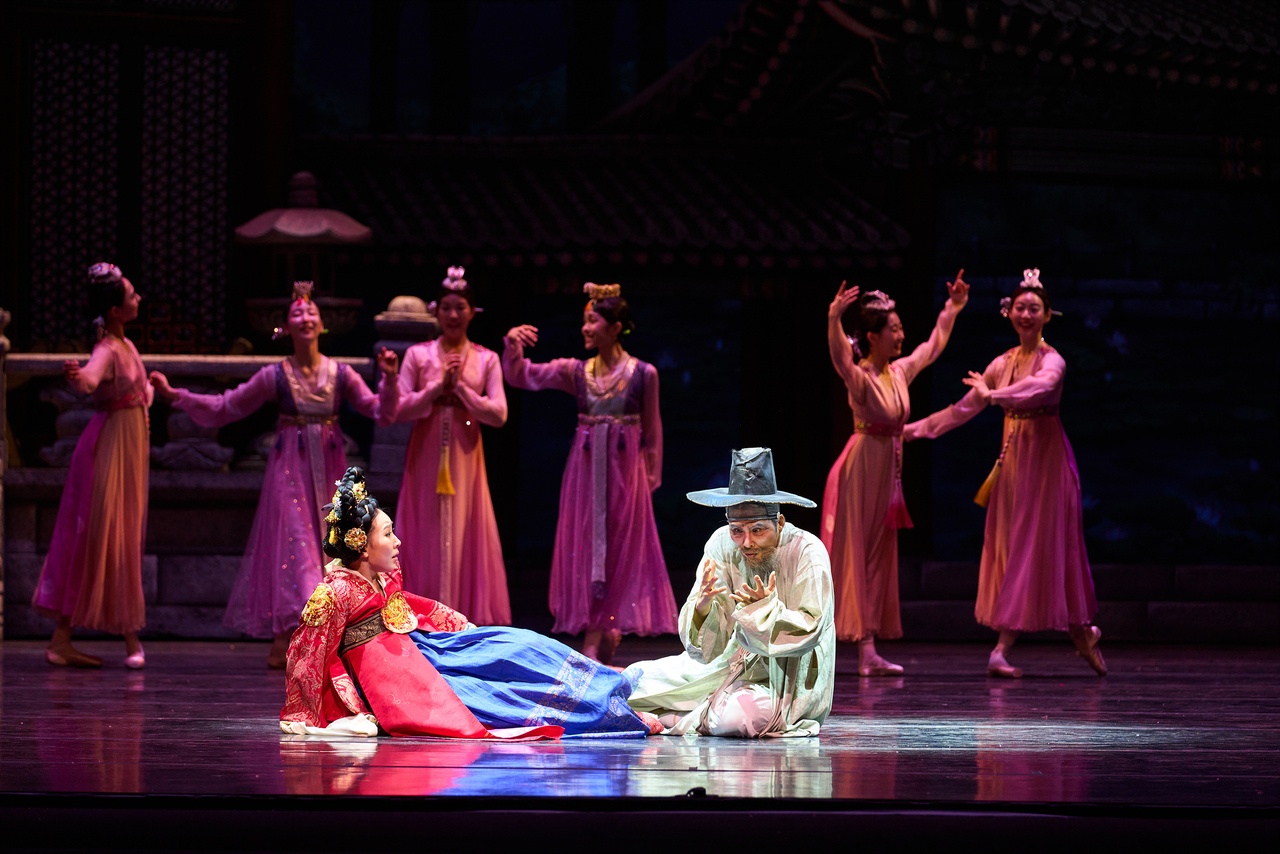
Here, the male lead shifts with each act — from the ship's captain to the Underwater Dragon King to the King — leaving Shim Chung to carry the story alone.
"So she has to thread the entire ballet. If you are not a strong actor, it is very difficult to hold the audience."
She often reminds dancers to approach the work as a "drama ballet," where expression must travel through the fingertips, the turn of the head and the gaze.
That emotional clarity, she said, transcends cultural barriers.
"When we tour abroad, you can sense some confusion at first. The idea of "hyo" (filial devotion) is uniquely Korean," she said. "But emotion communicates. By the reunion scene, audiences, regardless of nationality, are in tears."
For dancers, too, the role carries a particular weight: not Giselle or Odette, but a distinctly Korean heroine.
"Now, there's hardly anyone who isn't familiar with Korean culture. I hope this work can endure — like 'Swan Lake' — and remain in the repertoire for years to come."
The ballet will open the 16th Korea Ballet Festival, launching a series of performances through June 21 at major venues including the Seoul Arts Center.
hwangdh@heraldcorp.com