On Thursday, South Korea’s stock market staged a dramatic rebound, a day after a dizzying crash. Yet the spectacle should not be mistaken for stability.
목요일 한국의 주식 시장은 아찔한 하락세에서 하루만에 극적으로 되살아났다. 그러나 안정을 되찾은 모습이라 착각해서는 안된다.
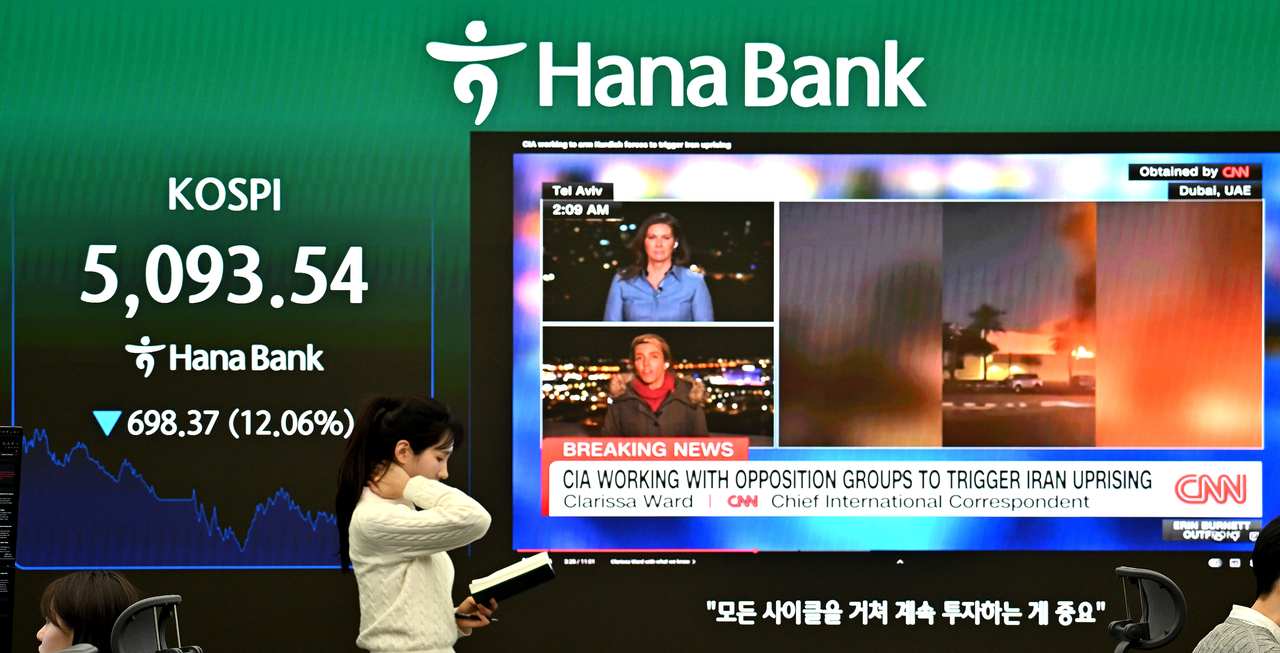
On Wednesday, the benchmark Kospi plunged 12.06 percent to 5,093.54, its steepest one-day decline since the aftermath of the Sept. 11 terrorist attacks in 2001. The selloff was triggered by escalating war fears in the Middle East. Circuit breakers halted trading as panic spread across the market. The “fear index,” the Kospi 200 volatility index, surged past 80 for the first time since its introduction in 2009.
수요일 대표 주가 지수 코스피는 2001년 발생한 9·11 테러의 여파 이후 일일 최대 하락폭인 12.06퍼센트를 기록하며 5,093.54로 떨어졌다. 중동 전쟁 관련 고조되는 공포로 촉발된 매도였다. 주식 시장 전반에 퍼진 두려움으로 일시 거래 중단 조치가 발동되어 거래가 한시적으로 정지되었다. "공포지수"로 불리는 코스피200 변동성지수는 2009년 도입된 이래 최초로 80을 넘어섰다.
By Thursday, the mood had flipped. The Kospi rebounded 9.63 percent to close at 5,583.9, snapping a three-session losing streak as bargain hunters returned and global markets steadied.
목요일 분위기는 전환되었다. 저점 매수자들이 돌아오고 글로벌 시장이 안정세를 찾으며 코스피는 9.63퍼센트 반등해 5,583.9에 마감하며 3일 연속 하락세를 끝냈다.
Even so, the index remains far below the 6,300 peak recorded on Feb. 26 that symbolized the optimism of the "Kospi 6,000 era."
그럼에도 코스피 지수는 2월 26일 "코스피 6천시대"라는 장미빛 꿈을 상징적으로 보여주었던 최고점 6,300에는 크게 못미쳤다.
The immediate trigger was the escalating conflict in the Middle East. US and Israeli strikes on Iran killed Supreme Leader Ayatollah Ali Khamenei, and Washington signaled the military campaign could continue. Iran’s political succession hardened expectations of confrontation rather than compromise. Markets quickly priced in the risk of wider war, pushing investors out of high-risk assets worldwide.
직접적인 원인은 중동에서의 고조되는 갈등이었다. 미국와 이스라엘이 이란을 공격해 최고지도자 아야톨라 알리 하메네이가 사망했고 미국 정부는 군사 작전이 지속될 수도 있다고 시사했다. 이란의 정치적 세습은 타협보다는 대치의 가능성을 높였다. 주식 시장은 전쟁의 확산 위험을 빠르게 반영했고 전세계적으로 투자자들이 고위험 자산에서 손을 떼게 만들었다.
In South Korea the reaction was severe. The Korean won weakened sharply early Wednesday, at one point breaching the psychologically significant 1,500 per dollar level in offshore trading, the first such move since the global financial crisis.
한국에서 반응은 심각했다. 원화는 화요일 오전 급락해 역외거래에서 글로벌 경제 위기 이후로 처음 심리적 마지노선인 달러당 1500원을 넘기도 했다.
Over two sessions the Kospi shed nearly one-fifth of its value before Thursday’s rebound.
목요일 반등 전까지 이틀새 코스피는 오분의 일에 가깝게 폭락했다.
Energy exposure explains part of the vulnerability. Roughly 70 percent of the country’s crude oil imports and more than 20 percent of its liquefied natural gas shipments pass through the Strait of Hormuz. Iranian threats to disrupt traffic through that corridor raise the prospect of surging oil prices, higher shipping costs and supply bottlenecks.
에너지 분야의 위험이 이 취약함의 한 원인이다. 한국이 수입하는 원유 약 70퍼센트 그리고 액화천연가스 20퍼센트 이상이 호르무즈 해협을 통과한다. 이 해협을 통과하는 것을 막겠다는 이란의 위협은 유가 상승, 운송비 인상, 공급 병목의 가능성을 높인다.
The market reaction also points to deeper structural weaknesses. South Korea’s stock market is heavily concentrated in a small number of exporters. When shocks hit sectors such as semiconductors, autos or shipbuilding, the effects ripple quickly across the entire index.
시장의 반응은 심층적인 구조적 취약점을 지적하는 것이기도 하다. 한국의 증시는 소수의 수출 기업에 과도하게 집중되어 있다. 반도체, 자동차, 조선 등의 분야가 타격을 입으면 그 반향은 빠르게 주가 지수 전체로 퍼져나간다.
Recent gains had already stretched the gap between markets and the underlying economy. Over the past eight months, the Kospi doubled from around 3,000 to above 6,000, driven largely by global liquidity and aggressive retail investing rather than stronger fundamentals.
최근의 상승세는 이미 시장과 실물 경제 간의 격차를 벌려 놓았다. 지난 8개월간 코스피는 약 3천에서 6천으로 두 배 늘어났고 이는 경제의 기초여건이 튼튼해져서라기보다는 글로벌 유동성과 공격적인 개인투자로 인한 것이었다.
Growth last year hovered around 1 percent, industrial production slowed, and domestic consumption weakened. A market built on optimism can climb quickly. It can also fall just as fast.
지난해 성장률은 1퍼센트에 그쳤고 산업 생산은 둔화되었으며 국내 소비는 부진했다. 낙관론에 기반한 시장은 빠르게 상승할 수 있지만 그만큼 빠르게 하락할 수도 있다.
Government intervention may help steady nerves. On Thursday, President Lee Jae Myung ordered a 100 trillion won ($68.3 billion) market stabilization program aimed at supporting financial markets and preventing a liquidity crunch.
정부의 개입은 심리적 안정감을 주는데 도움이 될 수도 있다. 목요일, 이재명 대통령은 금융 시장을 지원하고 유동성 위기를 방지하기 위한 100조 규모의 시장 안정 프로그램을 지시했다.
Such measures may place a temporary floor under asset prices, but they cannot offset the pressures of high oil prices, a weakening currency and rising inflation if the Middle East conflict drags on.
이러한 대책은 주가에 일시적인 보호망이 되어줄지는 모르나 중동에서 갈등이 지속될 경우, 고유가, 원화 약세, 인플레 심화로 인한 압박을 상쇄할 수는 없다.
The challenge extends beyond emergency management. Policymakers must strengthen market resilience and the broader economy through coordination among financial authorities, deeper foreign exchange markets and legislation supporting corporate investment.
어려움은 비상사태에 대처하는 것에 그치지 않는다. 정책입안자들은 금융 당국간 공조, 외환 시장 활성화, 그리고 기업 투자 지원 법안을 통해 시장의 회복탄력성과 경제 전반을 강화해야 한다.
It also requires confronting a harder issue: Korea’s dependence on imported energy routed through geopolitically fragile regions. Strategic reserves may buy time, but they cannot eliminate the vulnerability.
이를 위해서는 더 어려운 문제에 대처하는 것이 필요하기도 하다. 지정학적으로 취약한 지역을 통과하는 수입 에너지원에 대한 한국의 의존이다. 전략적 보유고는 시간을 벌어줄지언정 취약성을 제거하지는 못한다.
Thursday’s rebound offers relief, not a recovery. The violent swings of the past two days suggest more volatility ahead. In a world where geopolitical shocks travel instantly through financial markets, resilience may prove the more valuable benchmark than any headline index level.
목요일의 반등은 회복이 아니라 잠시 숨통이 트인 것에 지나지 않는다. 지난 이틀간의 급격한 요동은 향후 시장의 불안정성을 암시한다. 지정학적 충격이 즉각 금융시장으로 전파되는 세상에서 탄력회복성은 그 어떤 대표 지수 수치보다도 가치있는 지표로 판명될지도 모른다.
aftermath 후폭풍
volatility 변동성
streak 연속
breach 위반하다, 뚫다
crude oil 원유
ripple 파문처럼 번지다
fundamentals 기초, 기본여건
crunch 부족 사태
offset 상쇄하다
khnews@heraldcorp.com