
Social media posts shaming passengers in pregnancy priority seats spark debate over raising awareness versus defamation
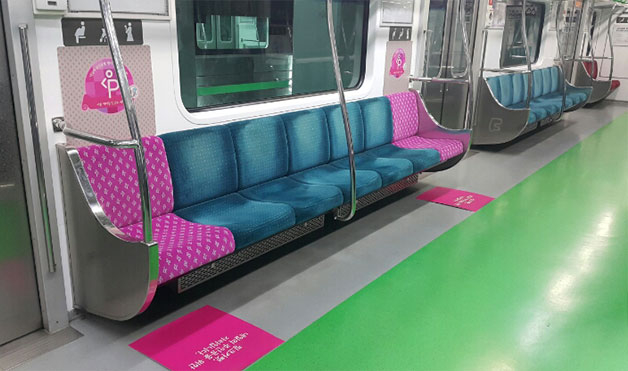
The yearslong debate over "pink seats" on buses and subways in Korea has taken a new turn amid a surge in social media posts shaming passengers who are apparently not pregnant.
A search for priority seating for pregnant women on local social media platforms turns up numerous photos and short videos of passengers occupying these seats, often with their faces blurred.
"I mean, sure, people can sit there for a bit if they're tired. But if you see a pregnant woman, shouldn't you at least try to move? There was another woman whose belly was bigger than mine, and still no one gave up their seat," one user, who identified herself as nine months pregnant, wrote on Instagram, alongside a photo she had taken of a man looking at his phone while seated in a designated pregnancy seat.
Mostly filmed and shared by pregnant women, these posts often turn into a battleground flooded with comments condemning the practice as illegal secret filming.
"I get that pregnancy is tough, and I do think those seats should be kept open whenever possible. But is it really OK to film people's faces and post them online just to make a point? With digital crimes being such a big issue these days, this feels like an emotional overreaction," one user wrote on Threads.
Some see such public callouts as nothing more than an online witch hunt.
"There could be elderly passengers who simply dozed off while meaning to give up their seats when a pregnant woman arrived, or someone who's actually not feeling well and needs to sit. Taking photos and shaming them online just because they're sitting there, without knowing the full story, is a witch hunt and defamation," said Han Ji-hee, a 27-year-old graduate student in Seoul.
Introduced in 2013 as part of Seoul's women's policy initiatives and later expanded nationwide, priority seating for pregnant women usually consists of two seats per subway car, located at opposite ends of the central section. The seats are pink and identified by floor markings indicating their use.
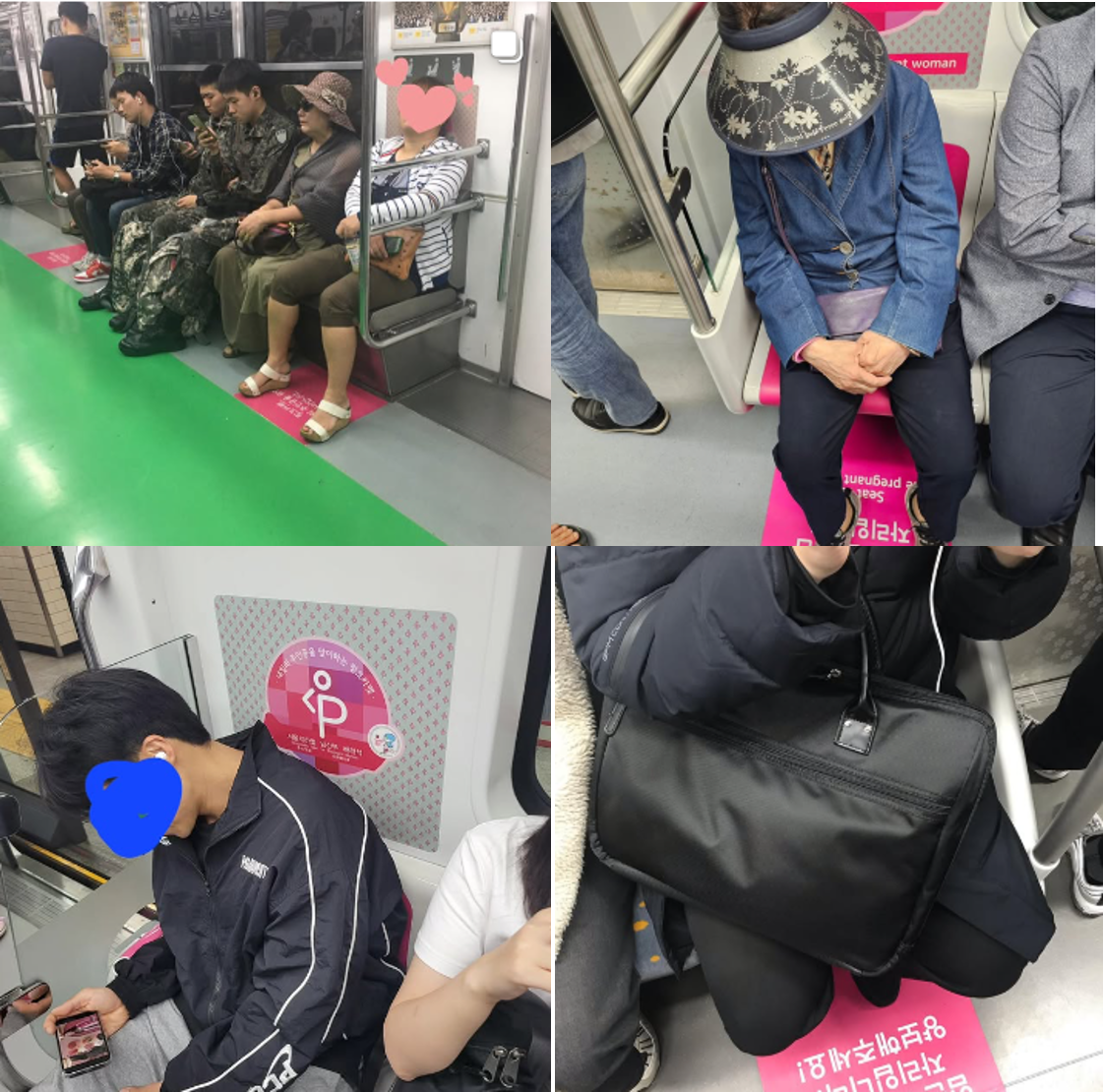
But their effectiveness has long been questioned. Complaints about nonpregnant passengers using the seats on Seoul Metro trains average about 7,000 a year, or more than 20 a day, data showed.
With little improvement even after more than a decade, some mothers defend their controversial online posts, saying they are not merely acts of shaming, but a desperate plea to raise awareness and call for greater consideration for expectant mothers.
"It's true that some people have gone too far to raise awareness. But if we don't do this, nothing changes. It's meant to be for the public good. Since institutional and social changes have been so slow, individuals are stepping in and taking matters into their own hands," said Shin, a 34-year-old expectant mother in Incheon who is due to give birth next month.
Experts, however, doubt the public interest behind such posts and warn of legal risks.
"Since the posts appear intended to publicly shame certain individuals, those involved could face defamation charges under the Information and Communications Network Act. If victims file a complaint, civil damages may also follow," said Yang Hong-seok, an attorney at law firm Igong.
The law imposes up to three years in prison or a fine of up to 30 million won ($20,400) for online defamation.
Will pink seat debate ever end?
The pink seat conflict has grown more intense in recent months, as more people rely on public transit due to high fuel costs.
A woman, five months pregnant, wrote on workplace community app Remember recently that she was verbally abused by an older man after sitting in a pink seat reserved for pregnant women on the Seoul Subway during her morning commute.
Even after explaining she was pregnant, the man continued to hurl insults and even nudged her leg with his foot, the post said.
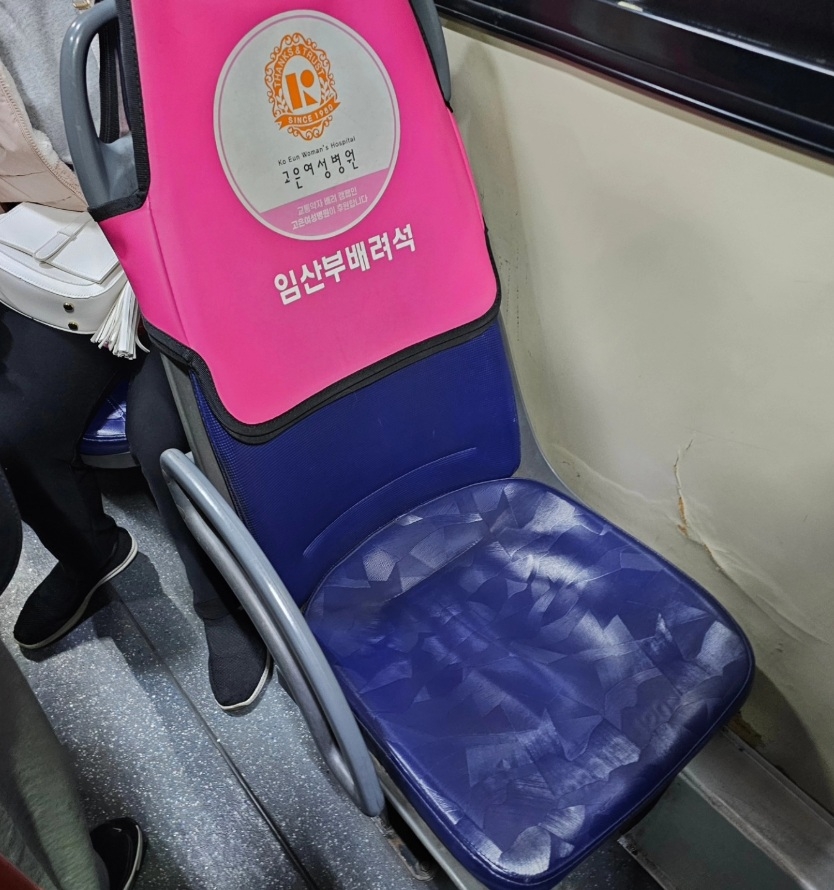
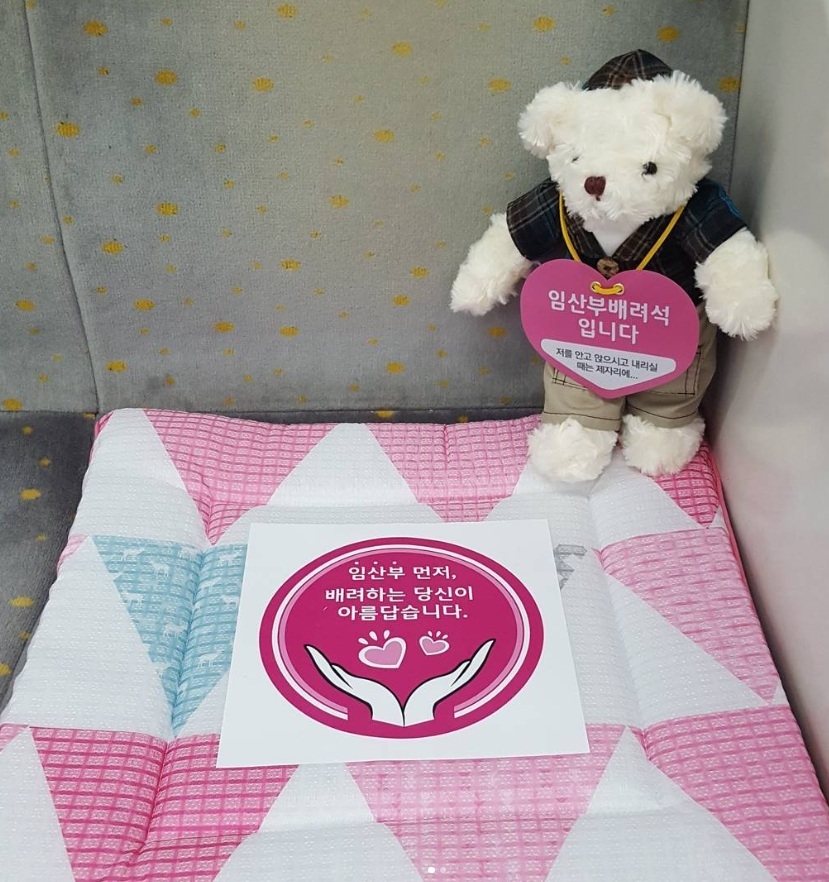
A similar incident occurred earlier this month on a Seoul Subway Line No. 1 train, where a middle-aged man seated in a designated pink seat refused to give up his seat for a woman wearing a pregnancy badge and instead shouted and swore at her when other passengers asked him to do so, saying, "How do I know she's really pregnant?" according to news reports.
Pregnant women stress the need for priority seating, as pregnancy can be difficult to recognize, particularly in its early stages.
"These seats let me sit without having to ask, which is a huge relief, especially during crowded commutes. Given the higher risk of miscarriage early on, I don't think I'm being overly sensitive," said Yoo Eun-hye, a 33-year-old kindergarten teacher in Hwaseong, Gyeonggi Province, who is four months pregnant.
But voices against making consideration a social obligation have continued to grow.
"I once sat down for a bit because I felt sick after lunch and was going to get up if a pregnant woman needed the seat. But one woman kept glaring at me before telling me to move. I was going to give up my seat anyway, but it felt unfair to be treated like that," an office worker surnamed Han said.
"Some passengers may have health conditions that are not immediately visible, so expecting everyone to give up those seats could lead to another form of discrimination. Consideration only carries meaning when it is voluntary."
cjh@heraldcorp.com


![[Exclusive] Ateez to return in November](https://wimg.heraldcorp.com/news/cms/2026/09/02/news-p.v1.20260902.76162fb0ba55493aad1c076f240d0750_R.jpg?type=h&h=120)