President Lee Jae Myung's political lieutenant launches Incheon mayor bid, set to square off against right-wing incumbent
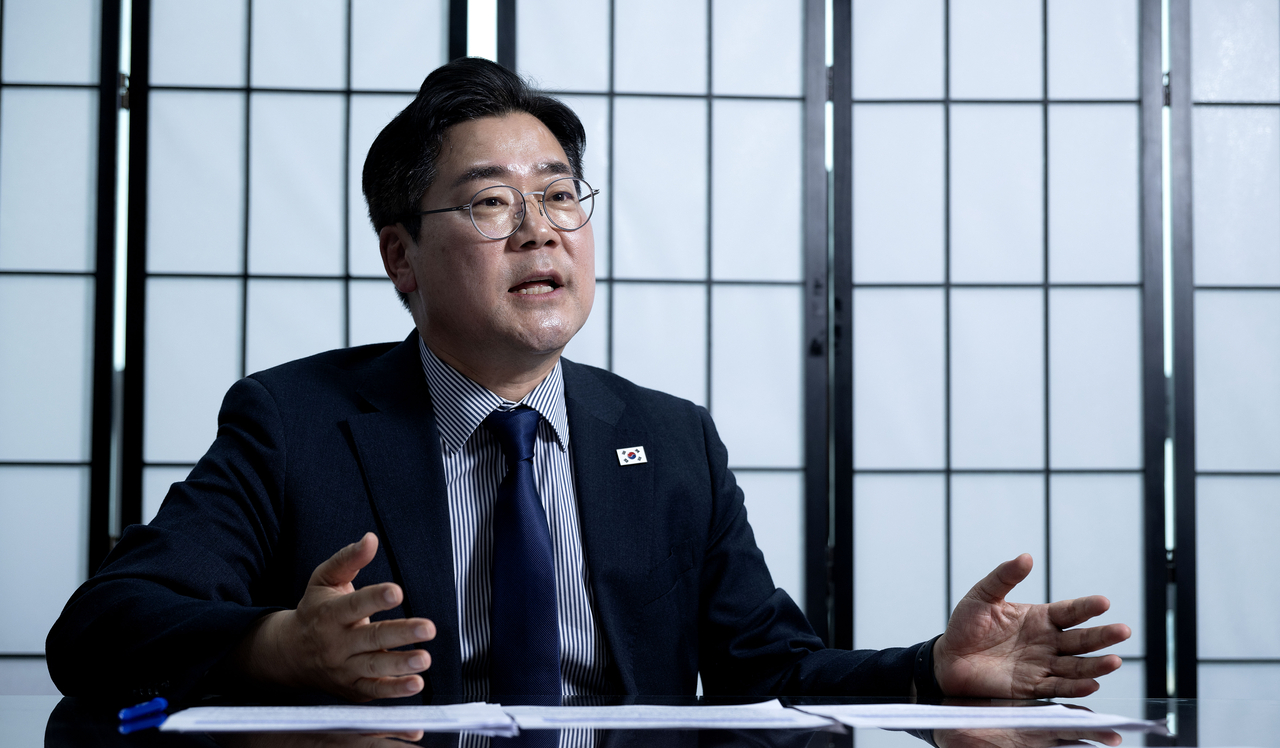
Rep. Park Chan-dae of the ruling Democratic Party of Korea is envisioning a self-sufficient, immigrant-friendly Incheon as he vies for the city's mayoral post in June.
Park, who has represented Incheon's Yeonsu-A constituency for three terms, says that the city is becoming more than just an immigrant gateway of South Korea.
"As South Korea is seeing a growing influx of foreign workers, Incheon has served as not only the gateway for foreigners to enter South Korea, but also their place to live," Park told The Korea Herald.
According to the Ministry of Data and Statistics, the number of migrants aged 15 or older in Incheon ― which combines foreign nationals and naturalized citizens ― rose 47.9 percent from 73,000 in 2018 to 108,000 in 2025. That growth rate dwarfs the national average of 28.9 percent recorded for the same period.
Park, who was confirmed in March as the Democratic Party's candidate for the Incheon mayoral election, said now is time for the metropolitan city with a population of some 3 million to adapt to "an inevitable trend."
"Establishing foreign resident support centers (across Incheon) is needed in this regard," Park said. "Also, foreigners need greater access to counseling services and occupational safety training as they work in industrial complexes or construction sites."
Yeonsu-gu, where Park's constituency is located, has the largest foreign population among Incheon's districts, standing at 19,100 — about 20 percent of all foreign residents of Incheon — as of March.
In addition, the Interior Ministry's 2024 figures show that foreigners, excluding naturalized citizens or those aged 18 or under, accounted for 6.4 percent of all Yeonsu-gu residents.
Yeonsu-gu is already home to communities of expats from Central Asia and Russia, as well as Southeast Asia and the Middle East. One such community is Hambak Village in Yeonsu-dong, where expats from countries like Kazakhstan, Uzbekistan and Russia ― including thousands of ethnic Koreans known as Koryoin ― gather and live.
"If a South Korean business seeks to make a foray into Central Asia or Russia, Incheon could be a very important gateway for them because the business could start from the human network of those who returned home after working in Incheon," Park said.
Ongnyeon-dong in Yeonsu-gu is also home to communities of those from Southeast Asia and the Middle East, who come for jobs in industrial complexes or used car export complexes in Incheon, according to Park.
What matters more than institutionalizing support for the migrant workers is creating an environment in which naturalized citizens and foreigners settle down and can integrate in the local community.
Park viewed social conflicts arising from the foreigner influx in Incheon as "frictional conflicts" that happen in times of transition, which could be solved "in a constructive manner."
"As Incheon is becoming culturally diverse, people here are increasingly accustomed to the country’s growing trend to fill in the significant portion of the workforce with foreigners," he said.
Road to self-sufficiency
If elected mayor, Park hopes to set Incheon on a path to self-sufficiency in terms of employment.
A 2023 estimate by the Ministry of Data and Statistics suggested that over 30 percent of Incheon residents commute to workplaces outside Incheon ― mostly either to Seoul or Gyeonggi Province. The metropolitan city's local employment was the second-lowest of all key municipalities in South Korea.
Park himself was among the tens of thousands of Incheon residents who commuted when he was a tax accountant, and he hopes to create an environment where long commutes are less prevalent.
"I am concerned whether Incheon residents should repeat the same," Park said, adding that lacking local employment for Incheon residents suggests there are relatively fewer good jobs in Incheon than Seoul or Gyeonggi Province.
"At a time when balanced development is needed for South Korea, Incheon faces both the opportunities and the constraints as the city neighboring the capital."
Against this backdrop, boosting self-sufficiency would be Park's priority for the port city to thrive if he is elected mayor of the city already home to free economic zones in Cheongna, Songdo and Yeongjong.
"We need to redraw the industrial map for Incheon's future," Park said.
Under Park's blueprint, Incheon would attract jobs by employing artificial intelligence technology to augment the city's logistics infrastructure and by bolstering renewable energy.
Park also pledged to establish a research hub for drug discovery and health innovation, in the city already home to biosimilar powerhouses like Samsung Biologics and Celltrion. An old sports complex would also be converted into a cultural complex with a multipurpose performance venue.
“More foreigners would be coming to Incheon in search of high-paying jobs, as well as those coming to invest, once I fulfill my policy initiatives in these areas,” Park said.
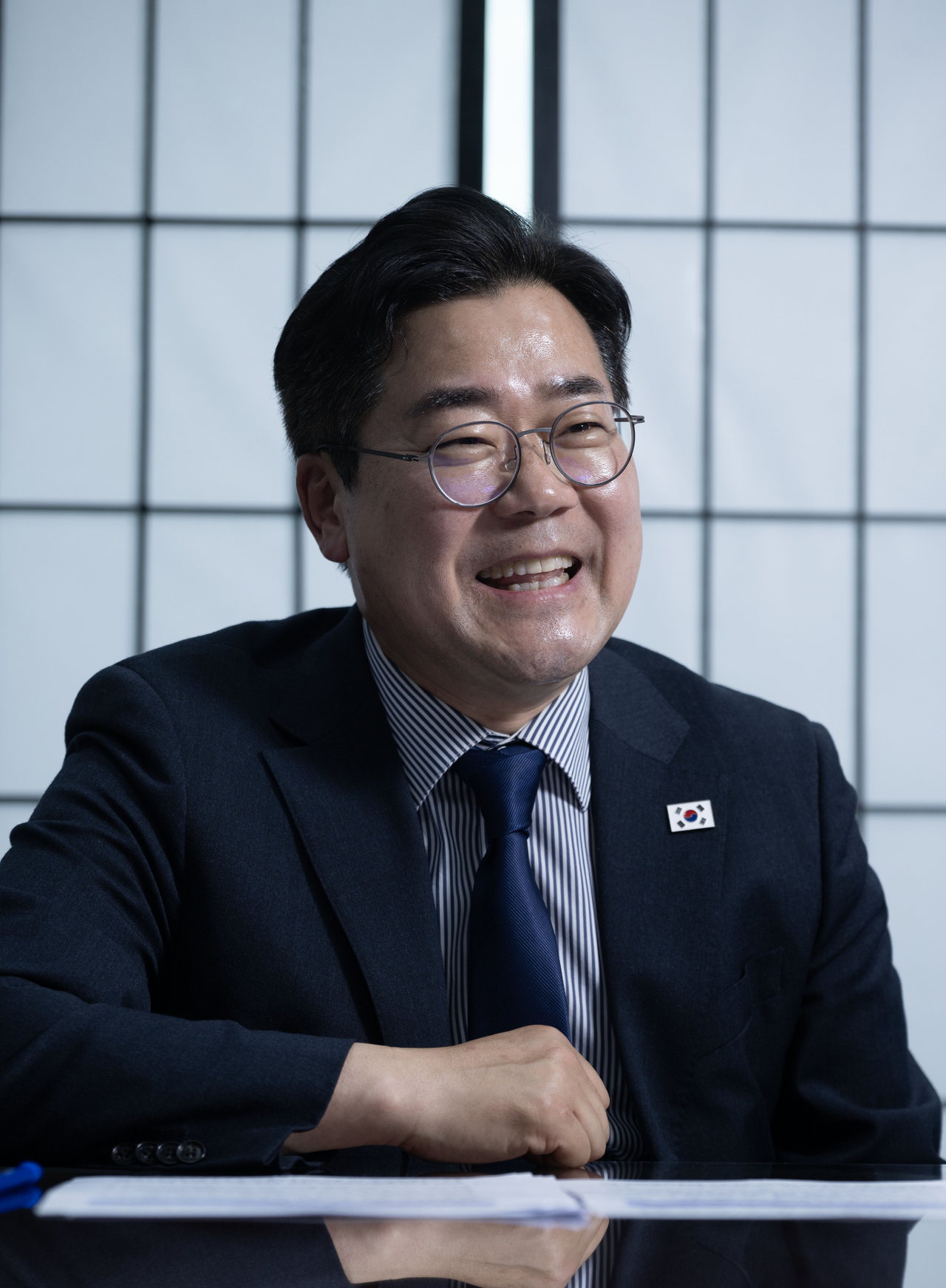
Park is President Lee Jae Myung's political lieutenant. He was formerly floor leader of the Democratic Party when Lee was the party chair. After Lee was elected president in June 2025, Park served as the acting chair of the party until August.
Facing off against incumbent Incheon Mayor Yoo Jeong-bok of the People Power Party in the June election, Park said he has an edge over Yoo given his close relations with the presidential office, the administration and the National Assembly.
"My past experience of communicating with the presidential office and (ruling party) lawmakers ... will help Incheon overcome challenges Incheon has been facing and open up Incheon's new future," Park said, pledging to address a range of development regulations the city is subject to for its economic growth.
consnow@heraldcorp.com