
Originating in online hate communities, anti-male symbol draws backlash across industries
In a recent Korean Army recruitment poster, a female model in combat uniform and a beret smiles softly, gazing off to the side with her hand resting just beneath her chin.
A common pose and hand gesture in advertising, yet it has drawn backlash in some online communities, where users took issue with the shape formed by her thumb and index finger.
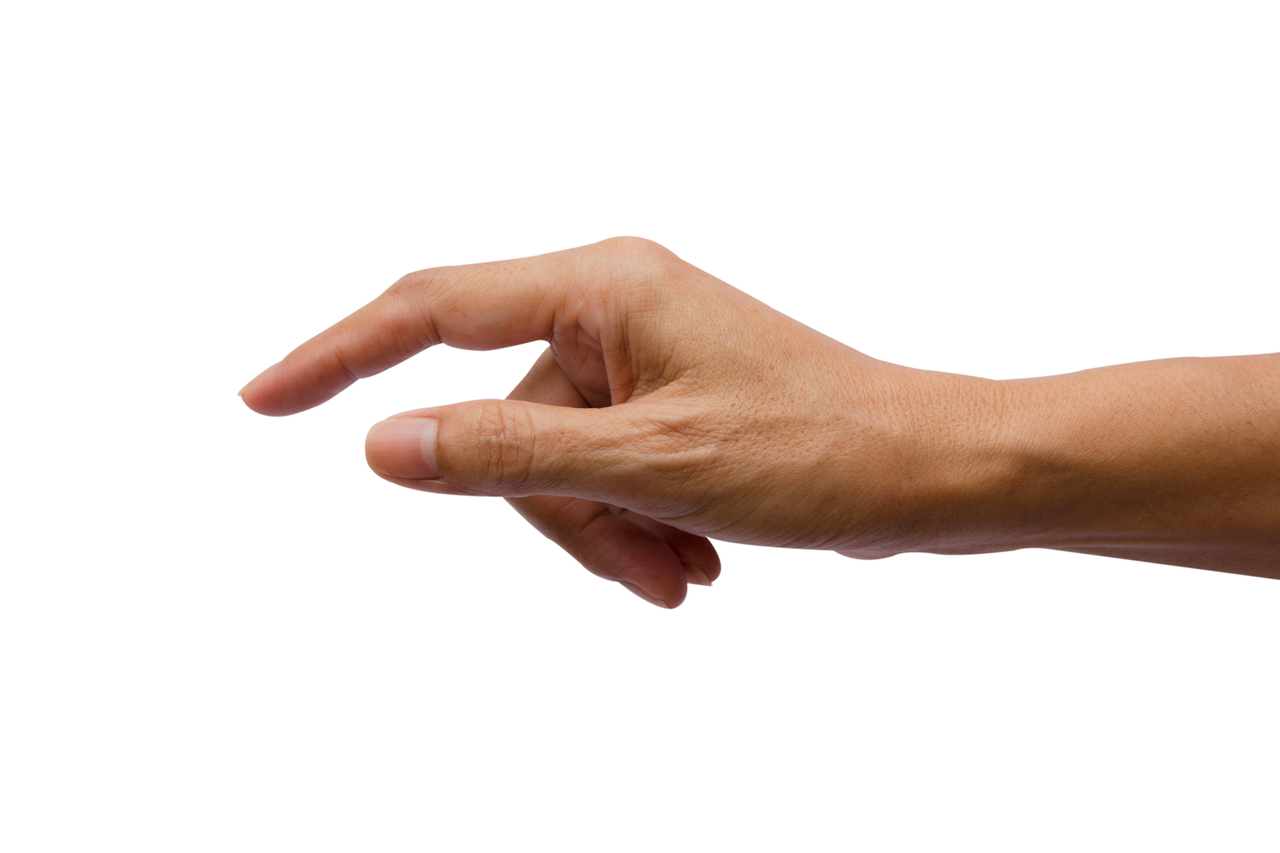
As the two fingers come together like a pair of tongs, some suspected it was intended to depict the pinching gesture known as the “Megalian hand,” used by fringe feminist online groups to demean men.

Believed to have originated from Megalia, an online feminist community in Korea known for its anti-male posts and campaigns in response to misogyny, the gesture was used to mock the size of Korean men‘s genitals.
Even more than a decade after the community was shut down, controversy over the two-finger pinching gesture continues to resurface across media, from advertisements and social media to games. Even similar-looking hand shapes are often accused of carrying the “Megalian hand” connotation, although it is often difficult to determine objectively whether such intent actually exists.
In 2024, a now-defunct promotional video on Renault Korea’s YouTube channel came under fire, as a female brand manager was seen repeatedly making the controversial gesture while introducing the carmaker’s new Renault Grand Koleos through interviews with employees.
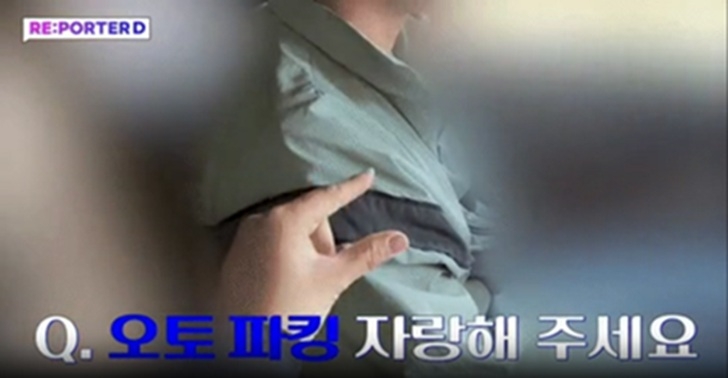
The company later issued an apology and suspended the employee involved.
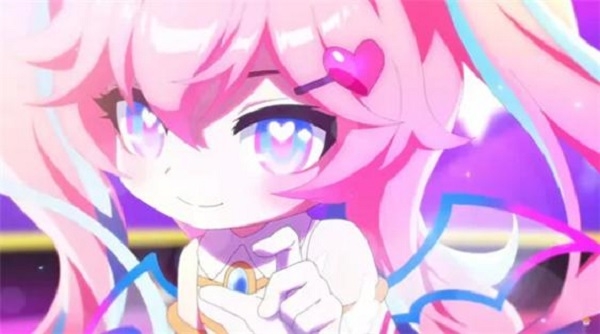
Gaming giant Nexon faced similar criticism the previous year, after the finger sign flashed on screen for barely a second in an online promotional video for MapleStory.
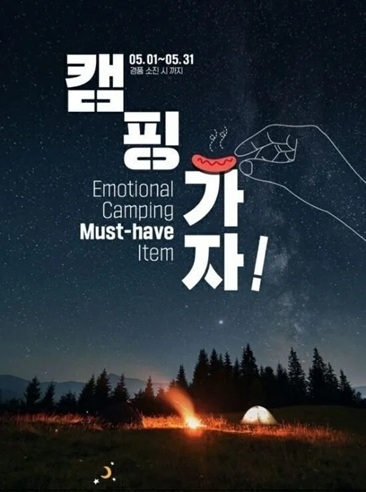
A 2021 advertising poster by GS25 promoting camping products, where fingers are shown picking up a sausage, even triggered boycott calls among some users, who argued that the gesture resembled the Megalian hand.
Benign or not, two-finger pinch now a no-go
Across cultures, hand gestures are often used as shorthand for meaning, including insult, affiliation or emotion. In many cases, their interpretation is widely shared within a society, making intent relatively easy to read.
For example, the middle finger in the United States is clearly understood as an explicit insult, leaving little ambiguity about the user’s intent.
The Megalian hand, however, differs in that a pinching motion between the thumb and index finger was, for most people, an everyday and largely neutral gesture before it became associated with a fringe group as an anti-male symbol.
As a result, companies and individuals have become increasingly cautious, often avoiding hand gestures in marketing when there is even a potential for misinterpretation or controversy.
This sensitivity has extended to global brands as well.
When Apple unveiled the iPhone 17 Air, its thinnest and lightest iPhone, measuring 5.6 millimeters thick and weighing 165 grams, it released promotional images showing the device held between the thumb and index finger to highlight its slim profile.
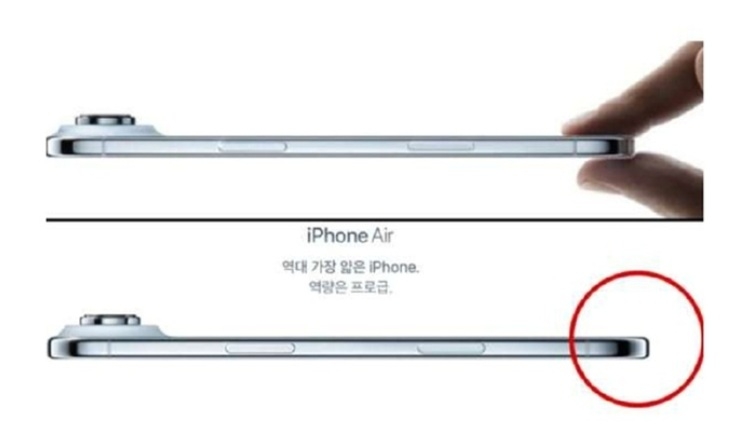
The advertisement appeared on Apple’s websites in most countries where it has retail stores, including the United States, China, Japan and France, but not on its Korean website.
The omission fueled speculation that the move was intended to avoid potential backlash, as the hand gesture could be interpreted as resembling the anti-male symbol and could trigger negative publicity.
“Since IT devices and video games tend to have a largely male consumer base, companies are naturally sensitive to how male users might respond. Apple likely aimed to head off any potential controversy in Korea from the outset,” Jang Sung-chul, a professor of consumer science at Sungshin Women’s University, told The Korea Herald.
"As marketing has shifted largely to online platforms, conflicts among online groups with divergent interests are now a major factor in corporate risk management.”
So for some marketers, gestures that once passed unnoticed are now subject to careful review.
"I once edited a cooking tutorial for a restaurant, and the chef naturally used a pinching hand gesture when talking about adding a small amount of seasoning or pointing out details. Then I saw comments calling it a ‘Megalian hand,' said Woo Sung-young, 29, a content marketer specializing in food-related content.
“That was something I had never even imagined. Since then, I’ve made sure to edit out those scenes or talk it through with the chef in advance.”
Fringe groups and their coded symbolisms

Cultural psychologist Han Min said seemingly benign gestures can sometimes be appropriated by fringe groups as symbolic tools embedded in public-facing content.
“Groups that direct hate at specific targets often create their own symbols or coded language and slip them into advertisements and TV programs, gaining a sense of superiority or victory from the fact that the public is exposed to their messages without realizing it,” he explained.
“They know that what they say and do is wrong. That is why they express it through anonymous hand gestures," he added.
Before the emergence of the Megalian hand controversy, a similar phenomenon was observed in online communities associated with male supremacy. Ilgan Best, or “Ilbe,” a far-right online community that emerged in the early 2010s, used a signature hand gesture resembling the OK sign.
The gesture involves forming a circle with the thumb and index finger while extending the middle and little fingers and folding the ring finger downward. It was used by members to signal affiliation with the group, which later became notorious for content demeaning women and disparaging certain regions.
“While they are aware they are wrong, that awareness fades as more like-minded individuals gather, and they come to derive a sense of self-worth from expressing the group’s identity in public, whether explicitly or implicitly,” Han explained.
cjh@heraldcorp.com


