
중국 브로커들이 한국어능력시험(TOPIK) 문제를 시험 전에 온라인에서 최대 750만원에 판매했다는 정황이 포착되면서 시험 공정성과 신뢰성에 대한 우려가 커지고 있다.
중국 소셜미디어 플랫폼 샤오홍슈에서 ‘TOPIK’을 검색하면 시험 관련 광고 게시물이 다수 확인된다. ‘카풀’, ‘점수 보장’, ‘즉시 합격’ 등으로 풀이되는 중국어 은어가 등장한다.
한국에 거주하는 한 학생은 코리아헤럴드에 “중국인 동급생들로부터 읽기·듣기 영역 답안을 시험 전에 받아 외웠다는 얘기를 들었다”고 전했다.
코리아헤럴드가 샤오홍슈에 올라온 한 브로커에게 서비스를 문의하자, 해당 브로커는 홍보용 책자를 보내왔다.
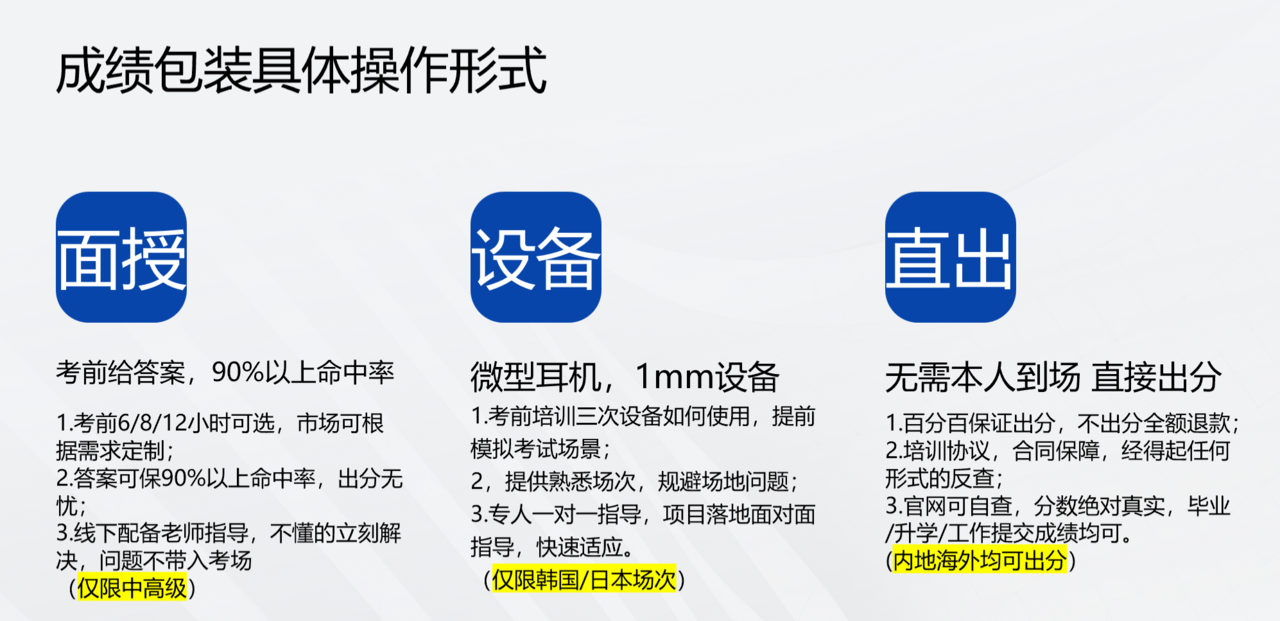
책자에는 대리시험, 90% 적중률을 내세운 사전 답안 제공, 초소형 무선 이어폰을 이용한 시험 중 실시간 1대1 지원 서비스 등이 소개돼 있었다.
책자에는 “답안은 시험 6시간 전, 8시간 전, 12시간 전 중 선택해 받을 수 있다”며 “적중률은 90%이므로 점수는 걱정할 필요가 없다”고 적혀 있었다.
해당 중국 브로커는 문제는 한국 내 시험장 직원에게 금품을 주고 입수했다고 주장했다. 대리시험이 실패할 경우 전액 환불도 약속했다.
크기 1밀리미터(mm)에 불과하다고 주장하는 초소형 무선 이어폰 사용법 교육도 제공한다고 했다.
무선 이어폰 서비스는 2만 위안(약 430만원), 시험 문제 사전 제공은 시점에 따라 2만5000~3만5000위안으로 책정됐다.
다른 게시물에서는 또 다른 수법도 확인됐다. 시차 때문에 먼저 시험을 치르는 유럽 등 지역 응시자들이 돈을 받고 문제를 외운 뒤 이를 브로커에게 넘기고 이후 다시 판매되는 구조다.
4월 12일 치러진 제105회 TOPIK 시험에 응시한 한 학생은 코리아헤럴드에 “샤오홍슈에 올라온 일부 답안이 실제 시험 문제와 일치했다”고 말했다.
국립국제교육원은 매 회차 A형과 B형 두 가지 형태로 시험을 시행한다.
국립국제교육원이 주관하는 TOPIK은 외국인 유학생의 국내 대학 입시 등에 널리 활용된다. 일부 대학과 학과에서는 졸업 요건으로도 요구된다.
교육당국에 따르면 2025년 TOPIK은 17개국에서 시행됐고, 9월까지 응시자는 약 55만 명에 달했다.
국립국제교육원은 관련 실태를 파악하고 있으며, 문항을 다양화하고 시험 일정 조정 등을 통해 대응하고 있다고 밝혔다.
국립국제교육원 TOPIK센터 관계자는 “소셜미디어에서 벌어지는 상황을 인지하고 있다”며 “응시자가 늘고 성적 활용 범위가 확대되면서 부정행위도 증가하는 추세”라고 말했다.
이어 “여러 대응책을 마련하고 있지만, 현실적으로 이를 완전히 차단하기는 어렵다”고 했다.
(코리아헤럴드 이승구 기자)
기사 원문
[Exclusive] Chinese brokers sell leaked TOPIK questions online for up to $5,000
Chinese brokers have been selling purported Test of Proficiency in Korean questions online for as much as $5,100 ahead of the exam, raising concerns over the integrity of the Korean-language proficiency test.
A search for “TOPIK” on the Chinese social media platform Xiaohongshu shows numerous posts advertising test-related services in Mandarin slang that roughly translates to “carpooling,” “score guarantee” and “immediate pass.”
One student in Korea told The Korea Herald that Chinese classmates had said they received answers to the reading and listening sections before the exam and memorized them.
The Korea Herald contacted a broker on Xiaohongshu to ask about available services. The broker responded by sending a promotional booklet.
The booklet outlined three services: proxy test-taking, advance answer provision with a claimed 90 percent accuracy rate, and real-time one-on-one assistance during the test using a small earpiece. It also said answers could be provided six, eight or 12 hours before the test with a 90 percent "hit rate," saying there was no need to worry about the score.
The broker offered pretest training on how to use a small earpiece, which it claimed was 1 millimeter in size. The booklet further said customers would receive a full refund if the proxy test service failed to produce a result.
The broker quoted 20,000 yuan ($2,900) for the earpiece service and 25,000 yuan to 35,000 yuan for advance access to test questions, depending on how early they were delivered.
The broker claimed the questions had been obtained from a staff member at a test center in South Korea.
Other posts suggested what appeared to be a coordinated scheme in which test-takers in earlier time zones, such as Europe, memorize exam questions and pass them to brokers for a fee. Brokers then resell the material to candidates in later regions before the test begins.
A student who sat for the 105th TOPIK exam on Sunday told The Korea Herald that some partial answer keys uploaded by brokers on Xiaohongshu matched answers from the test he took.
Searching for the term "TOPIK preparation" on Xiaohongshu yielded over 87.5 million posts, a majority of which related to testing malpractices.
TOPIK, administered by the National Institute for International Education, is held multiple times each year and is widely used by Korean universities in admissions, with some institutions or programs also using it to satisfy graduation requirements.
In 2025, the exam was administered in 17 countries, and the number of test-takers reached roughly 550,000 by September, according to education authorities.
Officially, NIIED administers two versions of the exam, known as Form A and Form B.
NIIED told The Korea Herald that it was aware of the malpractices and was doing its best to diversify test questions and adjust testing timetables.
"We are aware of what is happening on social media," said an official at NIIED's TOPIK Center. "There is an increase in test-takers and more places are accepting the scores now, leading to a surge in testing malpractices."
"We are coming up with many different responses, but the reality is we aren't able to prevent 100 percent of it."
seungku99@heraldcorp.com