
SDV set for 2027 launch, EV production to begin in Busan by 2028
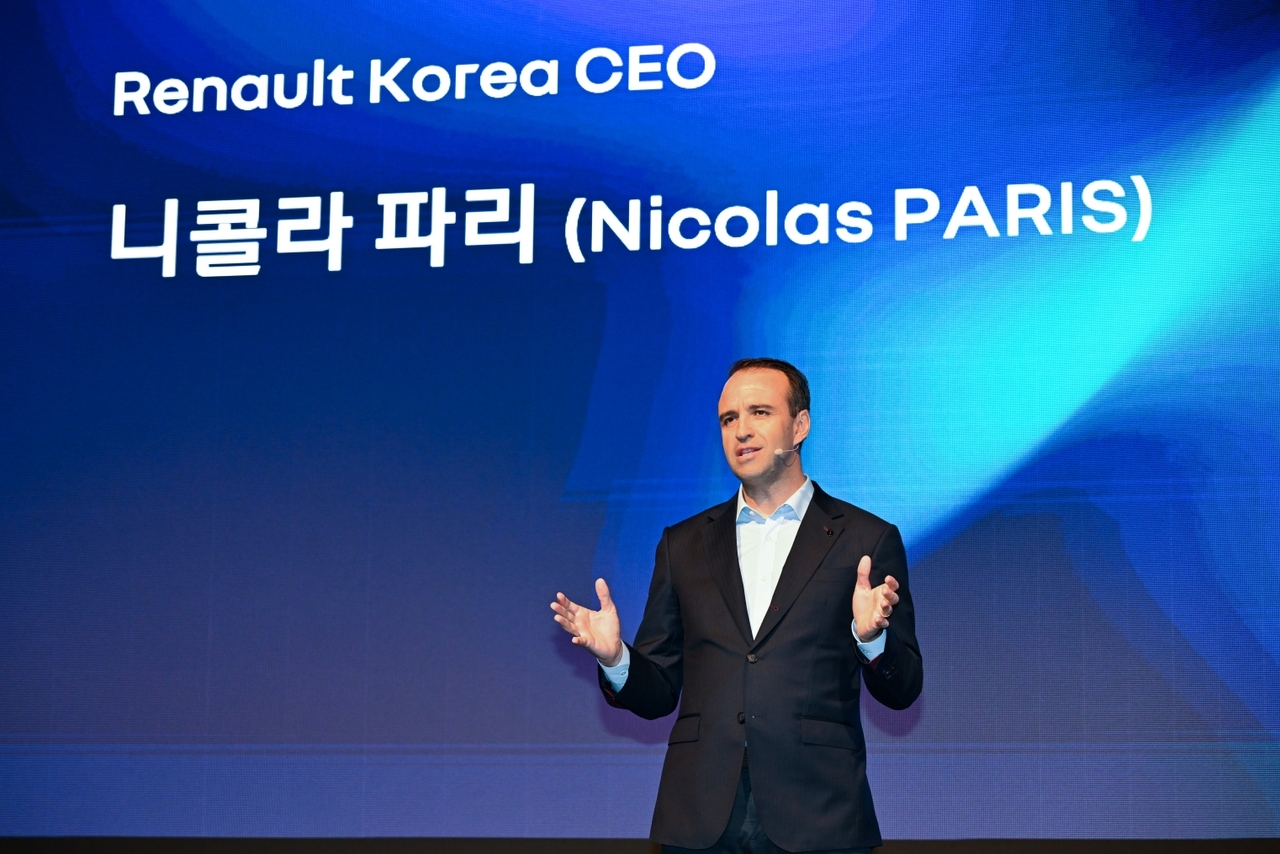
Renault Korea said Tuesday it will launch its first software-defined vehicle in South Korea in 2027, while its Busan plant will manufacture electric vehicles in 2028, as part of a broader push to transform the Korean unit into a hub for the French carmaker’s premium vehicle and future mobility.
Speaking at his first press conference since taking office in September, Renault Korea CEO Nicolas Paris announced the company’s plans to introduce one new model every year through 2029 under Renault Group’s "futureReady" strategy.
“Renault Korea’s mid-term strategy is one new model per year through 2029,” said Paris, stressing the company’s goal is to lead in quality and the premium segment, while gaining the capability to design and mass-produce flagship models for the group.
Paris outlined four pillars of the strategy for South Korea: “Growth Ready,” “Tech Ready,” “Operational Ready” and “Trust Ready.”
Under the growth strategy, Renault Korea aims to position itself as Renault Group’s hub for D- and E-segment vehicles. Paris said the company will begin producing Renault’s next-generation EV at its Busan plant in 2028.
To that end, he stressed that localizing EV battery production and building a domestic EV ecosystem are among Renault Korea’s priorities, stressing the need to catch up in electrification compared with other brands in Korea.
“The localization of full EV battery production is a key priority for the future. We will therefore focus on developing a competitive EV ecosystem in Korea to support this strategy.”
Renault Korea plans to launch a fully software-defined vehicle, or SDV, in 2027, though he declined to provide details on the model type or specifications. With the SDV, the carmaker seeks to move toward what Paris called an “AI-defined vehicle.
The company plans to offer Level 2++ end-to-end autonomous driving across both urban areas and on highways, while equipping the vehicle with Renault’s next-generation AI-based OpenR Panorama system, which Paris described as transforming the vehicle into an “intelligent companion.”
He also said Renault Korea would target a vehicle development cycle of under two years, noting the Grand Koleos, built in just 24 months, as an example.
Amid concerns that faster vehicle development could harm quality, Paris stressed quality remains Renault Korea’s top priority and that it will strengthen collaboration with partners to optimize existing technologies in the market for Korean customers.
sahn@heraldcorp.com


