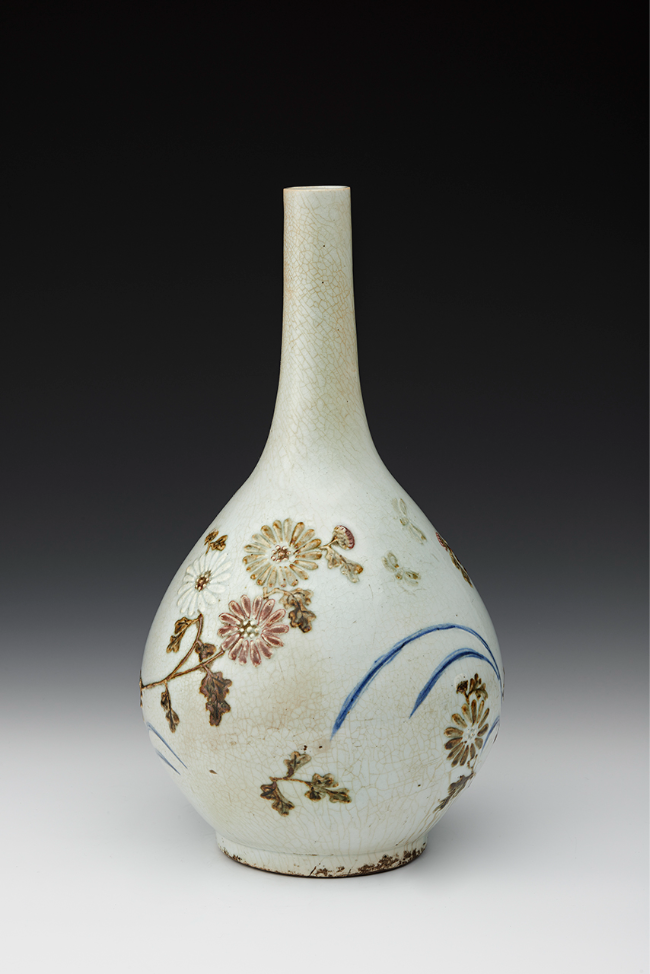
In 1936, a single piece of Joseon white porcelain fetched the equivalent of 15 houses at an auction in colonial Seoul.
It was Jeon Hyung-pil (1906-1962) who secured it after intense competition with Japanese collectors in the colonial era (1910-1945), claiming the work that might otherwise have disappeared overseas.
The white porcelain was later designated as a national treasure.
Jeon — who devoted himself to preserving Korean cultural heritage during the colonial period as a wealthy merchant — acquired the porcelain “White Porcelain Bottle with Grass and Insect Design in Underglaze Iron, Copper, and Cobalt Blue” for a record-breaking 14,580 won.
It was the highest price ever recorded at the Gyeongseong Art Club auctions at the time, according to the museum.
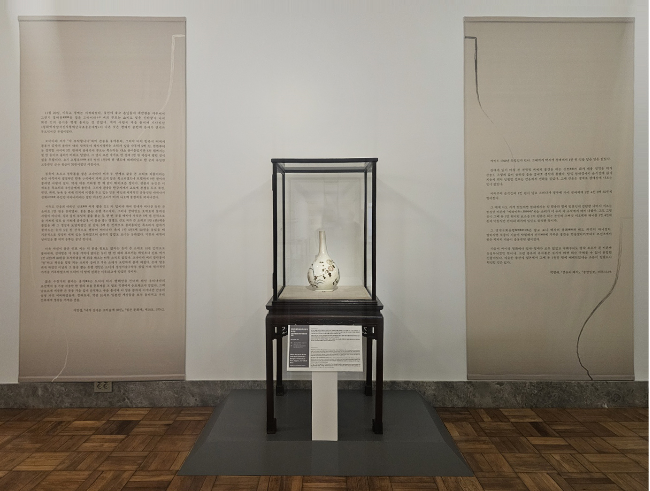
Marking the 120th anniversary of Jeon’s birth, the exhibition revisits his 14-year engagement with the auction market in the colonial era through archival materials and selected works from the museum’s collection.
The national treasure is unveiled to the public at the exhibition “The Spirit Preserved by Cultural Conviction” at the Kansong Museum of Art, Korea’s first-ever private museum built by the Korean collector in 1938, showing 46 pieces of Korean cultural heritage.
The white porcelain vessel, originally used to store oil such as sesame oil, later gained recognition for its outstanding craftsmanship.
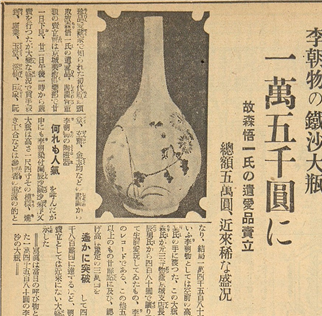
Alongside the national treasure is the article published on Nov. 23, 1936 by the Gyeongseong Ilbo, the official newspaper of the Japanese colonial government in Korea as the most widely circulated publication during that time.
“The auction began at 1 p.m. on Nov. 22 and drew an overwhelming number of buyers, creating a frenzy of bidding,” the article said.
The auction, founded in 1922 by Japanese dealers, became the largest art market in colonial Korea, but functioned as a key conduit for the outflow of cultural heritage, much of which never returned.
“Cultural heritage can only be passed on to future generations when there is a conscious effort to value and protect it,” said Jeon In-geon, director of the museum and a grandson of the museum founder.
“Through this exhibition, we hope to share the intense history of collecting behind these works and the true meaning of safeguarding cultural heritage with visitors.”
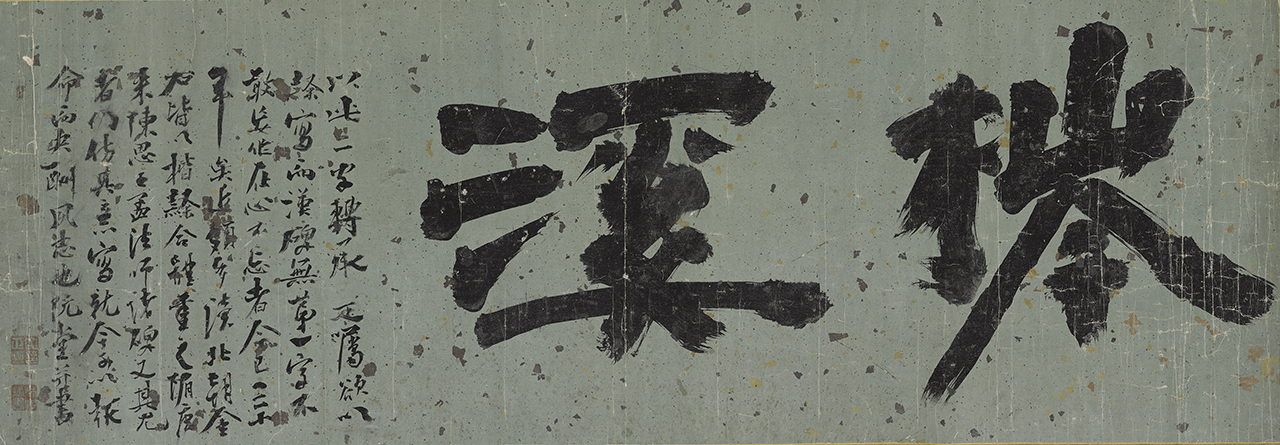
The exhibition shows Jeon’s focused acquisition of works related to Kim Jeong-hui, widely known by his pen name Chusa, whose calligraphy and intellectual lineage were highly valued in the art market at the time.
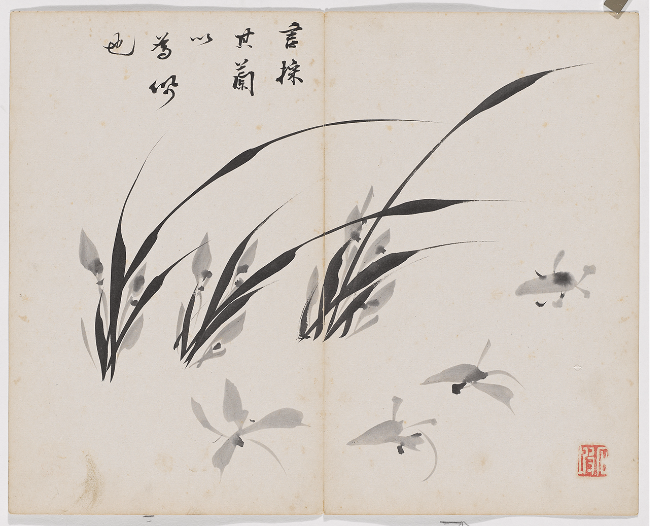
Jeon’s collecting through the auctioneer began in earnest with his acquisition of an orchid painting album by Heungseon Daewongun, one of the most influential figures in the late Joseon era, as the father of King Gojong.
Also known as Lee Ha-eung, Heungseon Daewongun is often seen as working within the artistic lineage influenced by Chusa.
The exhibition will run from April 15 to June 14, with reservations available through NOL Ticket.
yunapark@heraldcorp.com