
South Korea is reviewing a plan to exempt additional launches of its homegrown Nuri rocket from a preliminary feasibility study, with two missions planned annually from 2029 through 2032, the head of the nation’s space agency said Wednesday.
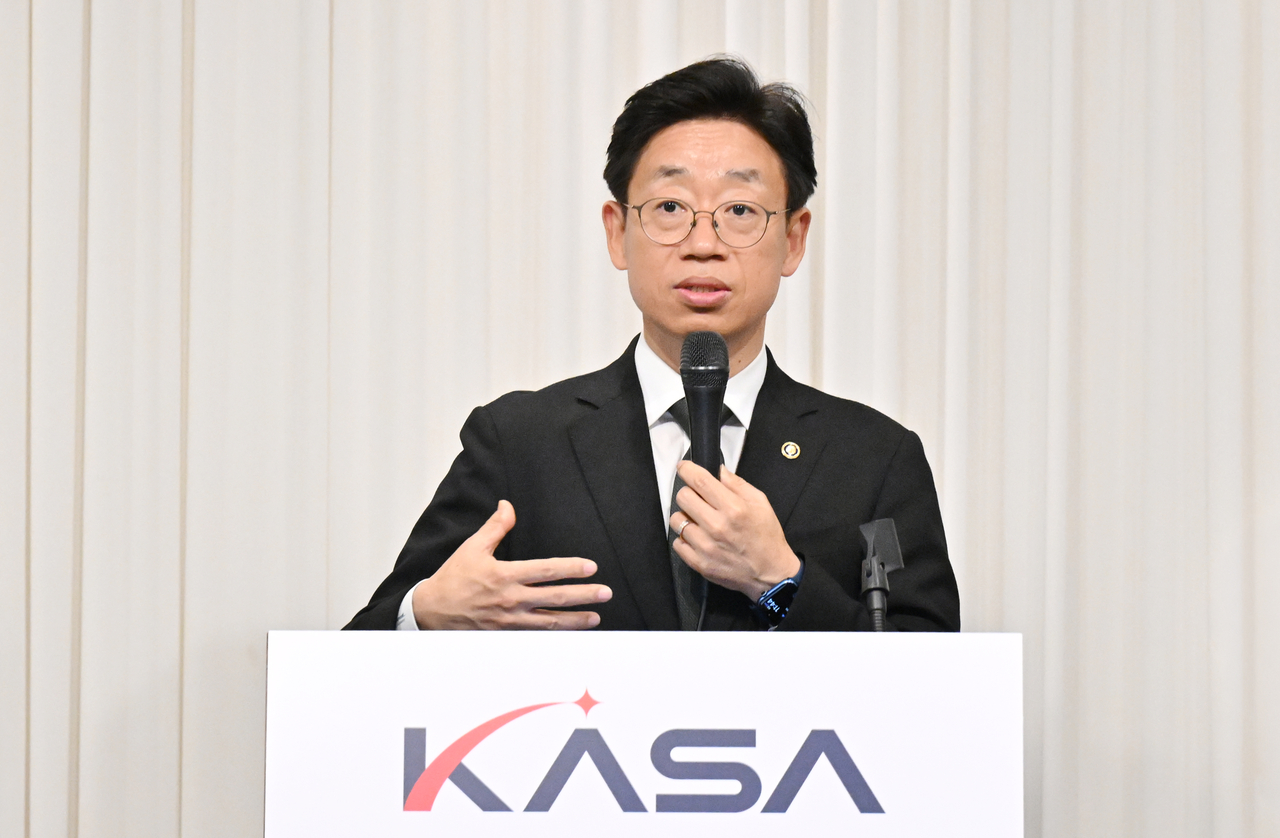
“We are reviewing a plan to seek a waiver from the preliminary feasibility study for additional Nuri launches, and the required budget has largely been calculated,” said Oh Tae-seog, administrator of the Korea AeroSpace Administration, during a luncheon with reporters in Seoul. “If the exemption is granted, the project could be reflected in the 2027 budget immediately.”
Oh said Korea must move beyond simply “possessing” launch vehicles and shift toward actual operations, as demand for launch services is expected to rise sharply with the expansion of satellite production.
In line with this, the government is considering additional Nuri launches over the period, while maintaining at least one launch annually through 2032 to build reliability and operational experience.
Marking two months in office, Oh said the agency is moving into a phase focused on delivering tangible results after laying its institutional groundwork over the past two years.
“Now is the time to turn policies into outcomes,” he said, describing the shift as the agency’s “second phase.”
Organizational reform remains a key priority. The agency has launched an advisory panel of private-sector experts to address concerns over structure, personnel management and its relatively limited role in industrial promotion, while also working to improve internal workplace culture.
The agency aims to foster a “new space” ecosystem by linking launch vehicle and satellite technologies with emerging commercial opportunities. It will also step up engagement with industry to identify and address bottlenecks as it prepares to enter the commercial launch services market.
The government is also pushing ahead with upgrades to the Naro Space Center to support expanded launch activity, including next-generation rockets and a planned lunar lander.
Looking further ahead, a second spaceport is under consideration for the post-2035 era, when reusable launch vehicles are expected to become more widespread. A dedicated launch pad for private firms at Naro is set to open in 2027.
In aviation, the government is seeking to strengthen competitiveness by expanding beyond defense into the civilian sector, while increasing Korean participation in global aircraft development projects through risk- and revenue-sharing partnerships. It is also working to advance key technologies such as electrified propulsion and autonomous flight.
Separately, Oh also addressed the recent failure of Korea’s cube satellite K-RadCube, which was deployed aboard Artemis II but did not complete its mission.
“While communication was not successful, the experience of a private company leading the entire process of developing a deep-space satellite is, in itself, a valuable asset,” he said.
yeeun@heraldcorp.com