


“This selection embraces the beginning and the end of my life as a pianist,” Paik Kun-woo told reporters at a press conference Monday ahead of his nationwide recital tour.
The selection certainly reflects Paik's beginnings: Sonata No. 13 was the very first Schubert piano sonata he ever studied. Sonata No. 20, meanwhile, is a piece the pianist had long set aside, unable to find his way in.
But does it signify an end? Not quite. “For musicians, retirement simply has no meaning,” he said. “There are still so many pieces I want to play. A lifetime is just too short.”
The numbers bear him out. With a discography of more than 30 albums, Paik signed with Decca Classics in 2000 and has released recordings through Deutsche Grammophon since 2010. A Schumann album in 2020, Granados' "Goyescas" in 2022, and his first-ever Mozart recordings — released as a three-part series across 2024 and 2025 — all point to an artist very much in motion.
When Paik speaks of an ending, what he really means is a reckoning with a musical world so different from today's that he feels compelled to document it.
In November 1956, only three years after the Korean War ended, a 10-year-old boy took the stage at the National Theater, performing Grieg’s Piano Concerto with the Naval Symphony Orchestra under conductor Kim Saeng-ryeo.
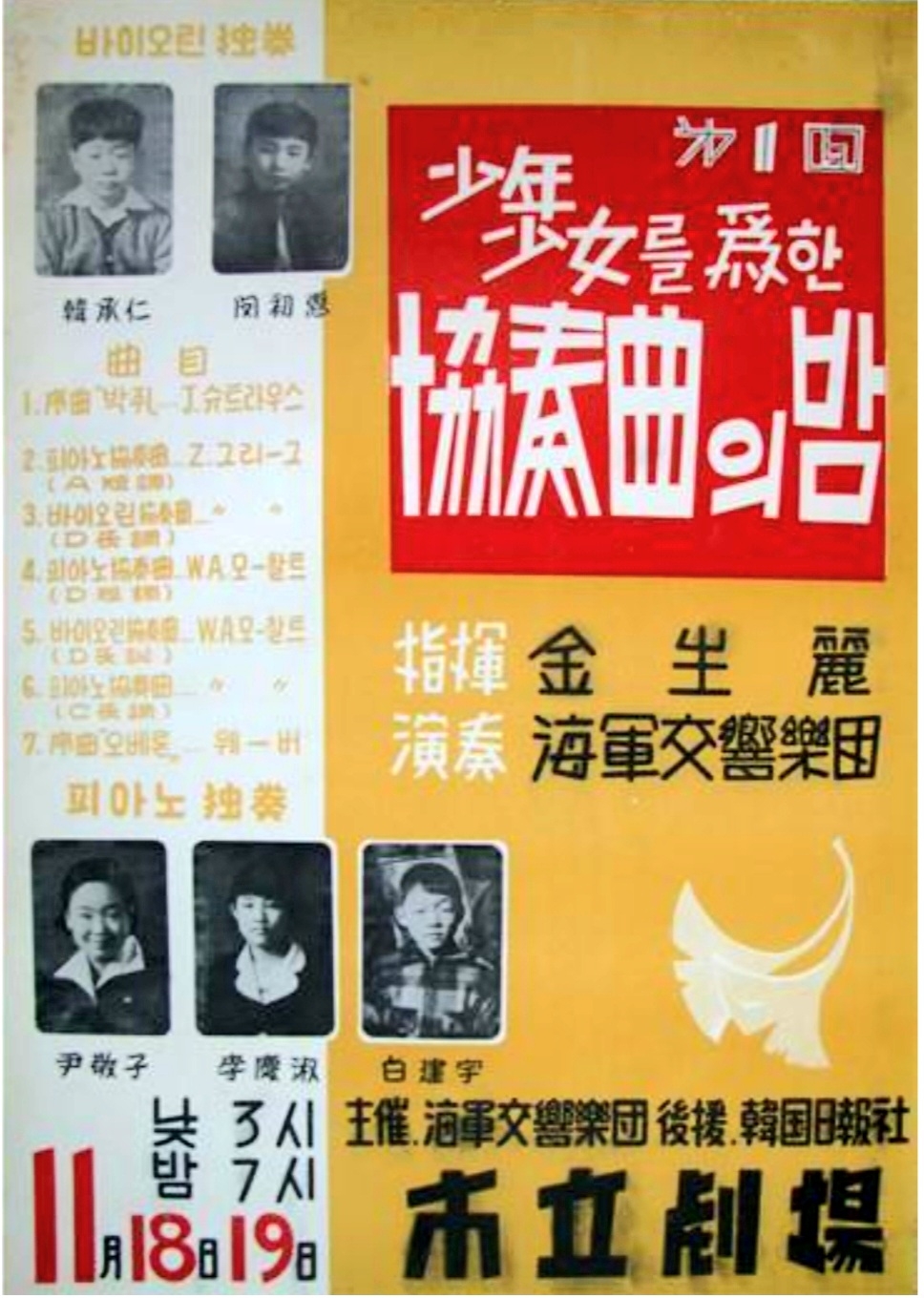
When he first arrived at the Juilliard School in New York in 1962, history was still alive in the room. “The greatest performers and composers were all active at the same time,” he said. “Bernstein was conducting next door, practically every day.”
That world, he fears, is being lost — replaced by streaming counts, YouTube views, and the pressure to build a name before building an ear.
Later this year, he will publish an autobiography. By sharing his story, he said, he wants to convey one thing above all: that those who dedicate themselves to music must never lose sight of it. Never let themselves drift away from the music itself.
For Paik, the years have brought a hard-won freedom. "For so long, there was stress, the constant need to deliver," he said. "Now what remains is simply the joy of music."
Paik released his new Schubert album — four piano sonatas, Nos. 13, 14, 18 and 20 — on March 26 through Universal Music. The answer to Sonata No. 20, when it finally came, arrived not through effort but through its absence. “I realized I had to try not to do anything,” he said. “To let the music sing by itself, and to have the confidence to endure the silence.”
On Schubert, he spoke with quiet awe. "Sometimes I wonder, 'was this written by a human, or did it come from heaven?' It just flows out naturally, in a way that feels beyond human conception."
He recalled a note in the album's liner notes quoting Stravinsky: that even if you fall asleep listening to Schubert, you will wake up in paradise. "That line really stayed with me," he said.
Paik's tour opens April 3 in Busan and closes on May 10 — his birthday — at the Seoul Arts Center Concert Hall, featuring Schubert's Sonatas Nos. 13 and 20 and Brahms' Four Ballades.
gypark@heraldcorp.com


![[World Class] HUFS bets on Songdo, AI to redefine what a global university can do](https://wimg.heraldcorp.com/news/cms/2026/10/18/news-p.v1.20260930.7e4dbeacfc1d4d16848c0e2a441c04e6_R.jpg?type=h&h=120)