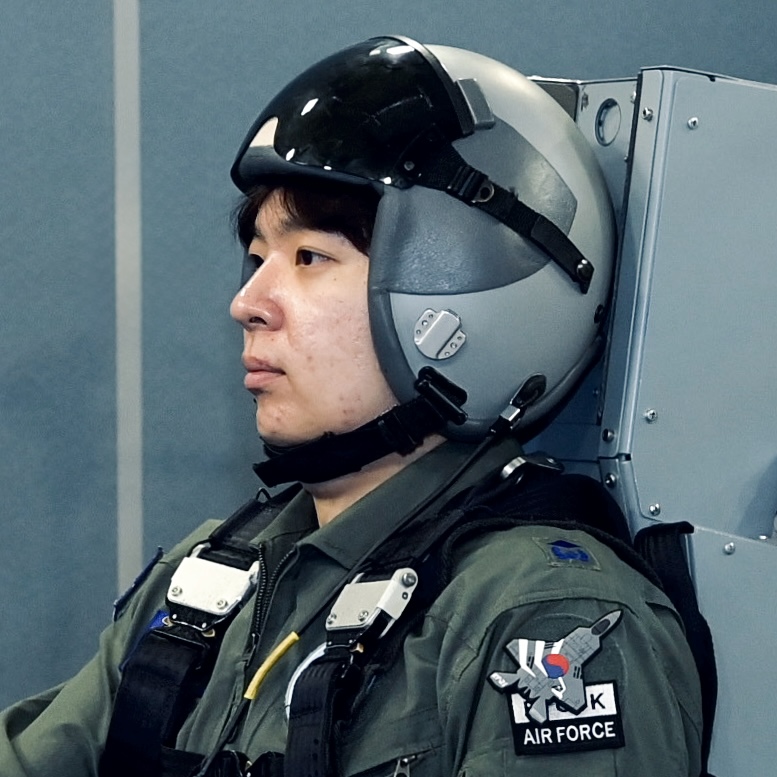

North Korea may consider US “strategic flexibility” — the ability to redeploy overseas troops depending on the situation — a direct security threat rather than a gap in South Korea’s defenses, a Seoul-based expert said Monday.
The assessment also addresses concerns in Seoul that such flexibility, which has drawn renewed attention under US President Donald Trump’s second term, could reduce United States Forces Korea troop levels and weaken deterrence against the North.
According to a report released by Jeon Kyung-joo, head of the Korea Peninsula security studies division at the Korea Institute for Defense Analyses, North Korea has closely tracked the concept for years and consistently framed it as an expansion of US military threats.
The report found that Pyongyang had mentioned “strategic flexibility” dozens of times in official statements since May 2005. The concept was first introduced under the George W. Bush administration as part of broader post-Cold War and post-9/11 military restructuring.
References tended to coincide with major shifts in US force posture, including troop realignments, base relocations and missile defense deployments, reinforcing Pyongyang’s perception of strategic flexibility as a mechanism for rapid force projection rather than a drawdown.
“North Korea is unlikely to interpret the redeployment of USFK assets — such as Terminal High Altitude Area Defense or Patriot systems to the Middle East following US strikes on Iran — as an opportunity to launch an attack on the South,” Jeon said.
“Rather, it may perceive such movements as evidence of US military mobility and feel a greater sense of threat,” she added.
Jeon cautioned, however, that South Korea should still prepare for worst-case scenarios and not rule out the possibility of miscalculation by Pyongyang.
“At the same time, if South Korea is to benefit from the US strategy of strategic flexibility, it needs to adopt a more open approach and work toward establishing procedures and criteria for how much flexibility to allow,” she said.
Over the past two decades, North Korea has responded sensitively to major developments in US force posture on and around the Korean Peninsula.
When the concept of strategic flexibility was first introduced, North Korea reacted most strongly as Washington began restructuring its overseas troop deployments under the Global Posture Review.
Pyongyang viewed the realignment of USFK — including the restructuring of the US 2nd Infantry Division and the relocation of bases from Yongsan in Seoul to Pyeongtaek, south of Seoul — not as a drawdown, but as a mechanism enabling rapid reinforcement from outside the peninsula.
Between 2011 and 2017, North Korea’s criticism focused more on the expansion and modernization of US military capabilities. It argued that the buildup of Camp Humphreys in Pyeongtaek and the deployment of advanced systems such as THAAD would enable the rapid inflow of strategic assets, reinforcing its claim that South Korea was being used as a forward base for broader regional operations.
Pyongyang largely dropped the issue after 2017, when it shifted its messaging toward advancing nuclear and missile capabilities. But North Korea raised the concept again last year, placing greater emphasis on criticizing broader US strategic intent rather than specific deployments.
A June statement by Kim Yong-bok, a senior official at the Korean People’s Army General Staff, described the concept as having become more “offensive” in nature, while maintaining the view that the United States seeks to use South Korea as a primary forward base to restore its regional dominance.
flylikekite@heraldcorp.com

![[Exclusive] Ateez to return in November](https://wimg.heraldcorp.com/news/cms/2026/09/02/news-p.v1.20260902.76162fb0ba55493aad1c076f240d0750_R.jpg?type=h&h=120)