

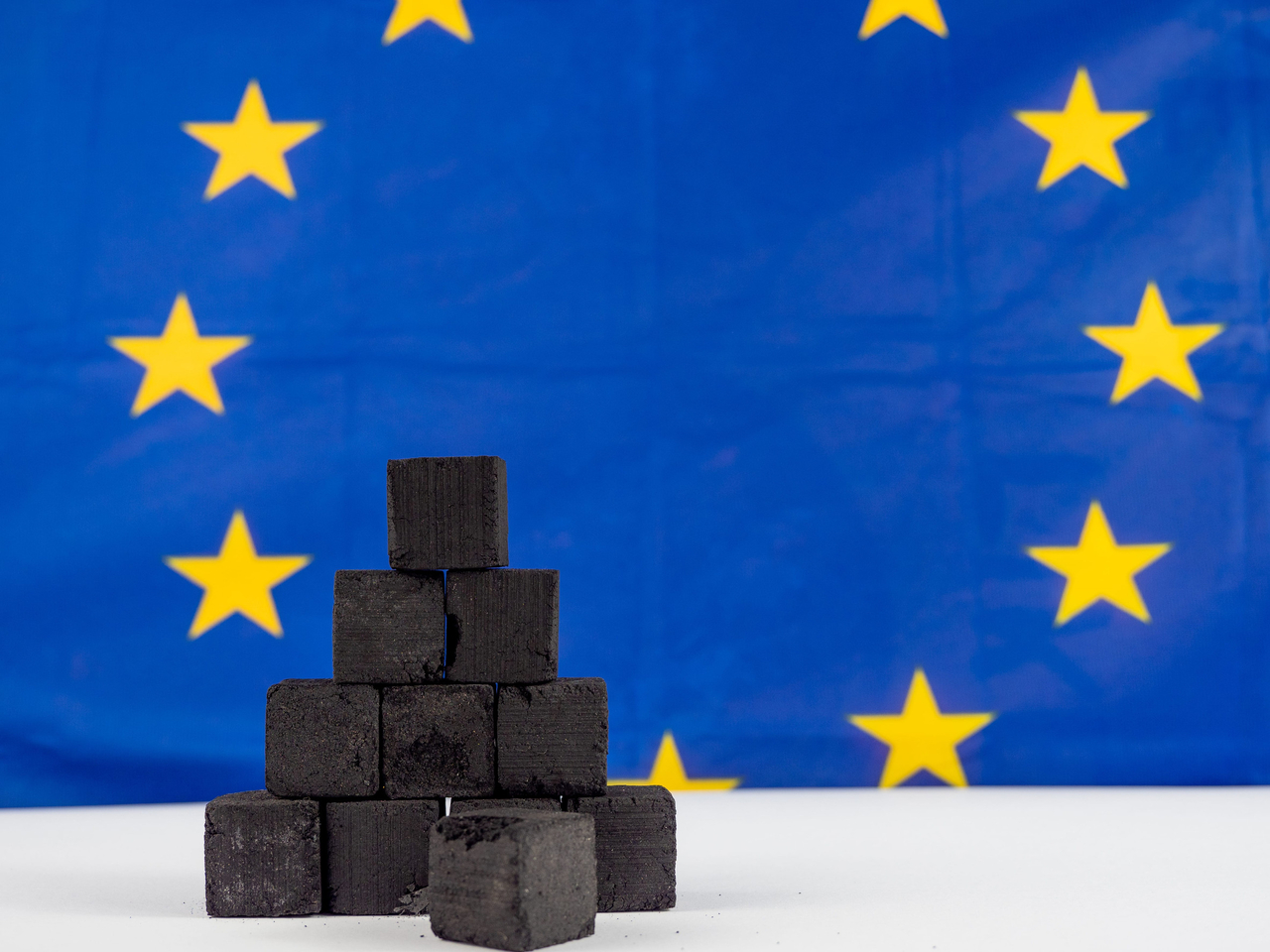
South Korean exporters are set to face a sharp rise in carbon-related costs in the European Union starting in 2031, as the bloc phases out free emissions allowances and bolsters its Carbon Border Adjustment Mechanism, according to a new report Monday.
The study by the Korea International Trade Association says the financial burden of CBAM is expected to grow considerably after 2030, as the EU starts to substantially cut free allowances under its emissions trading systems.
Since Jan. 1, the EU has imposed a tax on carbon-intensive imports such as steel, aluminum, cement and fertilizers. In 2028, the bloc plans to expand the scope to additional products, including machinery, electronic equipment and medical instruments, pending approval by the European Parliament.
Under this framework, companies exporting to the EU are required to calculate the carbon emissions tied to their products and disclose this information to importers, who must then purchase CBAM certificates based on the emissions.
Although CBAM has already been introduced, its real economic impact is expected to intensify as free emissions allowances are gradually phased out. Products covered by the EU's free emission allowances are expected to decrease from 97.5 percent this year to zero by 2034. The report said that by 2031, the rate will fall below 40 percent, at which exporters will begin to bear a much larger share of carbon costs.
KITA estimates that a 1 percent increase in export prices due to CBAM-related costs would lead to a 0.98 percent decline in export volumes.
Going forward, shipments of CBAM-covered products to the EU are projected to fall by between 0.9 percent and 5.3 percent through 2030. The decline could steepen considerably to a range of 7.7 percent to 17.9 percent from 2031 to 2034, when the free credit declines and the burden of paid carbon allowances rises substantially.
“As the scope of CBAM application expands from 2028 and the burden of carbon costs effectively begins from 2031, Korean companies do not have much time to prepare,” said Lee Kwanjae, a senior researcher at KITA. “To maintain export competitiveness, companies need to complete their transition to low-carbon facilities and establish proactive supply chain management systems by 2030.”
sahn@heraldcorp.com