

It began with a deep affinity for nature.
Artist Kim Yun-shin left Korea for Argentina in her 40s, after hearing from a relative that the country had “excellent wood.” Now at 92, she opens her first retrospective exhibition in Korea at the Hoam Museum of Art.
Rising from a wheelchair and wearing her signature sunglasses, which she often wears when appearing before the public, she walked slowly to the front.
“As I’ve grown older, making art has come to feel like becoming one with the work itself,” Kim said at the museum on March 11. “When I was young, I focused on how to make a piece. Now, it comes from within me, and it feels more truly my own.”

The retrospective brings together 170 works, tracing some 70 years of her artistic journey.
Though long overlooked in Korea, Kim recently entered the international spotlight, with her inclusion in the 2024 Venice Biennale main exhibition marking a turning point in her decadeslong practice.
Kim was born in 1935 in Wonsan, which is now part of North Korea. She grew up watching her mother pray each morning, lighting a candle on a small stone at the foot of a mountain.
The quiet ritual is echoed in Kim’s sculptures, which often resemble precariously stacked stone towers.
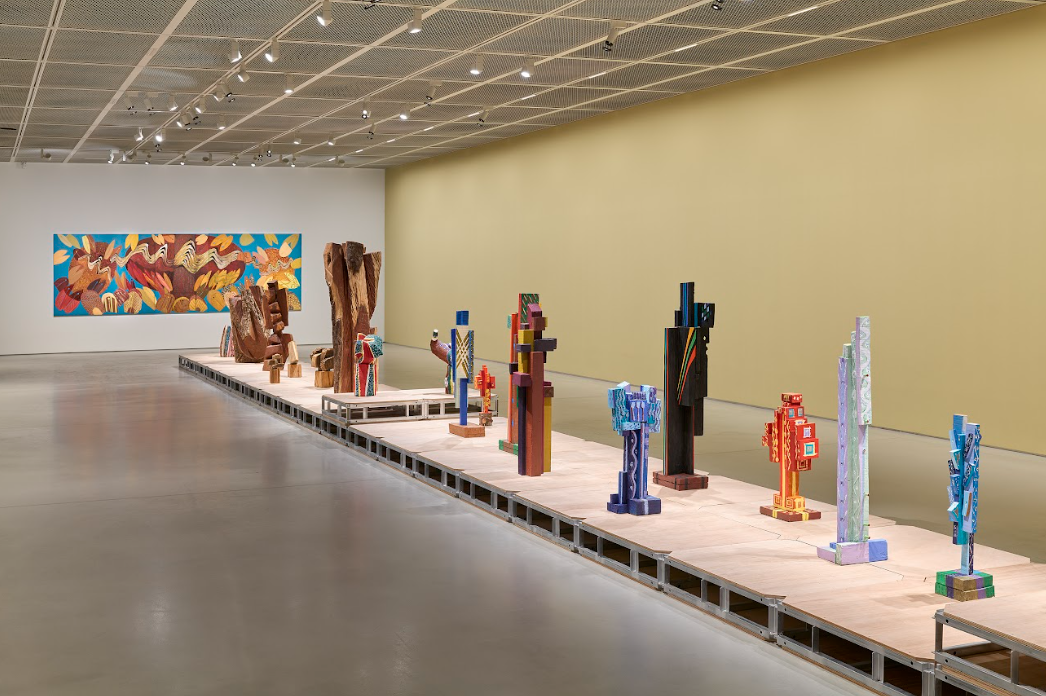
“Wood is me. I grew up in the countryside, living with nature at the foot of a mountain. Nature is what brought me here," Kim said. The artist recalled her shock when pine trees were harmed by Japan during the country's colonial rule of Korea (1910-1945) to extract oil from the roots during World War II.
Leaving behind her position as a professor at Sangmyung University in Korea, she moved to Argentina mid-career, drawn by the promise of abundant wood. There, she began working with electric saws to carve dense hardwoods — materials far tougher than those she had encountered in Korea.
“The wood is extremely hard there. I had to become one with the saw to work with it,” she recalled.
“Some trees were so hard that the blade would bounce back, forcing me to adapt my body to the tool.”
Rather than relying on preparatory sketches, Kim observes the material and responds intuitively, her process unfolding in real time.
“The moment I plan a work in advance, it becomes something of the past," she said. "Life exists only in the fleeting present, and that is where everything must take place."
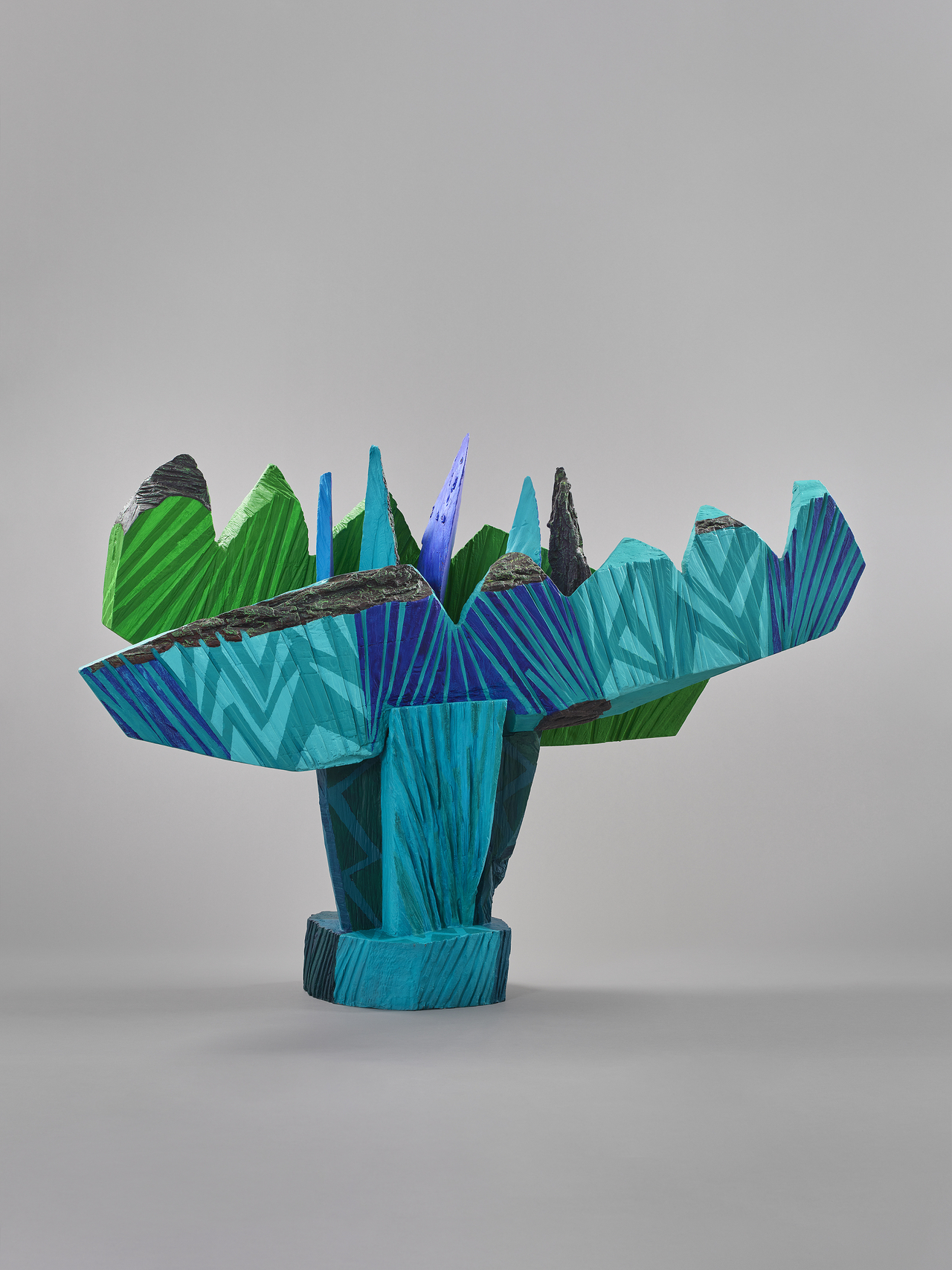
One of the highlights of the exhibition is “Add Two Add One, Divide Two Divide One,” created with palo santo, a hardwood native to South America. The piece is one of her early works created in Argentina, and now forms part of the collection of the Guggenheim Museum in New York.
Some of the repeated forms in her sculptures recall elements of Korean tradition, such as the curves of hanbok or the lines of hanok eaves. Others incorporate the shape of the cross, reflecting her Catholic faith, according to the museum.
“Kim is an artist who went to Argentina driven by a single material. Absorbing both European and South American influences while retaining Korean elements, she has built a unique artistic language that is modern yet primal, and deeply rooted in nature,” said Tae Hyun-sun, curator of the museum.
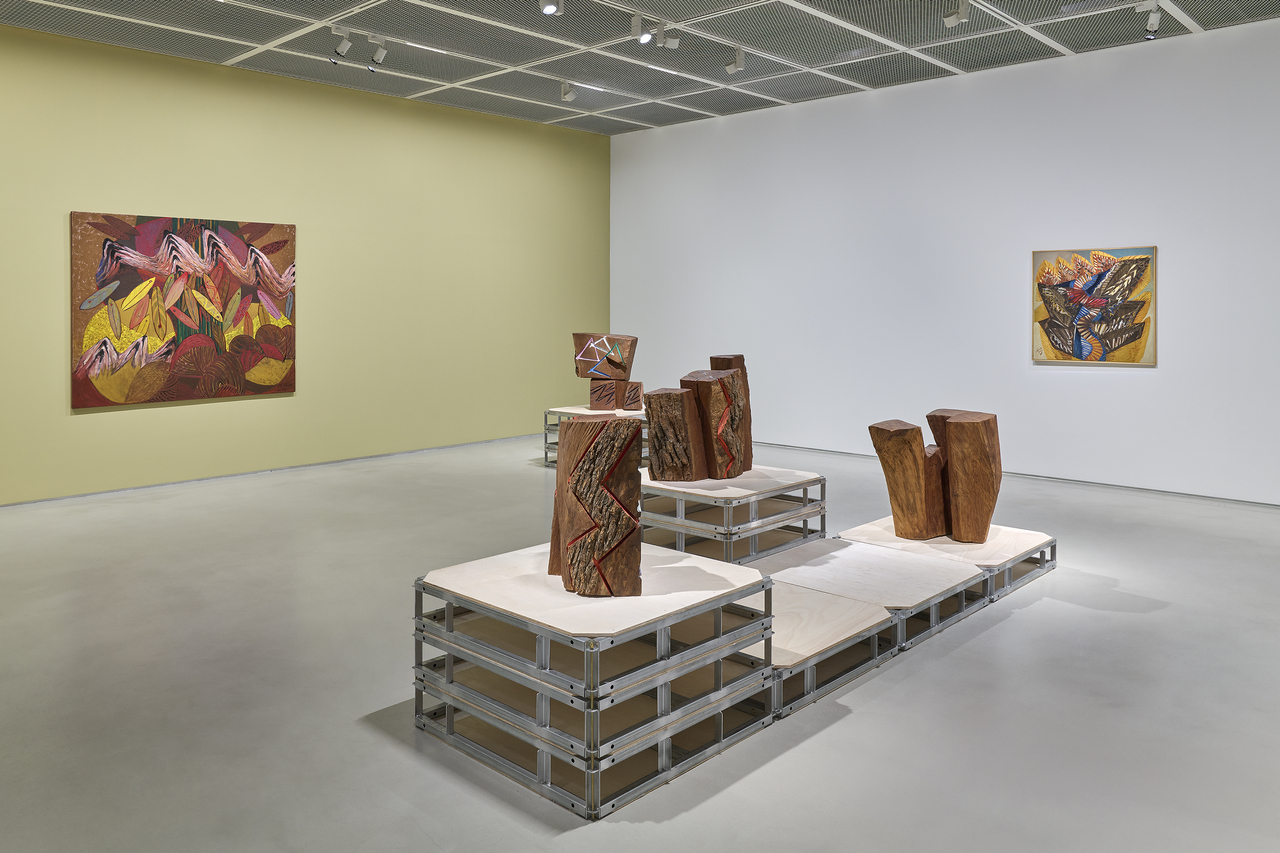
In her more recent works, bright colors spread across wooden surfaces, unfolding almost like a stage. Despite the growing recognition, the artist remains detached from the idea of age or achievement.
“To be honest, I don’t really think about my age,” Kim said. “I never imagined I would be standing here like this, speaking to all of you about my work.”
yunapark@heraldcorp.com