
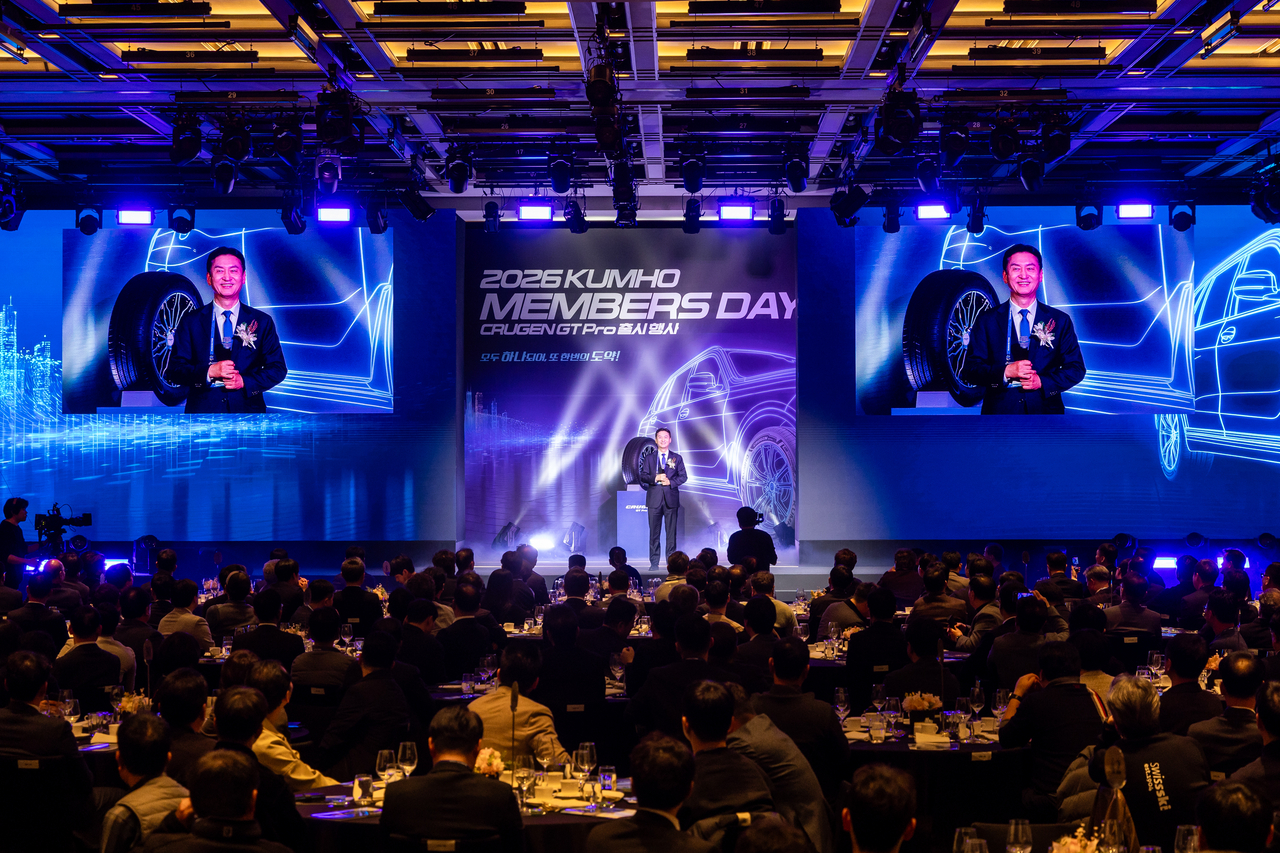
South Korean tire maker Kumho Tire on Tuesday launched the Crugen GT Pro, a premium comfort tire tailored for sport utility vehicles, as part of its push to deepen its foothold in the global SUV and electric vehicle market.
The new tire integrates Kumho’s Crugen technology platform and is designed to offer enhanced ride comfort, low noise and improved fuel efficiency, the company said.
The company said the Crugen GT Pro has earned a Grade 2 rating in rolling resistance under Korea’s energy efficiency guidelines, making it the only domestically produced SUV tire to reach that level.
The tire comes in 53 sizes ranging from 18 to 22 inches, covering a wide range of premium SUVs from carmakers including Hyundai Motor, Kia, Mercedes-Benz, BMW and Porsche, and is optimized for both electric and traditional combustion-engine models.
At a media briefing, CEO Jung Il-taek said the launch reflects the tire maker’s push into the premium SUV tire market, aiming to achieve over 5.1 trillion won ($3.41 billion) in sales this year, up from a record 4.7 trillion won in 2025.
Kumho's previous SUV product, the Crugen HP71, sold about 25,000 units a month in the domestic market. The company said it has set an initial goal of 50,000 units a month for the Crugen GT Pro, though the figure could be revised upward depending on market response.
Following its launch in Korea, the tire will be introduced in North America in September and rolled out globally later this year.
Kumho Tire also discussed supply chain risks, noting that geopolitical tensions in the Middle East have caused temporary disruptions to shipments that previously passed through the Strait of Hormuz. However, the company stressed that its exposure to the region accounts for only about 7-8 percent of its sales, limiting the overall impact.
“We have seen some disruptions to shipments that were previously exported via the Strait of Hormuz, but we have been able to secure alternative supply routes through the Suez Canal,” said Jung.
He said that the company is closely monitoring potential cost pressures stemming from rising oil prices, which could affect raw material costs and freight rates.
“We remain cautious about geopolitical risks, particularly as it is difficult to predict how long the conflict will last,” Jung said. “However, given our relatively small exposure to the Middle Eastern market, we believe our annual targets remain achievable, even under contingency plans.”
The company also provided an update on its facility expansion plans, saying land acquisition for its planned plant in Poland has been completed. With environmental assessment and design work underway, construction is slated to kick off in the fourth quarter of this year, with mass production scheduled for the second half of 2028.
The facility is expected to have a capacity of up to 12 million tires, aimed at boosting premium original equipment supply in Europe rather than offsetting output from existing factories.
sahn@heraldcorp.com