
South Korea’s plan to introduce regionally differentiated electricity prices is raising concerns that inland provinces and public utilities in the greater Seoul area could face higher power costs, as the government pushes ahead with reforms to ease regional imbalances in energy supply.
The proposal centers on offering cheaper electricity to areas near major power generation facilities to encourage industries to relocate from the capital region to provincial areas. Many of these regions have become key electricity producers due to their concentration of renewable energy projects and nuclear power plants.
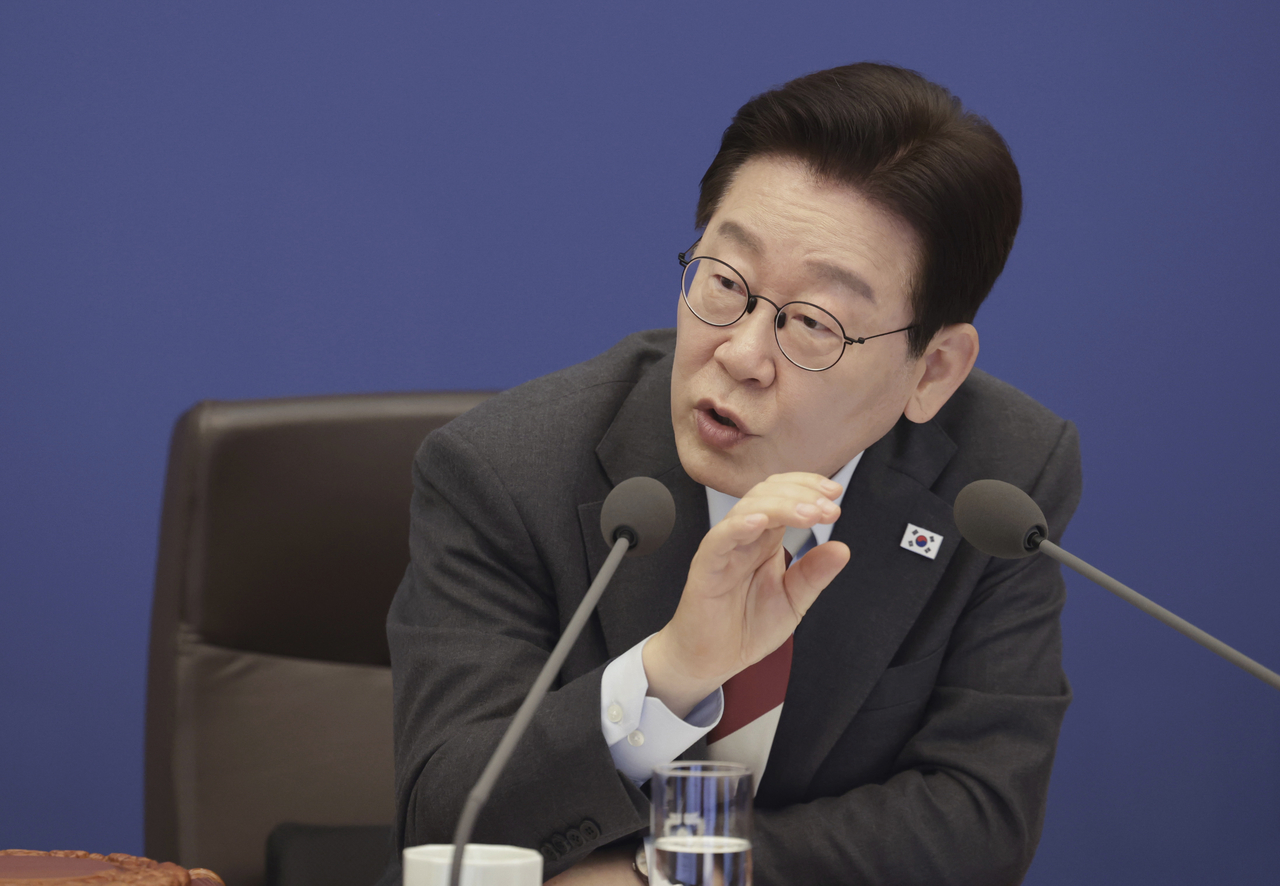
President Lee Jae Myung voiced support for the measure during an extraordinary cabinet meeting on March 5, arguing that the current nationwide pricing system disadvantages power-producing regions.
“The cost of transferring electricity from remote regions to Seoul is substantial, yet the single nationwide pricing system means power-producing regions suffer losses while heavily consuming areas gain groundless benefits,” the president said.
Officials have been instructed to review a system that reflects both electricity production costs and transmission expenses in regional tariffs.
The plan has also been framed as a way to address regional population decline and industrial concentration in the Seoul metropolitan area by incentivizing companies to move operations to other regions.
Data from Korea Electric Power Corp. highlights the imbalance in electricity production and consumption across the country.
Between January and July 2025, Seoul recorded an electricity self-sufficiency rate of just 7.5 percent. By comparison, North Gyeongsang Province posted 262.6 percent, South Jeolla Province 208.2 percent and Gangwon Province 163 percent.
The Ministry of Climate, Energy and Environment aims to present a detailed implementation plan by 2026. A ministry official said regional price differences could reach 10-20 won (0.7-1.4 cents) per kilowatt-hour, roughly 10 percent of the current industrial electricity tariff.
However, experts say the proposal could trigger resistance because it effectively redistributes electricity costs between regions.
“In the end, many groups will come forward asking for discounts for various reasons,” said Sonn Yang-hoon, an emeritus professor at Incheon University. “If higher electricity prices are imposed on industrial complexes in the capital region, will it be possible to avoid backlash? With elections approaching, announcing such measures can be politically burdensome.”
Concerns have already emerged among some regional governments and public transport operators.
North Chungcheong Province, where the electricity self-sufficiency rate is about 25 percent, has warned that higher electricity prices could weaken its efforts to attract future industries such as batteries and semiconductors. Provincial officials argue that the region’s role as a transmission corridor linking the capital area with other provinces should be reflected in any pricing system.
Seoul Metro, which already faces chronic deficits, has also raised concerns that public services should receive preferential treatment under the new pricing structure. The operator estimates that a 20 won increase per kilowatt-hour could add about 25.8 billion won annually to its electricity costs.
Despite the concerns, some industry officials say conditions for introducing the system are largely in place.
“The government appears to be coordinating among different ministries on the measures. If things proceed smoothly, some form of announcement could come before the June 3 local elections,” said Yoo Seung-hoon, an energy policy professor at Seoul National University of Science and Technology.
An official at KEPCO said the utility is currently awaiting the results of a commissioned study on regional electricity pricing. The factors used to determine regional tariffs are expected to be announced alongside the study’s findings.
Experts say that while differentiated pricing could improve grid efficiency and reduce regional imbalances by reflecting the true cost of electricity supply, the system must remain grounded in cost-based principles.
“If prices are determined based on the actual costs caused by companies in the capital region, opposition may not be very strong,” Yoo said. “In provincial areas, transmission costs are lower, but distribution costs are higher, and such factors should also be reasonably reflected.”
forestjs@heraldcorp.com