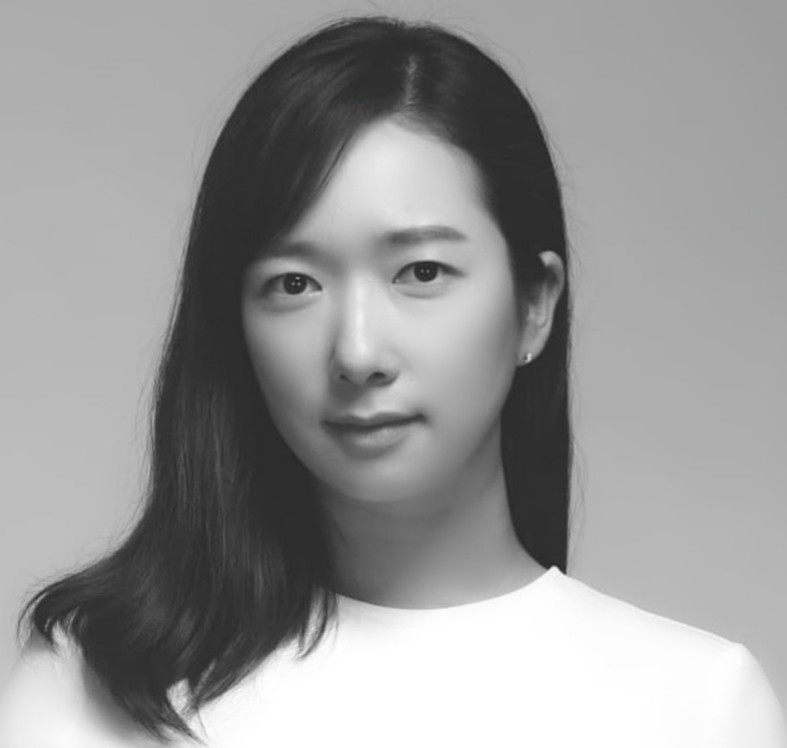
Tino Sehgal invites visitors into art that exists only in the moment at Leeum Museum of Art in Hannam-dong, Seoul
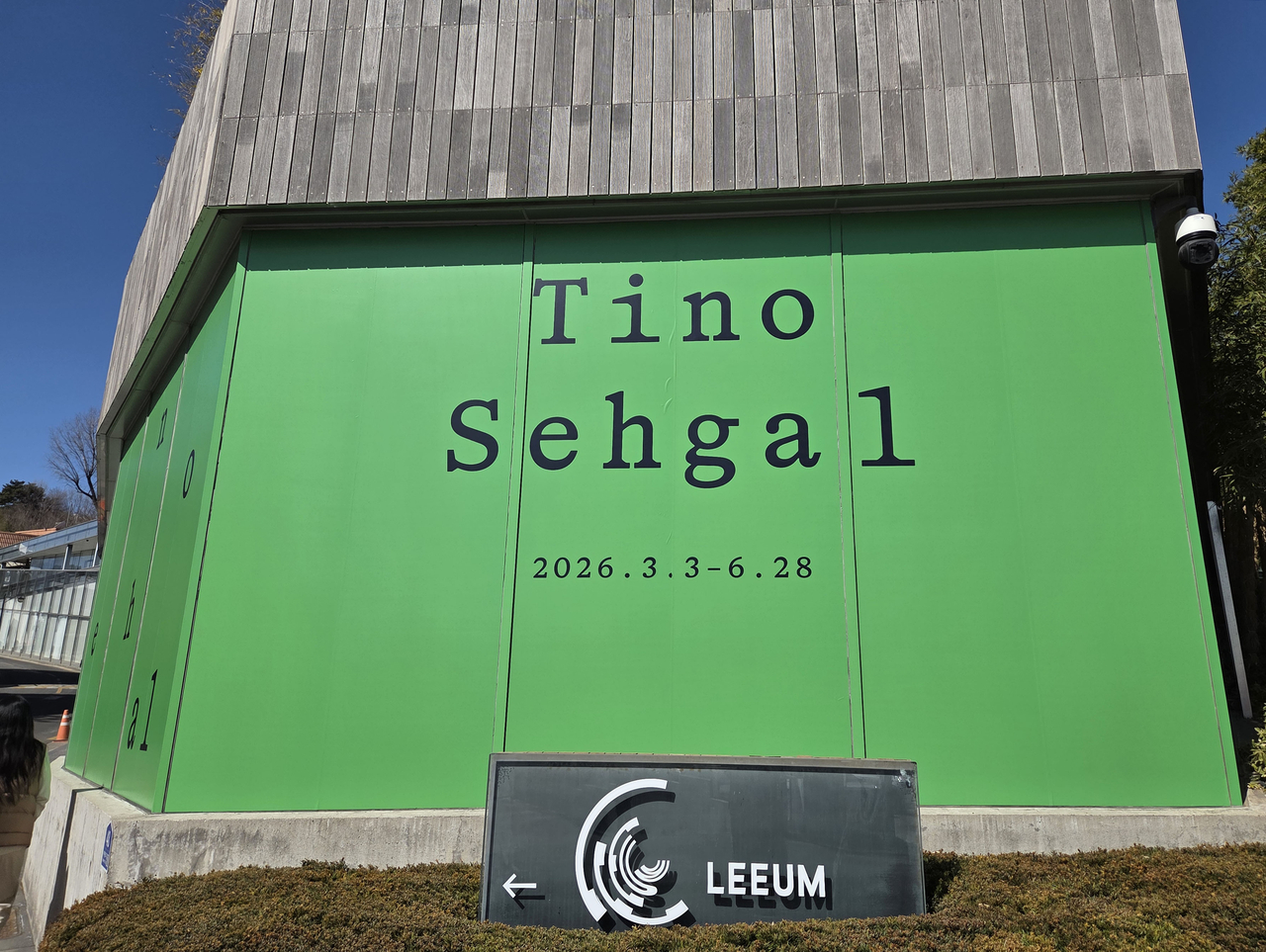
As you approach the entrance to the Leeum Museum of Art in Seoul, a group of people standing to the side suddenly steps forward, chanting, “This is so contemporary.” Startled and baffled, you may wonder, questioning, “Is this part of the show or something else?”
Once inside the museum, the performers, whom artist Tino Sehgal refers to as “interpreters,” blend naturally into the crowd, then slowly approach a visitor to share something intimate. If you stretch a hand toward them, they may touch or hold it.
After posing a question, the interpreters quietly recede into the audience once again. The untitled interaction is the artist’s new work created for the museum.
That is how the exhibition “Tino Sehgal” begins. The artist creates live, choreographed encounters instead of physical artworks.
The performances — what the artist calls “constructed situations” — exist only in the moment of experience. Visitors are not allowed to take photographs; they are encouraged to focus on the present. No brochures are offered.
“I can explain some of the reasons, but I don’t think it’s so interesting,” the artist told reporters on Feb. 25 at the museum, referring to his view that the works should be experienced in person rather than through images, especially in an age dominated by screens.
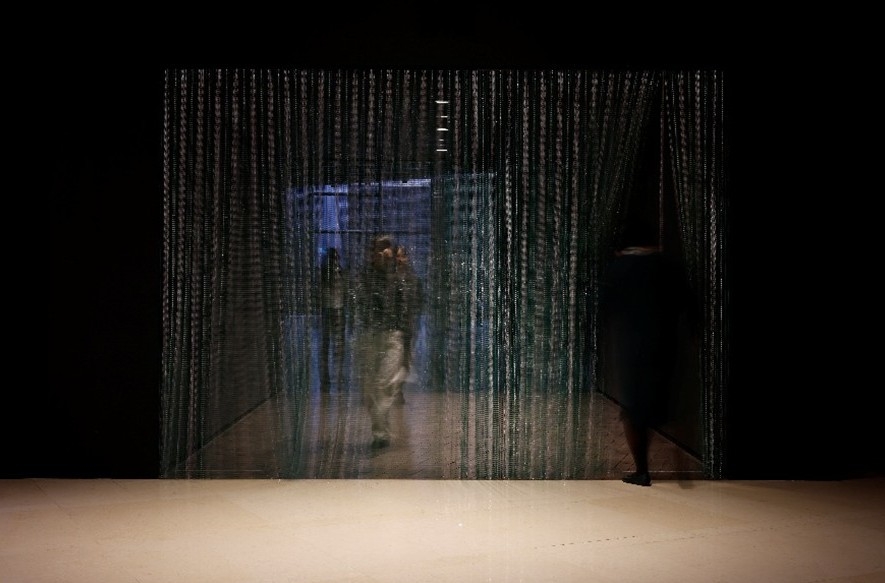
“I think my own work is the space between people. What happens when people meet — what is actually happening in this space, you know,” he continued. “That’s why I think the exhibition space was for me a more fruitful space than the theater. As a theater, you cannot really interact so easily.”
Even the act of sale is dematerialized, conducted through oral contracts instead of paperwork. Once a museum agrees to stage the work, Sehgal or his team trains local interpreters in person through rehearsal rather than written instructions.
"If you tell a five-year-old to play baseball, do you give them a book with the words? No, you start playing," Sehgal said. "If you look at most of the knowledge in society, we do very well in transferring knowledge from person to person.”

The artist presented a total of eight constructed situations, three of which are sound-based works presented sequentially, according to a schedule. The exhibition encompasses the artist’s 25-year-long career.
One of the artist’s early works, “Kiss,” is part of the show at a gallery where various sculptures by Auguste Rodin from the museum’s collection are on view. Drawing on depictions of the kiss throughout art history, the work features two interpreters embracing and slowly repeating a sequence of movements in a continuous loop.
"The starting point for the exhibition was to work with the collection (of the museum)," the artist said, adding that he is interested in how works relate to each other rather than standing alone.
Returning to the beginning of the exhibition, the artist was asked what was meant by the opening chant of "this is so contemporary." Is it a critique of contemporary art or a statement asserting the contemporary nature of his own work?
“I'm happy that you gave two interpretations, and which one do you prefer?” The artist laughed. “I hope there's more (in meanings). I think that's the beauty of art.
"What we are trying to say is: Art is a particular game we played together, and not the denotation of a certain preconceived meaning.”
The exhibition, which opened on Tuesday, runs through June 28.
yunapark@heraldcorp.com



![[Exclusive] Ateez to return in November](https://wimg.heraldcorp.com/news/cms/2026/09/02/news-p.v1.20260902.76162fb0ba55493aad1c076f240d0750_R.jpg?type=h&h=120)