
Award-winning directors, major production studios are betting on phone-sized format reshaping global entertainment

Two of South Korea's top-grossing filmmakers and a major distributor have entered the microdrama market, the latest sign that the country's entertainment establishment is treating the fast-growing short-form format as a serious business rather than a passing novelty.
Lee Byeong-heon, the director of "Extreme Job" (2019), which sold 16 million tickets to become the highest-grossing Korean film ever, premiered his first microdrama on Feb. 4.
"My Baby Daddy Is My Guy Friend" (working title) was released through Lezhin Snack, a new microdrama platform from the webcomic service Lezhin Comics. The 47-episode romantic comedy has topped the app's daily chart since its debut.
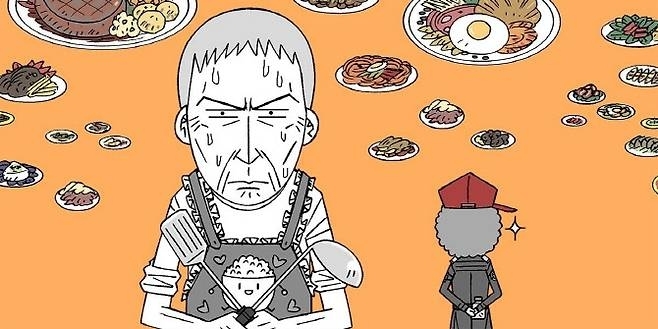
Lee Joon-ik, the veteran filmmaker behind "The King and the Clown" (2005) and "The Throne" (2015), is also making the jump. His project "Father's Home Cooking" (working title), adapted from a Lezhin Comics webtoon, is in early production, with Lee Jung-eun ("Parasite") and Byun Yo-han ("Mr. Sunshine") reportedly in talks to join.
Showbox, the country's major film distributor whose recent slate includes this year's hit "The King's Warden," is getting in on the action as well. The company wrapped filming on two microdrama titles in December and signed distribution deals with global platforms DramaBox and Vigloo.
These moves add to a growing wave of established Korean entertainment companies pivoting toward the format. KT's Studio Genie rebranded as a short-form-focused studio in April and partnered with DramaBox on original content. Tving, the country's largest homegrown streamer, launched a dedicated microdrama section and began producing in-house originals.

Microdramas or short-form dramas are serialized video content typically shot in vertical format for phone viewing, with each episode running one to three minutes across 30 to 100 installments.
Until recently, the format was considered a lower rung of the content ladder: low-budget productions cast largely with newcomers and K-pop idols dipping their toes into acting. That perception began changing as established names from Korea's content industry moved into the space.
The format originated in China, where it grew into a 50.4 billion yuan ($6.9 billion) market in 2024, surpassing the country's theatrical box office for the first time, according to the state-controlled China Netcasting Services Association.
The worldwide market for short-form dramas grew from $5 billion in 2023 to $12 billion in 2024 and is projected to reach $26 billion by 2030, according to research firm Media Partners Asia. The US has emerged as the largest market outside China, with short drama apps generating $1.4 billion in revenue in 2025, according to consulting firm Owl & Co.
Korea's short-form drama market was valued at 650 billion won ($450 million) in 2024, according to Kakao Ventures; some industry estimates project roughly 10 percent annual growth. That already puts it at more than half the size of the country's theatrical box office, which totaled about 1.26 trillion won the same year.
The economics are hard to argue with. A conventional Korean TV drama runs about 1.5 billion won per episode to produce; a feature film averages 10 to 15 billion won overall. A microdrama series, by contrast, can be made for as little as 50 million won per episode, with shoots typically wrapping in one to three weeks.
The shift coincides with a particularly difficult time for Korean cinema. The country's theatrical market has sat at roughly 53 percent of pre-COVID-19 pandemic levels since 2024. It lags well behind major markets like France, Germany and Japan, which have practically returned to normal.
The year 2025 ended without a single Korean film exceeding 10 million admissions, long considered the threshold for megahit status.
Interest from overseas could accelerate the trend further. Chinese platforms and investors who built the microdrama boom domestically are increasingly looking to Korean production talent to create higher-quality short-form content for global audiences, industry officials say.
Beijing imposed unofficial restrictions on Korean entertainment in 2016 over a missile defense dispute, but recent summits between the two countries' leaders have put cultural exchanges back on the agenda.
In January, a Chinese remake of a Korean drama appeared on the streaming platform Youku, the first such release since the restrictions began.
moonkihoon@heraldcorp.com