

North Korea's ruling party congress will be held later this month for the first time in five years, state media reported Sunday, with the regime's policy direction at home and abroad likely to be outlined.
The state-run Korean Central News Agency said the decision was made during the 27th Politburo meeting of the Eighth Central Committee of the Workers' Party of Korea, convened Saturday under the chairmanship of leader Kim Jong-un. The exact date of the congress has not been disclosed.
According to the KCNA, the meeting discussed and approved agenda items including the qualifications of delegates to the Ninth Party Congress, as well as organizational matters such as the composition of the executive body, presidium and secretariat, and documents to be submitted to the congress.
In North Korea's party-state system, the party congress serves as the highest decision-making body, setting national governance priorities and major policy lines.
Since the first congress in August 1946, eight party congresses have been held, most recently in January 2021. At the sixth congress in October 1980, Kim Jong-il, the son of state founder Kim Il-sung, was officially proclaimed successor.
While Kim Jong-il — often characterized by his reclusive leadership style — did not convene a single party congress during his rule, his son Kim Jong-un revived the gathering in May 2016 after a 36-year hiatus, with the seventh congress. The eighth congress took place five years later, in January 2021.
The seventh congress ran for four days, while the eighth went eight days. On the sixth day of the eighth congress, Kim Jong-un was formally elevated to the post of general secretary of the Workers' Party, a position widely regarded as the country's top party leadership role.
The upcoming ninth congress comes in the second term of US President Donald Trump, who returned to power in 2025 and is set to serve until 2029, raising the possibility that Kim could use his speech to clarify conditions for future dialogue between North Korea and the US .
In September last year, Kim said that "if the United States abandons its obsession with denuclearization and seeks peaceful coexistence based on reality, there is no reason the two sides cannot meet."
On inter-Korean ties, additional remarks elaborating on his "hostile two-state relations" doctrine — the notion that the two Koreas should exist as separate states rather than pursue unification — could emerge. Observers are also watching for signals regarding Pyongyang's recalibration of relations with Russia and China.
In mid-March, South Korea and the US are set to hold their annual joint military exercise, another factor that could shape the external messaging of the congress.
Domestically, Kim may also present new tasks related to nuclear weapon development or the modernization of conventional arms.
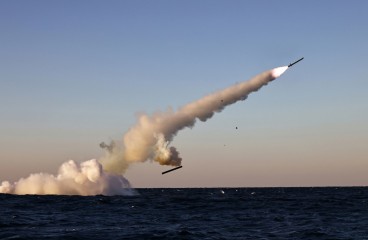
In a January report on the test-firing of a super-large multiple-rocket launcher system observed by Kim and his daughter Ju-ae, Rodong Sinmun, the official newspaper of the Workers' Party, said the party would unveil its "next-stage plans to advance nuclear deterrence capability" at the upcoming congress. If the congress is accompanied by a military parade, new strategic weapon systems could also be showcased.
The timing is notable in leadership terms.
Speculation persists that Kim could assume the title of state president — a post historically ranked as the highest in the state hierarchy — particularly as North Korea has referred to him as "head of state" since constitutional revisions in 2024.
Should Kim adopt the title of president, it would mark the first such usage since his grandfather Kim Il-sung, who died in 1994.
flylikekite@heraldcorp.com