
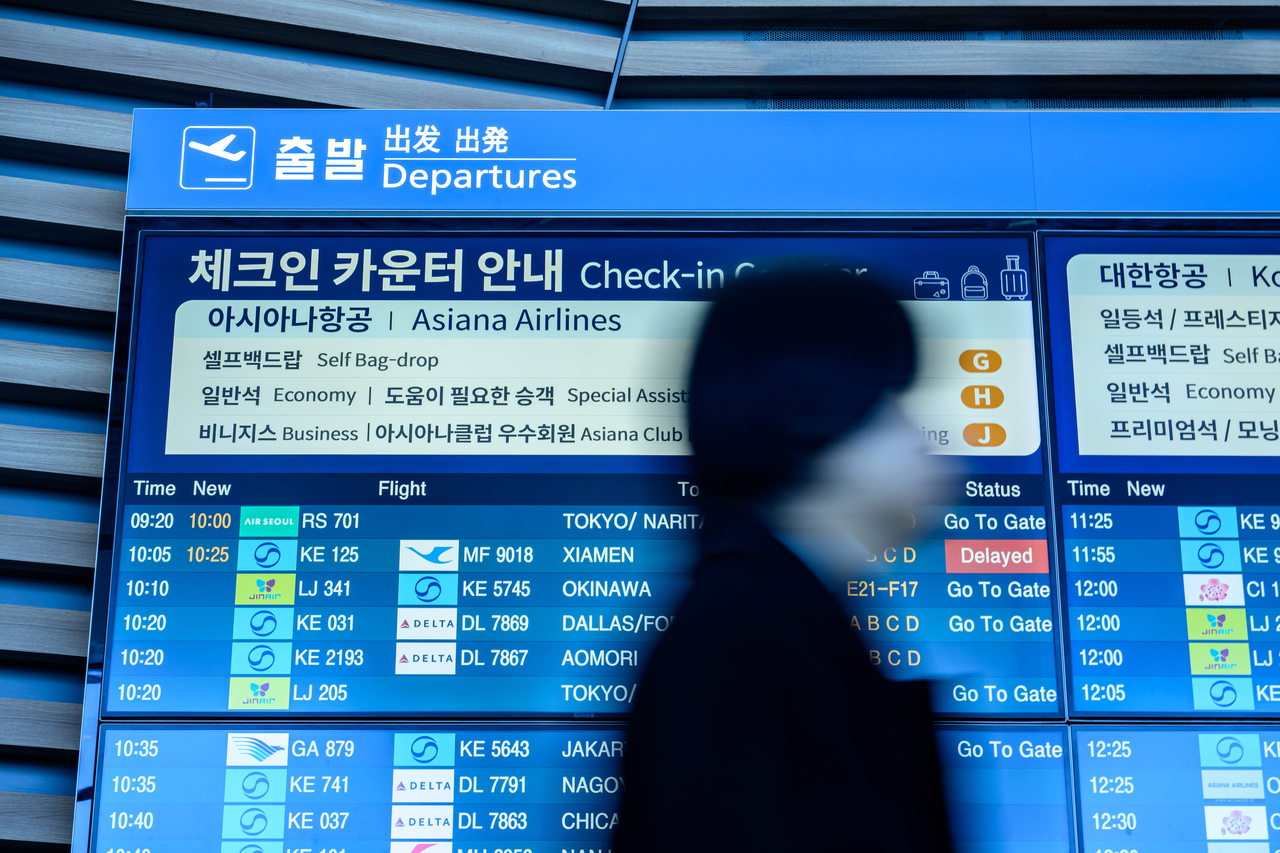
The number of transfer passengers at Incheon Airport fell 2.3 percent last year due to external factors, including Russia’s war in Ukraine, local media reported Sunday.
According to Segye Ilbo, citing airport data, about 8.04 million transfer passengers passed through Incheon last year, down from 8.23 million a year earlier.
One key factor behind the decline was the expansion of direct routes to the Americas and Europe from China and Southeast Asia, reducing the need for stopovers in Incheon.
The drop was also linked to flight restrictions following Russia’s invasion of Ukraine. South Korea’s national flag carriers are barred from Russian airspace, forcing them to take longer routes. Chinese airlines, which are still permitted to fly over Russia, have absorbed part of the transfer demand.
Before the war began in 2022, flights from Incheon to Europe typically passed through airspace over China, Mongolia and Russia. Since then, Korean carriers have had to detour, adding flight time. Airlines from some countries, including China, can still fly over Russia, cutting travel time by up to three hours.
In 2024, the number of transfer passengers at Incheon rose 14.3 percent from the previous year, as rising tensions between the United States and China led to fewer direct flights between the two countries, boosting demand for transfers through the South Korean hub.
shinjh@heraldcorp.com