‘Real peace includes human rights,’ special rapporteur Salmon underscored, calling on Seoul to keep issue on the agenda in any future inter-Korean dialogue
Decisions over North Korean prisoners of war captured in Ukraine belong to Kyiv, not Seoul or the media, an independent UN human rights investigator said, noting that Ukraine has already recognized the risk of torture if the captives are sent back to North Korea.
Media outlets, particularly in South Korea, have reported — based on interviews with two North Korean prisoners of war captured by Ukrainian forces in January 2025 — that the men wish to resettle in South Korea, while also publishing their names and images.
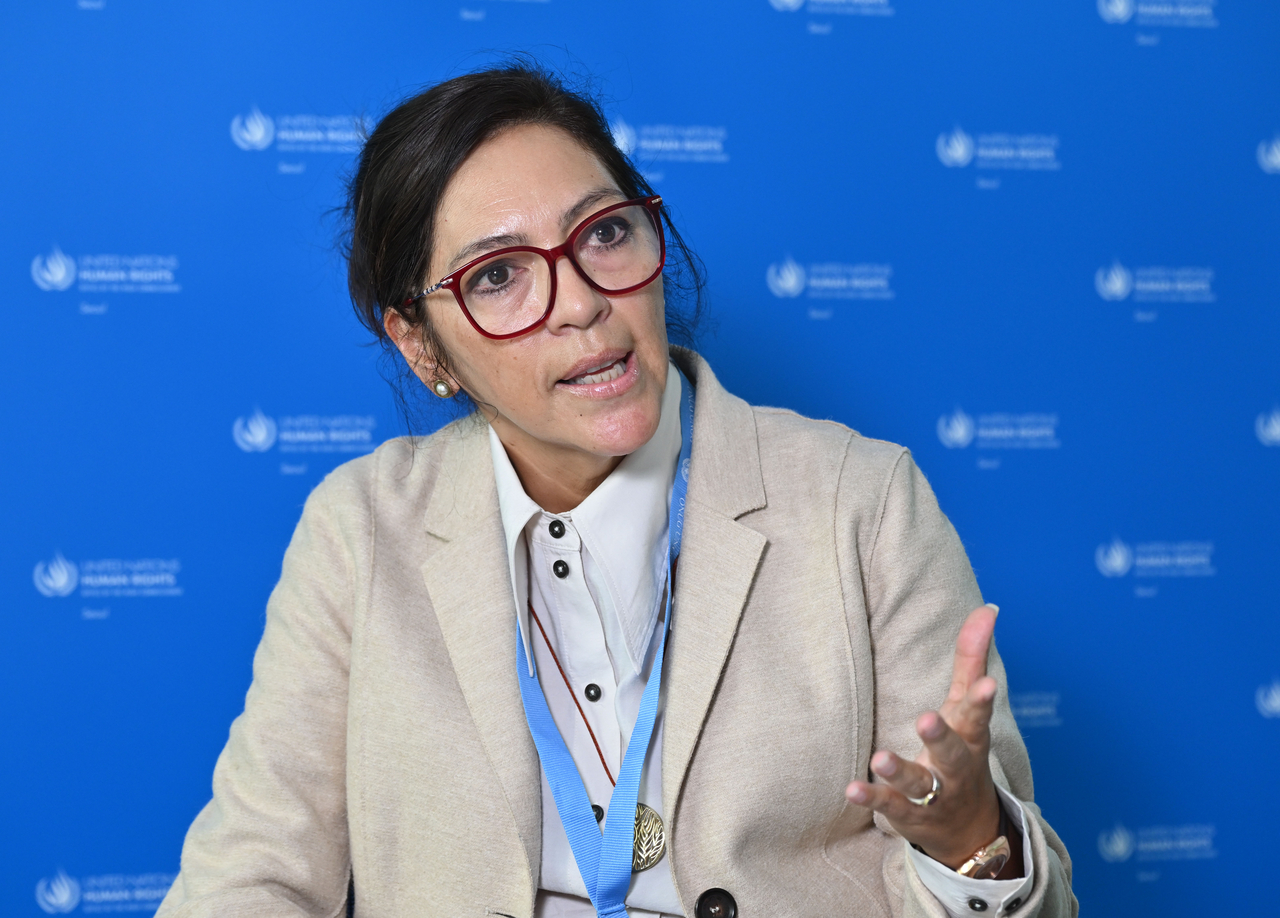
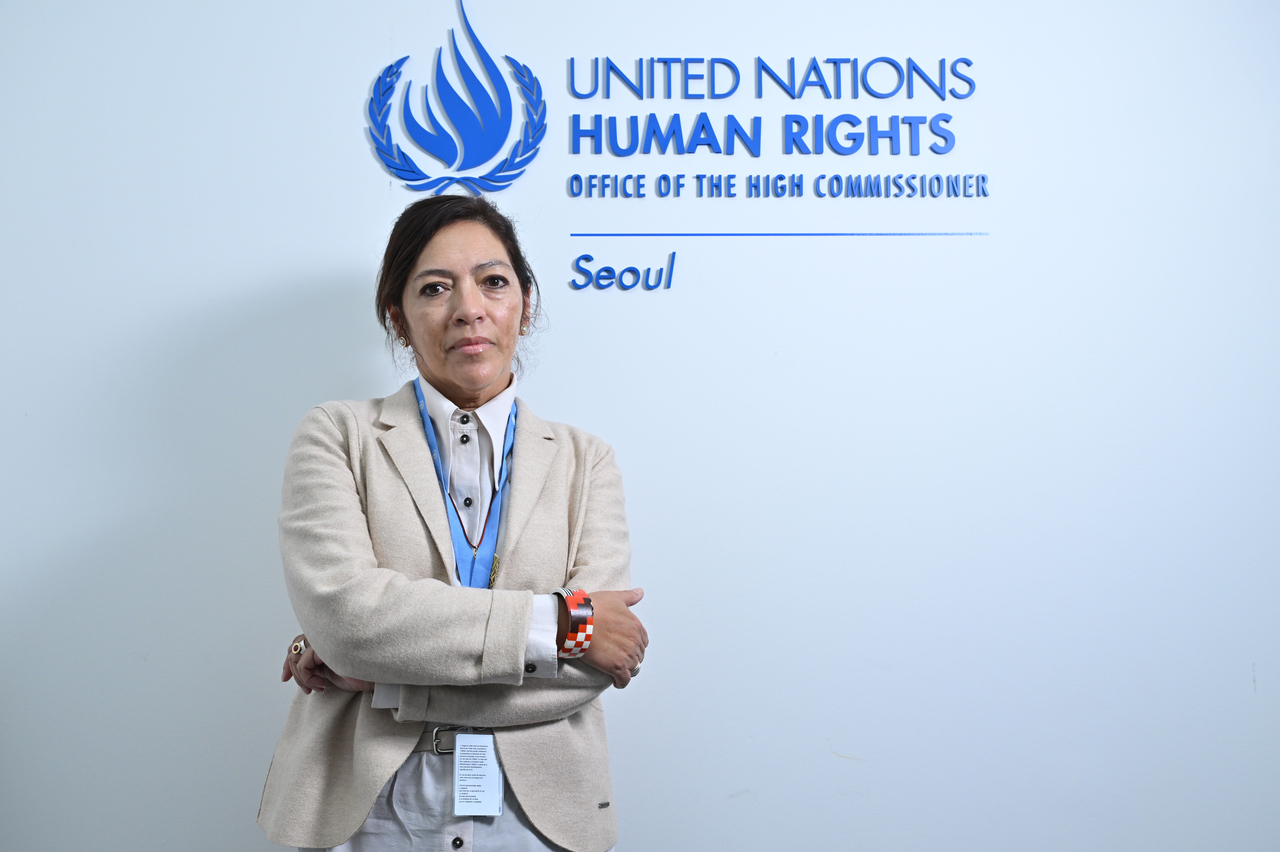
“It is not up to the media to decide that. That’s my point. This is a very risky situation," Elizabeth Salmon, the UN special rapporteur on the situation of human rights in the Democratic People’s Republic of Korea, said in an exclusive interview with The Korea Herald on Thursday in Seoul.
“It’s very concerning, really. It’s very concerning for me. According to my experience, I have never seen that exposure of prisoners of war in general,” Salmon added. She was visiting Seoul for the first time since July 2024, on a five-day trip through Friday.
The images and videos of two North Korean soldiers captured while fighting alongside Russian troops — along with interview details that could reveal not only their identities but also those of their families — have ricocheted across television broadcasts and social platforms.
In Seoul, the spotlight on the two captives intensified again after Russia and Ukraine agreed to swap 314 prisoners of war following two days of peace talks in Abu Dhabi, United Arab Emirates, involving Ukraine, Russia and the United States.
The South Korean government's basic position on North Koreans POWs has been that since their capture, “North Korean soldiers are South Korean nationals under the Constitution, and the government will accept all of them should they request to come to South Korea,” invoking the principle of non-refoulement.
When asked whether North Korean prisoners of war would be included in the Russia-Ukraine prisoner swap, the Foreign Ministry in Seoul on Friday reiterated, “The government is actively making multifaceted efforts to secure the repatriation of North Korean prisoners of war.”
However, Salmon stressed that the decision — and the legal responsibility — rests with Ukraine.
“It is up to Ukraine. It’s not up to South Korea to decide what to do with these two people, but they must assess exactly the situation according to international law,” Salmon said. “There is a principle — the principle of non-refoulement — and this is written in the Convention on Refugees but also in the Convention against Torture.”
That assessment, Salmon noted, must be guided by the principle of nonrefoulement — a cornerstone of international law prohibiting the transfer of individuals to places where there are reasonable grounds to believe they would face torture. The United Nations, Salmon explained, has documented such risks in the North Korean context for decades.
“The Ukrainian government is very well aware of the situation in North Korea, and they replied that there may be reasonable grounds to believe that they could be subject to torture there, in the DPRK,” Salmon said, when asked whether she had received any updates from Ukrainian authorities since submitting her latest report to the UN General Assembly in July 2025. The DPRK is an acronym of North Korea’s official name, the Democratic People's Republic of Korea.
Salmon added that she has since had exchanges with the Ukrainian government and was reassured that the two are entitled to prisoner-of-war status under international humanitarian law, specifically the 1949 Third Geneva Convention.
Salmon further explained that Ukraine also told her the two have access to visits and communication channels, including from the United Nations and the International Committee of the Red Cross, to help ensure their welfare.
‘Stop exposing POWs’
Ukraine’s legal options, she explained, are constrained but clearly delineated.
“What can Ukraine do? Ukraine can send the two persons to a third state or grant asylum to them. This is very difficult as for the second option — because of the current situation in Ukraine — but that’s all I can say,” Salmon said. “It is not up to the South Korean government to decide this. And literally, in international law, they can repatriate the prisoners of war after the war ends.”
The case, she suggested, is precisely the kind that invites conjecture and political projection — and precisely why restraint matters.
“I did my best. I had meetings. I provided information. And I’m sure that Ukraine will do what they must do,” Salmon said. “We must be very realistic and respect Ukraine’s position concerning this.”
During the interview, Salmon also warned that the problem lies in the POWs’ public exposure itself.
“Sometimes we forget that the risks are huge — not only for them, but also for their families. So my main concern is to protect those two guys,” Salmon said. “I was a little bit shocked.”
Salmon underscored that “the public exposure of these two guys is against international humanitarian law,” pointing to Article 13 of the Third Geneva Convention, which requires prisoners of war to be protected from “public curiosity and exposure.”
“Let me tell you, personally speaking, that their faces are shown here in videos on YouTube,” Salmon said. “I respectfully called for prudent behavior towards them. That’s my main concern at this stage.”
Extreme militarization deepens suffering
Salmon also noted that the issue of North Korean POWs should be understood within a broader framework of North Korea’s “transnational repression” — the extension of state coercion beyond national borders.
That pattern, the UN investigator said, encompasses not only prisoners of war but also overseas workers, abductees and cyber operations spearheaded by the North Korean leadership for their own benefit, such as generating revenue and other gains, and by silencing dissent.
“This must not be tackled in isolation,” Salmon underscored. “This is part of a pattern of transnational repression in which the DPRK goes beyond its borders to take measures, to take initiatives, to make decisions.”
On accountability for Pyongyang’s involvement in the war, Salmon said there was little realistic prospect of the International Criminal Court pursuing a case against North Korean leader Kim Jong-un, citing jurisdictional barriers under international criminal law.
“This is a very tricky question,” Salmon said. “According to international criminal law — Article 15(b) of the Rome Statute — you need both countries to be states parties to the Rome Statute. This is not the case, so legally speaking, it is very problematic, at least for the time being. We cannot conclude that the ICC will have jurisdiction.”
Salmon acknowledged emerging discussions in Europe about alternative accountability mechanisms, including proposals for a regional or special tribunal focused on Russia’s war against Ukraine. The European Union has moved to support the creation of a special tribunal, allocating an initial 10 million euros ($11.8 million) in January.
Salmon cautioned that such efforts remain at an early stage and fall outside her mandate, however. “It is too early to assess that situation,” she said.
She stressed that questions about future prosecutions should not overshadow the immediate human rights consequences of North Korea’s wartime involvement.
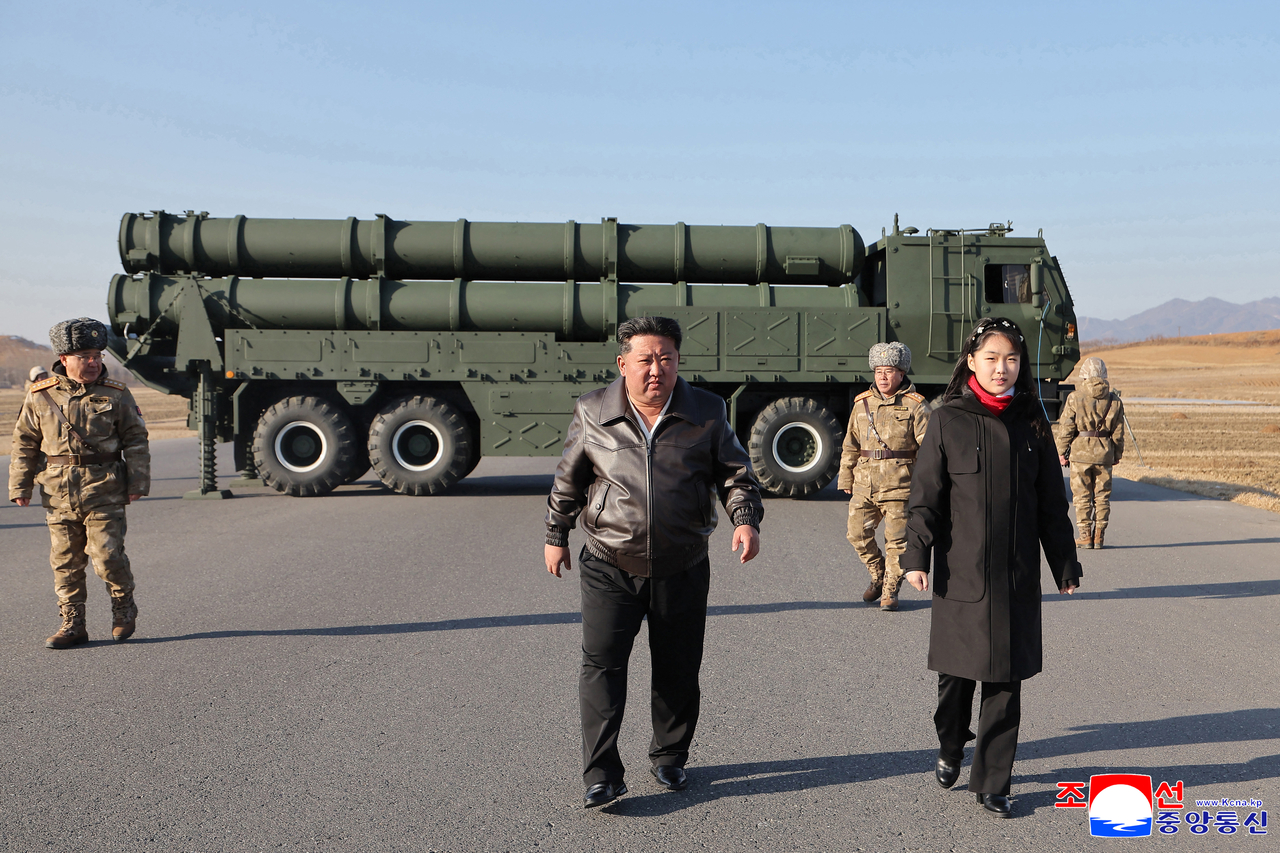
The more pressing concern, Salmon said, is the human rights impact of North Korea’s “extreme militarization,” which diverts resources from necessities and intensifies the human rights crisis inside North Korea.
“This is a very concerning situation because extreme militarization in the DPRK causes a lot of human rights violations,” Salmon said. “They don’t only divert resources that should be used to provide services to North Koreans — like food, health, water and sanitation, education, etc. — but it is also a very dangerous narrative, because if you are in war, you can justify more repression.”
“If you are in war, you can reinforce gender stereotypes — that women are not as strong as men to defend the country. So how could you speak about women’s rights in a context like that?” she added.
Salmon underscored that “The main point is that we must not forget that North Koreans are suffering.”
Human rights not sidebar
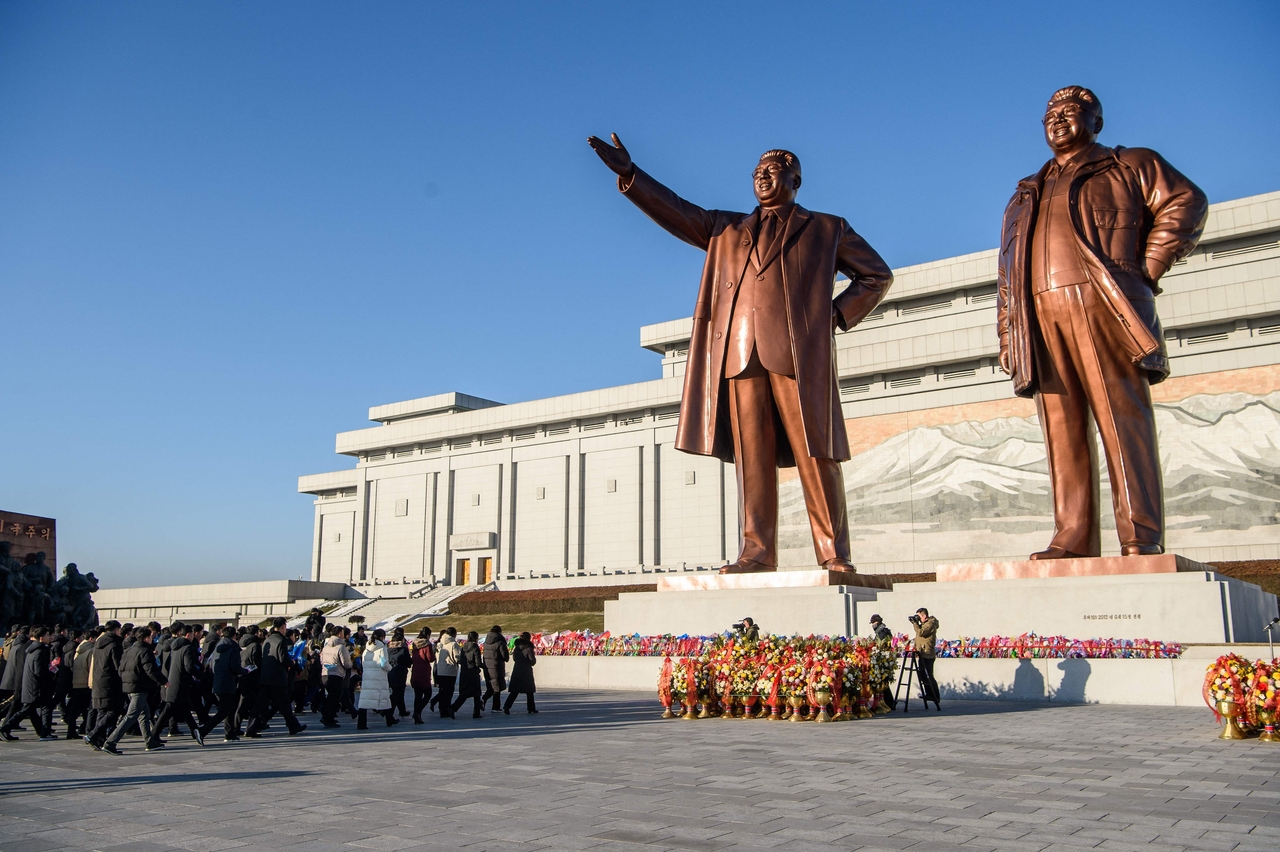
Turning to South Korea’s inter-Korean policy, Salmon stressed that human rights must not be treated as a secondary concern that can be deferred for the sake of diplomacy.
She was “encouraged” by the Lee Jae Myung administration’s stated commitment to pursue inter-Korean human rights cooperation alongside peaceful coexistence, as outlined in its inter-Korean policy document released by the Unification Ministry.
Asked how Seoul can keep human rights on the agenda without derailing efforts to restart dialogue, Salmon made clear that the issue should not be sidelined, as North Korea is a UN member state bound by human rights obligations.
The point was illustrated by the fact that, during its fourth Universal Periodic Review in November 2024, it accepted nearly half of the recommendations put forward by other states, including those on the rights to life, food, work, health care and disability rights.
“So why do we hesitate to talk about human rights with the DPRK if they themselves accepted a number of legal obligations, accepted a number of recommendations, and presented themselves to the committee?” Salmon asked. “What is the alternative?”
Salmon said that the record leaves Seoul with little justification for avoiding the issue.
“My main message to South Korean society is that human rights should not be left aside in any possible future negotiations — dialogue with the DPRK. We must not forget that the situation of human rights in the DPRK is dire."
Peace and human rights converge — and cannot be disentangled.
“So everybody agrees with peace. I also agree. How not to agree with peace? But I personally think that real peace includes human rights,” Salmon said. “Peace is not only to avoid war. For peace to be sustainable, we need to really, really, really settle the human rights standards in the DPRK.”
dagyumji@heraldcorp.com